AI Appraisal Estimate

AI-generated estimates · not official valuations

From the user

What was submitted

Photo and notes provided by the user — not generated by AI

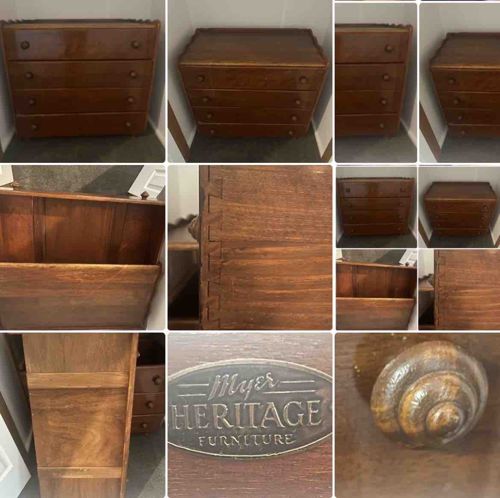
Submitted item photo
Submitted photo · May 22, 2026

User's notes

Myer Heritage Furniture

AI analysis below

AI appraisal

AI analysis & estimate

AI-Generated · Verify before acting

Everything below is generated by AI for informational purposes only. AI can make mistakes — the AI may misidentify items or misattribute them (artist, maker, brand, designer, origin, era). This is not an official valuation and should not be used for insurance, sale, tax, estate, legal, or lending purposes — or any decision requiring a certified appraisal. It is not an authoritative claim about any person, brand, or rights holder — do not share or rely on it as a factual statement about a third party. Always consult qualified professionals before making financial decisions.

Note

This analysis also relies on unverified notes provided by the user, which may be incomplete or inaccurate and could affect the result.

Read the full disclaimer

AI Identification

·Not independently authenticated·Verify before acting

Myer Heritage Four-Drawer Chest of Drawers

Antique & Vintage Furniture

AI Estimated Value

·Not an official valuation·Verify before acting

$450 - $650

As of May 22, 2026

AI Item Analysis

·AI can make mistakes·Verify before acting
This is a vintage four-drawer chest from the Myer Heritage furniture line, a well-regarded Australian brand active during the mid-20th century (predominantly 1950s-1970s). The unit is constructed from what appears to be solid timber with a warm medium-to-dark oak or walnut stain and a lustrous polished finish. A hallmark of this specific line is the high-quality joinery, specifically evidenced by the decorative machine-cut 'through' dovetail joints visible on the side of the drawer boxes. The chest features four graduated or uniform drawers, each fitted with two round wooden turned knobs. A distinctive design element is the scalloped or gallery-style back rail along the top surface, adding a decorative flourish. The interior of the drawers shows clean construction with secondary timbers. An original oval metal maker's plaque is affixed, reading 'Myer HERITAGE FURNITURE'. Condition-wise, the piece shows evidence of light age-appropriate wear, including minor surface scratches and slight variation in the wood grain's finish. The overall craftsmanship is indicative of mid-century mass-production with premium materials, focusing on structural durability and timeless aesthetic appeal. The back of the unit shows a panelled construction, reinforcing its sturdy build.
AI Appraisal Report

·AI can make mistakes·Verify before acting
I have carefully examined the provided images of this four-drawer Myer Heritage chest. This piece is a quintessential example of mid-century Australian manufacturing, specifically the Heritage line which was known for its 'English-style' sturdiness and quality materials. Based on the visual evidence, I can confirm the presence of the authentic oval metal 'Myer HERITAGE FURNITURE' plaque, which is the primary credential for this line. The decorative machine-cut dovetail joints on the drawer boxes and the scalloped back rail are consistent with the 1950s production era. The timber presents a healthy luster, and the graduated drawer design remains a desirable feature for modern foyers and bedrooms. The current market for Myer Heritage remains stable, buoyed by the broader 'Mid-century Modern' and 'Vintage Australiana' movements. While not as high-value as minimalist designer names like Parker or Featherston, Myer Heritage is prized for its solid timber construction—often Tasmanian Oak or Maple under the stain—rather than the veneers common in later decades. Comparables in similar condition have recently sold at auction and through vintage dealers in the $400 to $700 range. Features like the original turned knobs and the undamaged gallery rail significantly bolster its value. While this digital inspection suggests a high degree of authenticity, limitations exist. One cannot definitively verify the species of secondary timbers or the presence of hidden pest damage from photos alone. A full physical authentication would require checking for structural integrity of the drawer runners and a UV light inspection to determine if the finish is an original nitrocellulose lacquer or a later restoration. Documentation of ownership history would further cement its provenance.

Get your items appraised

Instant estimates of your treasures with AI-powered appraisals

Browse More Appraisals