AI Appraisal Estimate

AI-generated estimates · not official valuations

From the user

What was submitted

Photo and notes provided by the user — not generated by AI

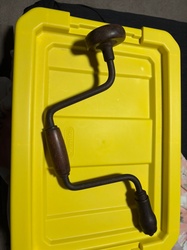
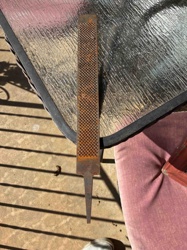
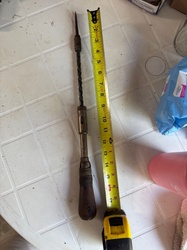
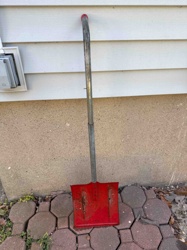
Submitted item photo
Submitted photo · June 6, 2026

User's notes

No additional notes provided.

AI analysis below

AI appraisal

AI analysis & estimate

AI-Generated · Verify before acting

Everything below is generated by AI for informational purposes only. AI can make mistakes — the AI may misidentify items or misattribute them (artist, maker, brand, designer, origin, era). This is not an official valuation and should not be used for insurance, sale, tax, estate, legal, or lending purposes — or any decision requiring a certified appraisal. It is not an authoritative claim about any person, brand, or rights holder — do not share or rely on it as a factual statement about a third party. Always consult qualified professionals before making financial decisions.

Read the full disclaimer

AI Identification

·Not independently authenticated·Verify before acting

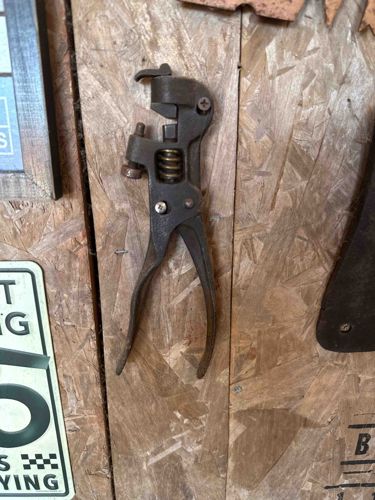
Vintage Saw Set Tool

Hand Tool

AI Estimated Value

·Not an official valuation·Verify before acting

$40 - $80

As of June 6, 2026

AI Item Analysis

·AI can make mistakes·Verify before acting
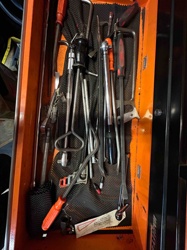
This item is an antique or vintage saw set tool, designed to adjust the 'set' or angle of saw teeth for efficient cutting. It is constructed primarily of dark, possibly cast iron or steel, exhibiting a uniform dark gray to black patina consistent with age and use. The tool has a robust, plier-like form with two distinct handles at the bottom, which appear to be forged or cast as part of the main body, providing a solid grip. The upper part of the tool features a complex mechanism with a large, visible coiled spring, suggesting a precise, adjustable action. There is a screw on the right side of the mechanism, likely for adjusting the setting depth or tension. Another smaller, knurled screw or knob is visible on the left side, possibly for fine-tuning the angle. The jaws or working end of the tool are designed to grip and bend saw teeth; one jaw has a distinct, curved protrusion. The surface shows some minor surface wear and possibly light rust or discoloration commensurate with its age, but no apparent major damage, breaks, or repairs. The visible screws appear to be original slotted-head types. The craftsmanship suggests a sturdy, utilitarian design, built to withstand repetitive use. While no specific maker's marks are discernible from the image, the overall style points to a manufacturing period likely in the late 19th to early 20th century, a time when such hand tools were common and essential for woodworking professionals.
AI Appraisal Report

·AI can make mistakes·Verify before acting
Based on my visual examination of the provided image, this Vintage Saw Set Tool appears to be in good, unrestored condition. The dark patina and consistent wear patterns suggest authenticity, with no obvious signs of major damage or repair that would detract significantly from its value. The presence of the original slotted-head screws and the robust, utilitarian design point to a manufacturing period consistent with the late 19th to early 20th century. While the overall form and features are typical of saw sets from this era, the lack of discernible maker's marks is a notable limitation. In terms of market conditions, vintage saw set tools are generally collected by woodworking enthusiasts, tool collectors, and those interested in antique trades. The demand for common, unmarked examples is moderate. Rarity is low to moderate for this type of tool unless a known, desirable manufacturer or unique design elements are present. Without a maker's mark, it's difficult to ascertain specific rarity or historical significance that would drive a premium price. Factors impacting value positively include its apparent complete state and good working condition, as suggested by the visible coiled spring and intact adjustment mechanisms. Negatively, the lack of manufacturer identification limits its appeal to specialized collectors. It is crucial to note that this appraisal is based solely on visual assessment from an image. Full authentication would require a physical in-hand examination to confirm material composition, assess the precise function of all moving parts, verify the absence of hidden flaws or repairs, and search for faint or obscured maker's marks under proper lighting and magnification. Provenance documentation, though unlikely for such a utilitarian tool, could also add to its historical context and value if available. Without these, the appraisal remains an informed estimation.

Get your items appraised

Instant estimates of your treasures with AI-powered appraisals

Browse More Appraisals