AI Appraisal Estimate

AI-generated estimates · not official valuations

From the user

What was submitted

Photo and notes provided by the user — not generated by AI

Submitted item photo
Submitted photo · June 8, 2026

User's notes

No additional notes provided.

AI analysis below

AI appraisal

AI analysis & estimate

AI-Generated · Verify before acting

Everything below is generated by AI for informational purposes only. AI can make mistakes — the AI may misidentify items or misattribute them (artist, maker, brand, designer, origin, era). This is not an official valuation and should not be used for insurance, sale, tax, estate, legal, or lending purposes — or any decision requiring a certified appraisal. It is not an authoritative claim about any person, brand, or rights holder — do not share or rely on it as a factual statement about a third party. Always consult qualified professionals before making financial decisions.

Read the full disclaimer

AI Identification

·Not independently authenticated·Verify before acting

Edwardian-Style Celluloid Cherub Picture Frame with Victorian Child Cabinet Card

Antiques & Collectibles / Early Plastics

AI Estimated Value

·Not an official valuation·Verify before acting

$45.00 - $65.00

As of June 8, 2026

AI Item Analysis

·AI can make mistakes·Verify before acting
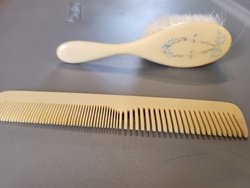
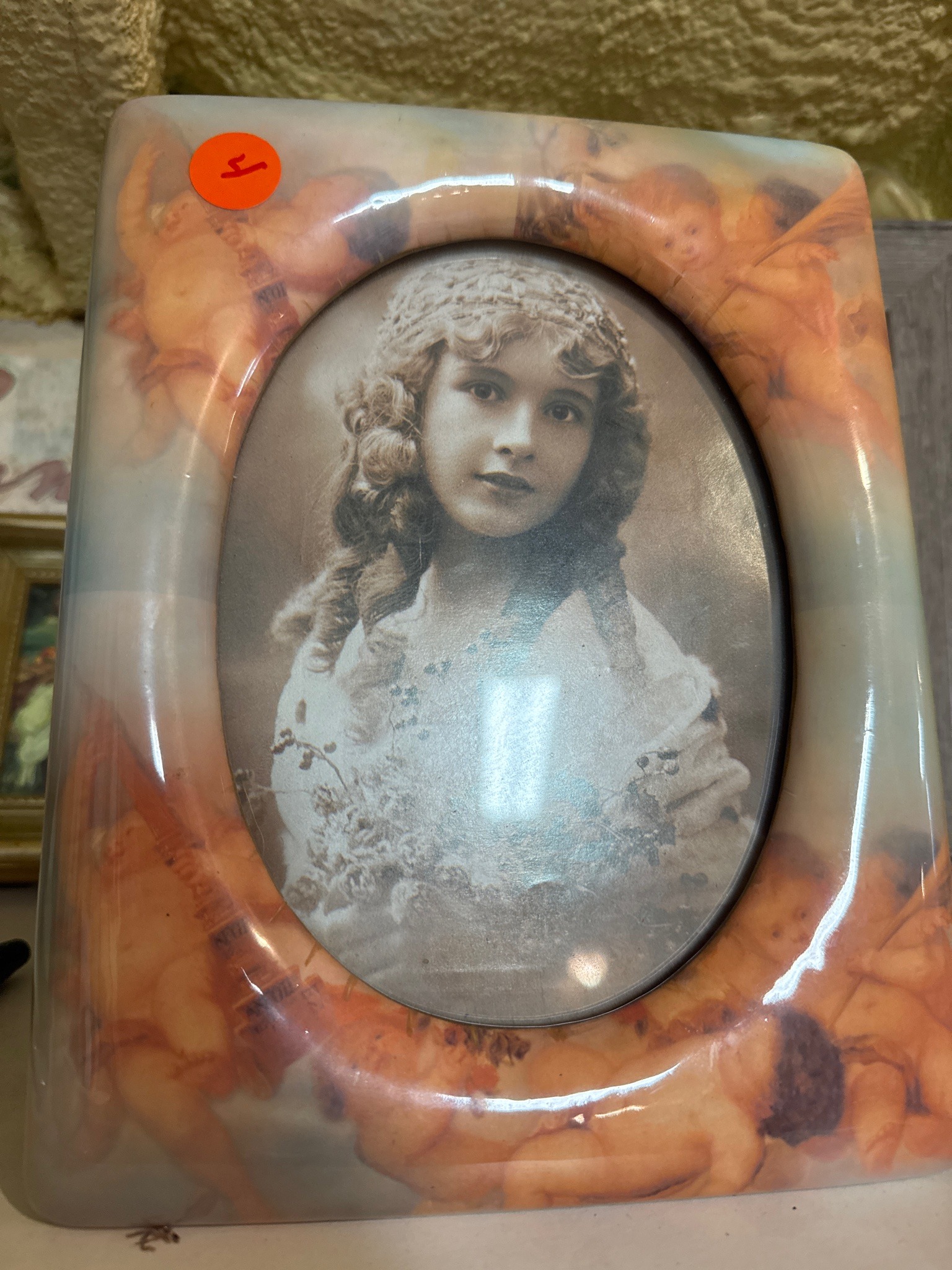
This item is an antique or vintage oval picture frame featuring a wide, rounded border made of decorated celluloid or a similar early thermoplastic material. The frame is approximately 5x7 inches in size and showcases a soft, translucent quality with a muted color palette of cream, sky blue, and pastel orange. The border is decorated with a printed motif of classical winged cherubs or putti in various reclining poses, characteristic of Neoclassical or Rococo Revival styles common in the late 19th and early 20th centuries. Housed within the frame is a black-and-white or sepia-toned studio photograph, likely a cabinet card, of a young girl with characteristic Victorian/Edwardian ringlet curls and a lace-trimmed bonnet. The construction appears to be a sheet of decorated celluloid wrapped over a metal or cardboard support, a popular manufacturing technique for vanity sets and small decor between 1890 and 1920. Visible condition includes a small orange pricing sticker in the upper left corner and minor surface grime. The photograph shows some silvering and atmospheric fading. There are no immediate signs of cracks or 'celluloid rot,' though the surface demonstrates a slight age-related patina and softening of the printed detail. No maker’s marks are visible from the front view.
AI Appraisal Report

·AI can make mistakes·Verify before acting
I have examined the images of this Edwardian-style celluloid picture frame containing a Victorian/Edwardian child's cabinet card. The frame demonstrates the characteristic wrap-around construction common in celluloid vanity items from the 1890–1915 period. Authenticity appears consistent with the light-weight thermoplastic manufacturing of the era; the lithographed cherub motifs and pastel color palette (cream, sky blue, and orange) are hallmarks of the Rococo Revival influence seen in early 20th-century catalogs like Sears, Roebuck & Co. Condition is fair to good. While I observe atmospheric silvering and fading on the studio portrait, the celluloid itself miraculously lacks the systemic cracking or 'weeping' associated with advanced celluloid rot. The presence of surface grime and a modern adhesive sticker are detracting factors that require careful removal to prevent surface lifting. The market for early plastics remains steady, though values for common lithographed celluloid frames have softened compared to the early 2000s. Similar examples of cherub-motif celluloid frames with intact photographs frequently realize between $40 and $70 at specialized antique auctions and online marketplaces. The photograph adds nominal 'crossover' value to collectors of Victorian ephemera, though it is likely a common studio portrait rather than a known subject. Limitations: This appraisal is based solely on digital images. A physical inspection is required to check for underlying structural corrosion of the metal support and to sniff-test for the distinctive camphor scent of deteriorating celluloid. Scientific testing via hot-wire or infrared spectroscopy would be necessary to distinguish between cellulose nitrate (celluloid) and later cellulose acetate, though the visual indicators strongly support the former.

Get your items appraised

Instant estimates of your treasures with AI-powered appraisals

Browse More Appraisals