AI estimate as of September 18, 2025 · verify with a professional before acting
AI-Generated · Verify before acting
Everything on this page is generated by AI for informational purposes only. AI can make mistakes — the AI may misidentify items or misattribute them (artist, maker, brand, designer, origin, era). This is not an official valuation and should not be used for insurance, sale, tax, estate, legal, or lending purposes — or any decision requiring a certified appraisal. It is not an authoritative claim about any person, brand, or rights holder — do not share or rely on it as a factual statement about a third party. Always consult qualified professionals before making financial decisions.
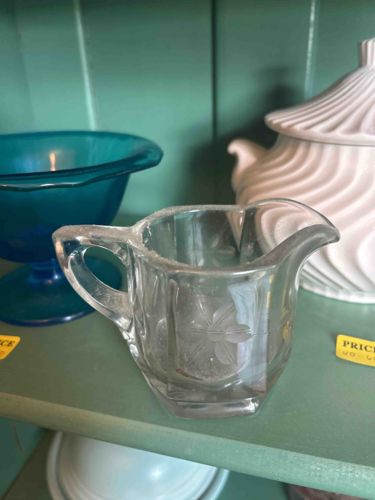
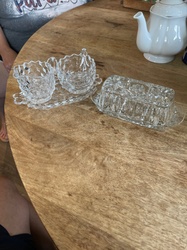
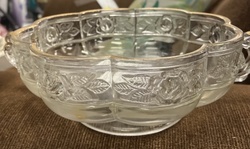
The item is a small, clear glass creamer, likely part of a larger glassware set. It is constructed from pressed glass, characterized by its molded shape with distinct facets and a substantial feel. The creamer features a faceted body, with several vertical panels. A notable decorative element is an etched or cut floral design, possibly a stylized star or flower with multiple petals, visible on at least one of the prominent facets of the main body, suggesting a repeating pattern around the circumference. The handle is a simple, C-shaped loop, integrated seamlessly into the molded structure. The spout is a classic pouring lip, designed for easy dispensing of liquids. The base of the creamer appears to be hexagonal or octagonal, contributing to its stable footing. The glass itself is clear, though it exhibits some dust or surface grime, especially noticeable along the rim and within the etched patterns, indicating it has been on display or in storage for some time. There are no visible chips, cracks, or significant damage, though a thorough inspection would be required to confirm the absence of minor flea bites or internal stress fractures. The craftsmanship indicates a functional yet decorative piece, typical of early to mid-22th-century pressed glass art. No discernible maker’s marks or signatures are visible in the provided image. The overall style suggests it could be a Depression-era piece or from a slightly later period when such pressed and etched glass patterns were popular for everyday tableware.
AI Appraisal Report
I have visually examined the provided image of this clear pressed glass creamer with an etched floral design. Based on my assessment, the condition appears good, with no immediately visible chips, cracks, or significant damage. The presence of dust and grime suggests it has been in storage or on display for some time but does not indicate structural issues.
Authenticity, as a pressed glass creamer from the early to mid-20th century, seems consistent with the visual evidence. The faceted body, C-shaped handle, classic spout, and hexagonal/octagonal base are characteristic of mass-produced tableware from that period. The etched floral design, likely a stylized star or flower, further supports this attribution. However, without a physical inspection, I cannot rule out minor flea bites, internal stress fractures, or subtle repairs. A thorough in-person examination, including blacklight testing and close scrutiny of all surfaces, would be necessary for a definitive condition report.
Market conditions for pressed glass creamers, especially those without specific maker’s marks or highly desirable patterns, are generally modest. While decorative, these items were produced in large quantities. Comparables in the secondary market typically range from $10 to $30 for single pieces. Demand for such utilitarian glassware is moderate, often driven by collectors seeking to complete sets or individuals looking for vintage decorative accents. Rarity is low due to common production methods and widespread availability.
Factors significantly impacting value are the commonality of the item and the lack of a known manufacturer or pattern. If this creamer were part of a complete, identified set or featured a highly sought-after pattern from a renowned glassmaker, its value would increase. Without provenance or maker's marks, it is considered a generic, albeit attractive, piece of vintage pressed glass. Full authentication and identification of the pattern or manufacturer would require a physical examination and research into pressed glass catalogs.