AI estimate as of August 9, 2025 · verify with a professional before acting
AI-Generated · Verify before acting
Everything on this page is generated by AI for informational purposes only. AI can make mistakes — the AI may misidentify items or misattribute them (artist, maker, brand, designer, origin, era). This is not an official valuation and should not be used for insurance, sale, tax, estate, legal, or lending purposes — or any decision requiring a certified appraisal. It is not an authoritative claim about any person, brand, or rights holder — do not share or rely on it as a factual statement about a third party. Always consult qualified professionals before making financial decisions.
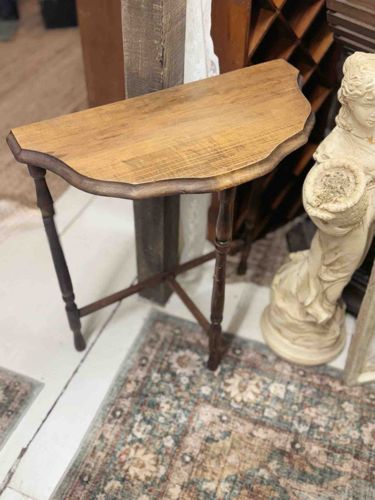
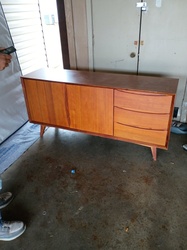
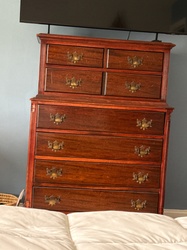
The item is a small, wooden demi-lune or console table, likely designed to stand against a wall, as indicated by its semi-circular top. The tabletop appears to be constructed from solid wood planks, showcasing a natural, light to medium brown wood grain with visible evidence of individual boards and their seams, suggesting a rustic or hand-crafted aesthetic. The edges of the tabletop are not straight but feature a subtle, irregular scalloped or wavy profile, adding a decorative touch. There is a darker, possibly stained or aged, beveled edge or trim directly beneath the main tabletop, which contrasts slightly with the lighter surface. The table is supported by three slender, turned legs, also made of wood. These legs are dark brown, indicating a stain or a different type of wood than the tabletop. Each leg exhibits simple turning details, such as rings or slight bulges, contributing to an early American or provincial style. The legs are braced by an X-shaped stretcher near the bottom, connecting them for stability, with the stretcher also matching the dark stain of the legs. The overall condition shows signs of age and use, including scuffs, scratches, and possibly some minor discoloration on the tabletop consistent with patina. There are no obvious signs of major damage like cracks or breaks, but close inspection might reveal minor wear. No visible manufacturer's marks or signatures are discernible from the image. The style suggests it could be an antique or vintage piece, possibly dating from the late 19th to early 20th century, or a reproduction of that era, due to its simple, functional form and decorative but restrained details. The craftsmanship appears sturdy but not overly ornate, suggesting utility combined with traditional design.
AI Appraisal Report
Upon visual examination of this demi-lune console table, I assess its condition as fair to good, consistent with a vintage or antique item. The tabletop exhibits visible wood grain and construction seams, indicative of solid wood and a rustic aesthetic. The subtle scalloped edge is a pleasant decorative detail. The darker, turned legs and X-stretcher provide structural stability and stylistic contrast. I note scuffs, scratches, and possible discoloration on the tabletop, suggesting typical wear and patina for its age; however, no major structural damage like cracks or breaks are apparent from the image. Given its utilitarian form and restrained decorative elements, it strongly suggests an early American or provincial style, likely dating from the late 19th to early 20th century, or a faithful reproduction thereof. Crafted with sturdy joinery, it appears functional despite its age.
In terms of market conditions, similar vintage console tables, particularly those with a demi-lune form and rustic charm, tend to have steady demand. Commercially, such pieces are sought after for their versatile size and historical appeal, fitting well into various decor styles from farmhouse to traditional. Comparables in the online vintage and antique furniture market, or specialized auctions, suggest a range for pieces of this quality and condition. Its uniqueness lies in its specific proportions and slightly primitive, yet elegant, styling. The rarity is moderate; while demi-lune tables are common, this specific combination of wood tone, leg style, and scalloped edge is less so.
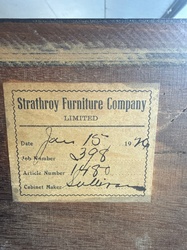
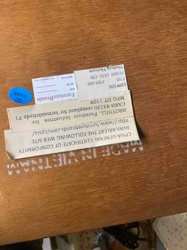
Factors significantly impacting value include its age, condition, and authentic craftsmanship. Without physical inspection, definitive authentication of its precise age and origin remains limited. I cannot discern manufacturer's marks or signatures from the image. For full authentication, an in-person examination would be crucial to assess joinery, wood species, and the true nature of any distressing. Provenance documentation, if available, would significantly enhance value, as would scientific dating for definitive age verification. My appraisal is based purely on the visual evidence provided.