AI estimate as of July 11, 2025 · verify with a professional before acting
AI-Generated · Verify before acting
Everything on this page is generated by AI for informational purposes only. AI can make mistakes — the AI may misidentify items or misattribute them (artist, maker, brand, designer, origin, era). This is not an official valuation and should not be used for insurance, sale, tax, estate, legal, or lending purposes — or any decision requiring a certified appraisal. It is not an authoritative claim about any person, brand, or rights holder — do not share or rely on it as a factual statement about a third party. Always consult qualified professionals before making financial decisions.
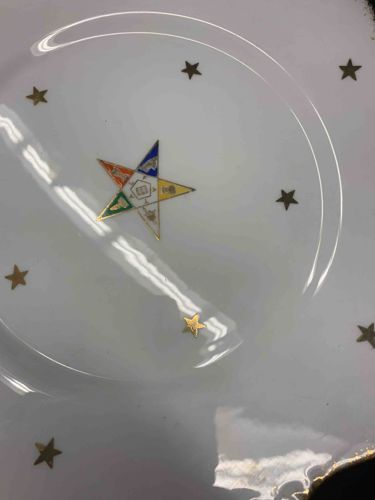
This item is a white porcelain or ceramic plate, likely a dessert or salad plate, featuring prominent fraternal symbolism. The plate has a smooth, glossy glaze, reflecting light in several areas, indicating its polished surface. The central design is a five-pointed star, the emblem of the Order of the Eastern Star, gilded and intricately colored with enamel. Each point of the star is a different color: blue, yellow, white, green, and red, representing the heroines of the order. Within the center of the star is a smaller, white five-pointed star with a compass and square, a symbol often associated with Masonic organizations, which the OES is appendant to. The gilded edges of the central star appear well-defined and sharp. Scattered across the white surface of the plate are numerous smaller, irregular five-pointed stars, also in gold. These smaller stars vary slightly in size and placement, giving a celestial or scattered effect to the design. The rim of the plate has a gilded edge, which appears somewhat worn or chipped in one area (bottom right of the main image), suggesting age and use. There are also subtle double-lined rings visible on the plate's surface, indicating a raised or decorative border design, likely also gilded. The overall condition appears good with minor signs of wear consistent with an antique or vintage item. The craftsmanship details suggest a mass-produced, yet decorative item, common for fraternal organizations to commission for banquets or commemorative purposes. The style period would likely be late 19th to mid-20th century, given the commonality of such emblem-decorated dinnerware during that era for fraternal groups.
AI Appraisal Report
Upon visual examination of the images provided, this Order of the Eastern Star commemorative plate presents as a fine example of early to mid-20th-century fraternal memorabilia. The central emblem, a five-pointed star with colored points and a Masonic compass and square at its heart, is rendered in gilt and enamel, appearing crisp and well-defined. The scattered gold stars and gilded rim are characteristic of decorative dinnerware commissioned by organizations like the OES for events or as member keepsakes. The general condition appears good; however, I note some wear to the gilt on the rim, specifically a chip or significant rub at the lower right. This is consistent with age and use and is a factor in its valuation.
The market for fraternal memorabilia is relatively niche. While items from older, more prominent Masonic bodies can command higher prices, OES items are generally more common. Similar OES commemorative plates from this era, produced by makers like Homer Laughlin or Knowles, typically trade in the $15 to $40 range, depending on condition, manufacturer, and specific event commemoration. The primary factor depressing the value is the mass-produced nature of such items. Rarity is low, and demand is primarily from collectors of fraternal items or OES members.
It is crucial to note the limitations of this appraisal. Without physical inspection, I cannot confirm the manufacturer's mark, assess the precise extent of the wear and chip, or verify the material as porcelain versus ceramic. Full authentication and a more precise valuation would require an in-person examination to identify any maker's marks on the reverse and to scrutinize the quality of the gilt and enamel work for dating purposes.