AI estimate as of October 23, 2025 · verify with a professional before acting
AI-Generated · Verify before acting
Everything on this page is generated by AI for informational purposes only. AI can make mistakes — the AI may misidentify items or misattribute them (artist, maker, brand, designer, origin, era). This is not an official valuation and should not be used for insurance, sale, tax, estate, legal, or lending purposes — or any decision requiring a certified appraisal. It is not an authoritative claim about any person, brand, or rights holder — do not share or rely on it as a factual statement about a third party. Always consult qualified professionals before making financial decisions.
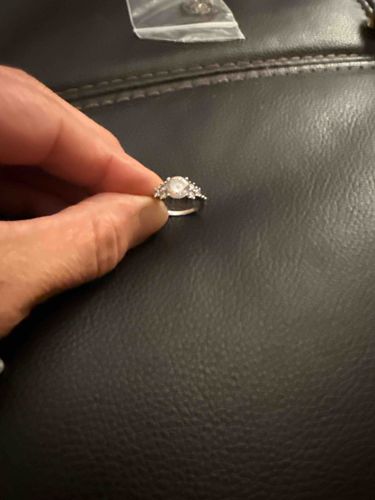
The item is a silver-toned ring, appearing to be crafted from a polished metal, possibly sterling silver or white gold, given its luster. The ring features a prominent central clear gemstone, likely cubic zirconia or a diamond simulant, cut in a brilliant round style and set in a four-prong setting. Flanking this central stone are two smaller clear gemstones on each side, integrated into the band, totaling four accent stones. These side stones also appear to be round brilliant cuts. The band itself is relatively thin and polished, showcasing a contemporary design. The overall aesthetic suggests a modern engagement ring style or a dress ring. No visible maker's marks or stamps are discernible from the image; however, the craftsmanship appears to be of good quality with securely set stones. There are no obvious signs of significant wear, damage, or repairs, maintaining a clean and reflective surface. The ring's size cannot be precisely determined without comparative objects, but it appears to be a standard finger ring. The piece exhibits a generally good condition with its reflective surface indicating care. While specific manufacturing details are absent, the design suggests a mass-produced item rather than bespoke jewelry, likely from the late 20th or early 21st century. The stones have good brilliance, catching the light well, indicating either well-faceted simulant stones or possibly lower-grade natural diamonds, though the former is more probable given the general appearance. The arrangement of the stones provides a classic yet elegant look.
AI Appraisal Report
Based on my visual examination of the provided image, I assess this silver-toned ring with clear gemstones. The overall condition appears good, with no obvious signs of significant wear, damage, or repairs. The metalwork is polished and reflective, suggesting a clean piece. The central and flanking gemstones exhibit good brilliance, capturing light effectively. Authenticity of the metal and stones cannot be definitively confirmed from an image alone. The 'silver-toned' appearance could range from sterling silver to a base metal plated with rhodium or another silver-colored alloy. Similarly, the clear gemstones are most likely cubic zirconia or other diamond simulants, given the typical presentation of such designs, but without testing, I cannot rule out very low-quality natural diamonds. The design is contemporary, consistent with mass-produced jewelry from the late 20th or early 21st century, often found in retail jewelers or department stores. This style is quite common, which impacts its rarity; it is not a rare or unique piece. Market conditions for such rings, especially if they are simulant-based and non-precious metal, are modest. Comparable items, new or secondhand, typically retail in the $50-$200 range depending on the specific materials (e.g., sterling silver versus plated brass) and brand. Factors significantly impacting value include authenticity of the metal (sterling silver would be higher than plated base metal) and, crucially, the type of gemstone. If these were natural diamonds and white gold, the value would be substantially higher. For full authentication, in-person examination is critical. This would involve testing the metal for composition (e.g., sterling silver, white gold), and crucially, testing the gemstones using a diamond tester or other gemological equipment to distinguish between natural diamonds, cubic zirconia, or other simulants. Additionally, microscopic examination could reveal any maker's marks or hallmarks not visible in the image. Without such tests and physical inspection, my appraisal is based on the assumption of non-precious or sterling silver metal and simulated diamonds, which is the most probable scenario given the visual evidence.