AI estimate as of October 21, 2025 · verify with a professional before acting
AI-Generated · Verify before acting
Everything on this page is generated by AI for informational purposes only. AI can make mistakes — the AI may misidentify items or misattribute them (artist, maker, brand, designer, origin, era). This is not an official valuation and should not be used for insurance, sale, tax, estate, legal, or lending purposes — or any decision requiring a certified appraisal. It is not an authoritative claim about any person, brand, or rights holder — do not share or rely on it as a factual statement about a third party. Always consult qualified professionals before making financial decisions.
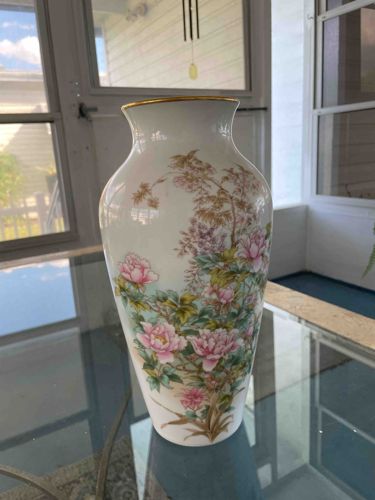
This is a elegant porcelain vase, likely of Japanese origin, possibly in the Imari style given the floral decoration and color palette, though without a clear mark it's difficult to confirm definitively. The vase features a classic slender neck that opens slightly, a gracefully swelling body, and tapers towards the base. It stands approximately 10-14 inches tall based on the visible proportions, though exact dimensions are not provided. The primary color of the porcelain body is a lustrous off-white or very light cream, providing a soft background for the detailed hand-painted decoration. A delicate gold rim, exhibiting minor wear, adorns the mouth of the vase, indicating a touch of luxury. The central motif is a vibrant and intricate arrangement of pink flowers, predominantly peonies or similar large blossoms, surrounded by lush green foliage and what appears to be delicate wisteria or similar trailing vines in softer purples and an earthy brown-gold. The brushwork appears fine and controlled, suggesting quality craftsmanship. There are no immediate visible signs of major damage like chips, cracks, or repairs from the provided images, though a full inspection would be required to confirm this. The condition seems generally good, with some possible slight dullness to the gold rim due to age or handling. The style suggests it could date from the late 19th to mid-20th century. The overall aesthetic is one of traditional Asian artistry, with a focus on natural beauty and harmonious color combinations.
AI Appraisal Report
This porcelain vase, while presenting in an elegant Japanese Imari style, exhibits characteristics that suggest it's more likely a decorative piece from the mid-20th century rather than an antique Imari porcelain. The overall painting style, while detailed, appears somewhat softer than the crisp, bold brushwork typically associated with true Meiji-period Imari. The luster of the off-white body is pleasant, and the gold rim, though showing minor wear, adds a nice touch. The pink floral motif, predominantly peonies, surrounded by green foliage and purple trailing vines, is aesthetically pleasing and well-executed for its likely age. Visually, the vase appears to be in good condition, with no immediate signs of chips, cracks, or repairs from the image provided. However, a full in-person inspection would be needed to confirm the absence of these defects and to properly assess any crazing, paint loss not visible, or manufacturing imperfections. Market conditions for decorative Imari-style porcelain of this type are generally stable but not highly lucrative. Comparables in similar condition and aesthetic typically fall within the $100-$300 range, with the higher end reserved for pieces with more intricate detail, better provenance, or confirmed age. Demand for such items is moderate; they appeal to collectors of Asian decorative arts but are not considered rare. The primary factor impacting value is the current assessment as a decorative, Imari-style piece rather than an authenticated antique Imari. To definitively confirm authenticity and precise dating, a physical examination would be crucial to inspect the porcelain body for typical aging characteristics, examine the foot rim and base for specific marks or firing characteristics, and potentially conduct scientific tests for materials. Without a clear maker's mark and further physical examination, its value remains in the decorative arts category rather than fine antiques.