AI Appraisal Estimate

AI-generated estimates · not official valuations

From the user

What was submitted

Photo and notes provided by the user — not generated by AI

Submitted item photo
Submitted photo · June 17, 2026

User's notes

No additional notes provided.

AI analysis below

AI appraisal

AI analysis & estimate

AI-Generated · Verify before acting

Everything below is generated by AI for informational purposes only. AI can make mistakes — the AI may misidentify items or misattribute them (artist, maker, brand, designer, origin, era). This is not an official valuation and should not be used for insurance, sale, tax, estate, legal, or lending purposes — or any decision requiring a certified appraisal. It is not an authoritative claim about any person, brand, or rights holder — do not share or rely on it as a factual statement about a third party. Always consult qualified professionals before making financial decisions.

Read the full disclaimer

AI Identification

·Not independently authenticated·Verify before acting

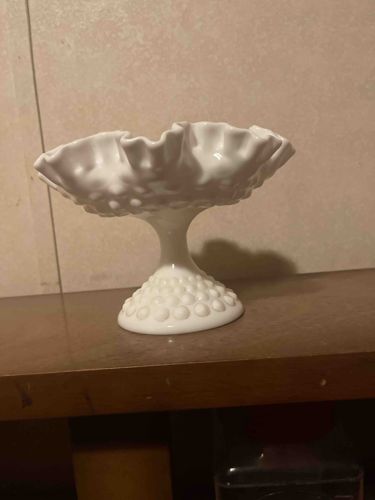
Milk Glass Hobnail Ruffled Compote

Decorative Glassware

AI Estimated Value

·Not an official valuation·Verify before acting

$25-45

As of June 17, 2026

AI Item Analysis

·AI can make mistakes·Verify before acting
This item is a decorative compote, likely crafted from milk glass, characterized by its opaque, glossy white appearance. The compote features a ruffled edge bowl, indicating a design that mimics fabric or floral patterns, common in vintage glassware. The most prominent physical characteristic is the hobnail pattern, which consists of raised, rounded bumps distributed across the exterior surface of both the bowl and the base. This textured design adds visual interest and a tactile quality. The item stands on a flared pedestal base, which is also adorned with the hobnail pattern, providing stability and elevating the bowl. The overall construction suggests a molded glass technique. While specific dimensions are not provided, it appears to be a medium-sized piece, suitable for holding candies, nuts, or as a decorative centerpiece. There are no visible chips, cracks, or repairs from the image, suggesting good overall condition. The age is estimated to be mid-20th century, a popular period for milk glass production, particularly with the hobnail motif. The craftsmanship, though mass-produced, is generally of good quality for pressed glass, with consistent hobnail formation and a well-formed ruffled rim. There are no discernible maker's marks or signatures visible in the provided image.
AI Appraisal Report

·AI can make mistakes·Verify before acting
Upon visual examination of the provided image, I assess this Milk Glass Hobnail Ruffled Compote to be in excellent condition. There are no visible chips, cracks, or repairs, which is crucial for glassware of this type. The consistent hobnail pattern and well-formed ruffled rim suggest good manufacturing quality typical of mass-produced pressed glass from its estimated period. This item's authenticity as a mid-20th century milk glass piece with a hobnail pattern appears consistent with its visual characteristics; however, without a physical examination, I cannot conclusively verify the exact age or the absence of subtle flaws like minor nicks or internal stresses. Market conditions for vintage milk glass, particularly common patterns like hobnail, are generally steady but not exceptionally high. Comparables typically sell in the $20-$50 range for well-preserved compotes of this size and style. Demand for such pieces is moderate, appealing primarily to collectors of vintage glassware and those seeking decorative accents. Rarity is low, as hobnail milk glass was produced in vast quantities by various manufacturers during its peak popularity. Factors significantly impacting value include its pristine condition and classic design. The lack of discernible maker's marks is common for many milk glass pieces and does not unduly devalue it, though a known maker like Fenton or Westmoreland with a clear mark might slightly increase desirability and value. For full authentication and a definitive appraisal, an in-person examination would be essential. This would allow for tactile inspection of the glass quality, precise measurement, blacklight testing to confirm composition and absence of repairs, and a thorough search for any faint maker's marks or mold numbers. Provenance documentation, if available, could also provide valuable insight into its history and origin.

Get your items appraised

Instant estimates of your treasures with AI-powered appraisals

Browse More Appraisals