AI estimate as of August 11, 2025 · verify with a professional before acting
AI-Generated · Verify before acting
Everything on this page is generated by AI for informational purposes only. AI can make mistakes — the AI may misidentify items or misattribute them (artist, maker, brand, designer, origin, era). This is not an official valuation and should not be used for insurance, sale, tax, estate, legal, or lending purposes — or any decision requiring a certified appraisal. It is not an authoritative claim about any person, brand, or rights holder — do not share or rely on it as a factual statement about a third party. Always consult qualified professionals before making financial decisions.
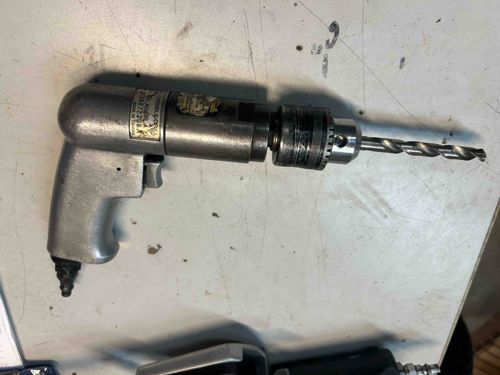
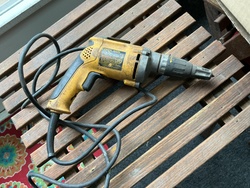
This item is an air-powered hand drill, likely made of aluminum or a similar lightweight metal alloy given its silver/grey color and visible texture. It features a pistol-grip style handle with a trigger mechanism for operation. The construction appears to be robust, typical of industrial or heavy-duty tools. The body of the drill is a uniform metallic grey, showing signs of use with minor scuffs and surface scratches consistent with a working tool. There is a faded, rectangular label affixed to the top of the body, which appears to contain manufacturing or operational details, though the text is largely illegible. The chuck, which holds the drill bit, is a traditional keyed chuck, showing some wear and darkening from use. A standard twist drill bit is currently installed in the chuck. At the base of the handle, there is a visible air inlet, indicating it connects to an air compressor for power. The overall condition suggests it is well-used but still functional, with a visible patina that speaks to its age and work history. There are no obvious signs of major damage or repair, and the craftsmanship appears to be industrial grade. Based on its design and material characteristics, it likely dates from the mid-20th century, possibly the 1950s to 1970s.
AI Appraisal Report
Based on my visual examination of the provided image, this pneumatic hand drill appears to be a robust, industrial-grade tool. Its silver/grey metallic finish and pistol-grip design are consistent with models produced from the mid-20th century, likely the 1950s-1970s. The visible scuffs, surface scratches, and darkening of the chuck indicate common use, but there are no signs of significant damage or repair, suggesting it has been well-maintained. The faint, rectangular label is a common feature on such tools for identifying manufacturer or model details, though its illegibility from the image limits specific identification.
From a market perspective, vintage industrial pneumatic tools like this have a niche demand. While some collectors seek out specific brands or historically significant models for display, most of the demand is from hobbyists or small workshops who value their durability and often simpler mechanics compared to modern electric alternatives. Comparables on online marketplaces for similar vintage pneumatic drills (e.g., Chicago Pneumatic, Ingersoll Rand) in working condition range widely depending on brand recognition, specific model, and demonstrable functionality. Rarity is generally low for common industrial tools of this era unless they possess unique features or a distinguished provenance.
Factors impacting value significantly include the unknown manufacturer, lack of confirmed working condition, and the overall aesthetic state. If it were a well-known brand or definitively in perfect working order, its value would rise. A major limitation of this appraisal is the reliance on images alone. I cannot physically assess its operational integrity (e.g., air leaks, motor function, chuck stability), nor can I definitively confirm the material composition beyond visual inference. To fully authenticate and assess its value, an in-person examination is crucial to test functionality, identify the manufacturer from the faded label, and confirm internal wear. Provenance documentation, such as service records or original purchase details, would also add significant value.