AI estimate as of November 18, 2025 · verify with a professional before acting
AI-Generated · Verify before acting
Everything on this page is generated by AI for informational purposes only. AI can make mistakes — the AI may misidentify items or misattribute them (artist, maker, brand, designer, origin, era). This is not an official valuation and should not be used for insurance, sale, tax, estate, legal, or lending purposes — or any decision requiring a certified appraisal. It is not an authoritative claim about any person, brand, or rights holder — do not share or rely on it as a factual statement about a third party. Always consult qualified professionals before making financial decisions.
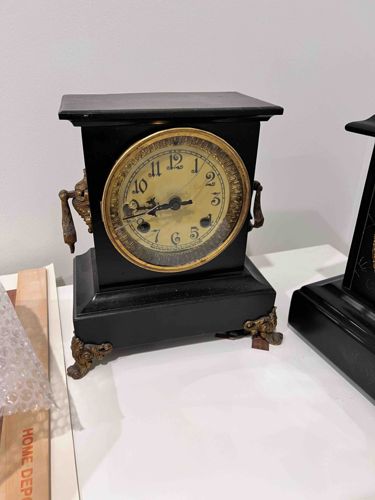
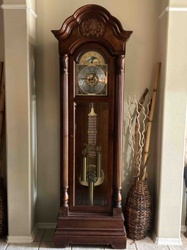
This item is an antique manteaux clock, likely dating from the late 19th to early 20th century, characterized by its rectangular, architectural form. The casing appears to be constructed from a dark, possibly ebonized wood or marble (though wood is more probable given the visible wear and texture), presenting a matte black finish. The clock face is round, featuring a brass or gold-toned bezel with a finely detailed, possibly chased or embossed, decorative border. The dial itself has an aged, cream or ivory color with black Arabic numerals that are somewhat stylized and slightly uneven, indicating hand-painted elements or wear over time. Minute and hour hands are black and appear to be of a spade or ornate design. There is visible discoloration and minor spotting on the dial, consistent with age and exposure. A decorative brass or bronze element, possibly a winding key or an aesthetic embellishment, protrudes from the left side of the clock. The clock sits on a rectangular base, which is also black. It is supported by four ornate, possibly cast brass or bronze claw feet, one of which is clearly visible in the foreground, showing some minor wear and verdigris indicative of its metallic composition and age. The overall condition suggests significant age with expected wear and tear, including some loss of finish or slight abrasions on the black casing, and patina on the metallic components. The craftsmanship, particularly of the metallic details and the general structure, suggests a manufacturing period focused on both function and ornamental appeal.
AI Appraisal Report
Upon visual examination of the provided image, I assess this antique manteaux clock to be a genuine artifact, likely from the late 19th to early 20th century. Its rectangular, architectural form and material characteristics, including the matte black finish (probable ebonized wood), align with stylistic trends of that era. The visible wear, such as discoloration on the cream dial, minor spotting, and patina on the brass/bronze elements like the bezel and claw feet, are all consistent with significant age and authentic deterioration. The stylized, slightly uneven Arabic numerals suggest hand-painting, further supporting its antique status. However, authenticity verification from images alone has limitations; I cannot definitively confirm the material of the casing (wood vs. marble) or the mechanisms without physical inspection. An in-person examination would allow for tactile assessment of materials, a more thorough evaluation of the movement's condition, and confirmation of any maker's marks. Market conditions for antique mantel clocks, particularly those without a highly sought-after maker, are steady but not soaring. Comparables of similar age and aesthetic, in fair to good condition, typically fetch in the $300-$600 range. While aesthetically pleasing, this piece does not appear to possess exceptional rarity, nor does it exhibit unique features that would dramatically increase its demand or value beyond its decorative appeal as an antique. The visible wear and tear, while authentic, also slightly diminish its top-tier market value. Without provenance documentation or scientific testing of materials, its exact origin and any potential restoration history remain speculative.