AI estimate as of July 25, 2025 · verify with a professional before acting
AI-Generated · Verify before acting
Everything on this page is generated by AI for informational purposes only. AI can make mistakes — the AI may misidentify items or misattribute them (artist, maker, brand, designer, origin, era). This is not an official valuation and should not be used for insurance, sale, tax, estate, legal, or lending purposes — or any decision requiring a certified appraisal. It is not an authoritative claim about any person, brand, or rights holder — do not share or rely on it as a factual statement about a third party. Always consult qualified professionals before making financial decisions.
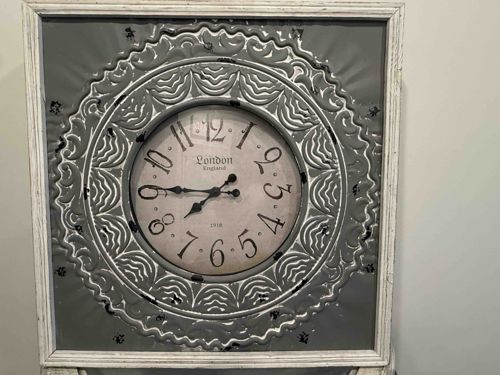
The item is a framed wall clock, designed with a rustic or distressed aesthetic. Its primary structure consists of a square or rectangular wooden frame, which appears to be painted in an antique white or off-white color with intentionally distressed areas, revealing darker undertones, possibly the natural wood or a darker base paint. The central clock mechanism is set within a square metal panel, which is painted a matte grey. This metal panel features a large, circular, ornate embossed design surrounding the clock face, giving it a three-dimensional, decorative relief. The embossed pattern evokes a classical or Victorian style, with swirling motifs and scalloped edges. This embossed area is highlighted with a lighter grey or white paint, creating a two-tone effect that accentuates the relief and contributes to the distressed look, as if the lighter paint has chipped or worn away in places. The clock face itself is circular with a light, possibly cream or very light grey, background and features large, clear black Arabic numerals for the hours. The hands are black, simple, and spade-shaped. Below the center of the clock face, the text 'London England' is printed, suggesting a design inspiration or a brand, and below that, the year '1918' is visible, possibly indicating a vintage style or a specific date of manufacturing or design inspiration. The overall condition appears to be good, with wear and distressing being part of the intended design rather than actual damage. The craftsmanship suggests a mass-produced decorative item, aiming for an antique or shabby-chic appearance.
AI Appraisal Report
Upon visual examination of this 'Distressed London 1918 Wall Clock,' I assess its condition as good, with the prominent distressing and wear being an intentional part of its design rather than actual damage. The '1918' marking clearly indicates a stylistic choice evoking a vintage era, rather than the actual manufacturing date, which would be inconsistent with the item's mass-produced decorative aesthetic. Authenticity as a true antique is immediately ruled out; this is a contemporary decorative piece.
In terms of market conditions, items of this nature, falling under 'shabby chic' or 'farmhouse chic' decor, generally enjoy steady but not exceptional demand. They are widely available from various retailers, including home goods stores, online marketplaces, and department stores, which keeps pricing competitive. Comparables would include similar distressed-look wall clocks, often mass-produced overseas. This particular item’s appeal lies in its decorative function, rather than any intrinsic material or historical value. It's neither rare nor particularly unique in the current market.
Factors significantly impacting its value are its decorative appeal and current condition. Its lack of genuine age, high-end materials, or artistic craftsmanship limits its appraisal value. The primary market for this piece is within home decor, rather than antique collecting.
Limitations in authenticity verification from images alone are crucial here: while I can definitively state it is not an authentic 1918 antique, I cannot verify the manufacturer, exact materials (e.g., specific wood type, metal composition), or the quality of the clock mechanism itself. An in-person examination would allow for physical inspection of material quality, weight, and the operational condition of the clock movement. Provenance documentation would be non-existent and irrelevant for this type of modern decorative item. Scientific testing would be unnecessary as it clearly presents as a contemporary reproduction.