Obsidian Scraper or Flake Tool
Lithic Artifacts / Prehistoric Stone Tools

Obsidian Scraper or Flake Tool

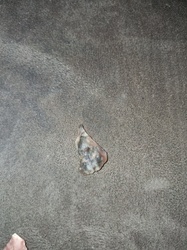
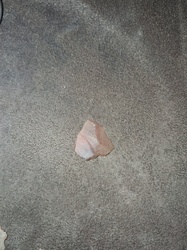
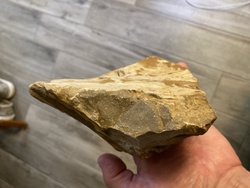
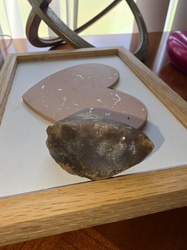
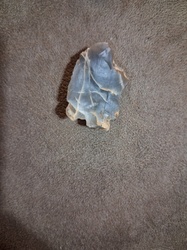
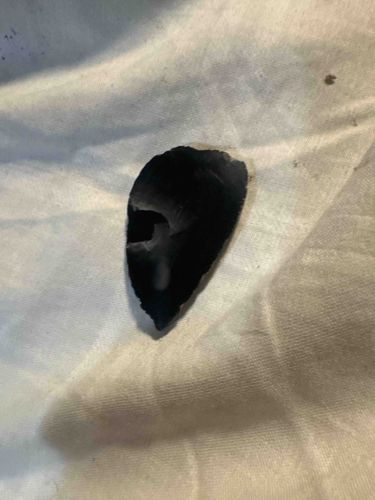
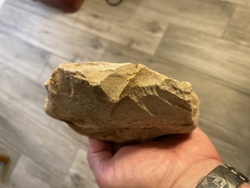
This item is an archaeological or lithic artifact, specifically a bifacially or unifacially worked stone tool crafted from obsidian. The material is a deep, translucent black volcanic glass, characterized by its high-gloss vitreous luster and conchoidal fracture patterns. The item is teardrop or ovoid in shape, measuring approximately 2-3 inches in length. It exhibits clear evidence of percussion and pressure flaking along the edges, which creates a sharp, serrated margin suitable for scraping or cutting tasks. The central face of the object shows large flake scars where material was removed during the reductive manufacturing process, revealing the inner texture of the glass. There is a visible notch or indentation on one side which may be a natural inclusion or a specific design feature for hafting. The condition appears stable with minor edge wear or 'use-wear' resulting in micro-nicking along the sharpest borders. No modern maker's marks are present, suggesting an ancient or prehistoric origin, though it lacks the heavy patina sometimes found on surface-recovered artifacts. The craftsmanship shows a high level of skill in lithic reduction, typical of indigenous stone-tool traditions from regions with volcanic activity.
Estimated Value

$150 - $250

Basic Information

Category

Lithic Artifacts / Prehistoric Stone Tools

Appraised On

February 23, 2026

Estimated Value

$150 - $250

Item Description

This item is an archaeological or lithic artifact, specifically a bifacially or unifacially worked stone tool crafted from obsidian. The material is a deep, translucent black volcanic glass, characterized by its high-gloss vitreous luster and conchoidal fracture patterns. The item is teardrop or ovoid in shape, measuring approximately 2-3 inches in length. It exhibits clear evidence of percussion and pressure flaking along the edges, which creates a sharp, serrated margin suitable for scraping or cutting tasks. The central face of the object shows large flake scars where material was removed during the reductive manufacturing process, revealing the inner texture of the glass. There is a visible notch or indentation on one side which may be a natural inclusion or a specific design feature for hafting. The condition appears stable with minor edge wear or 'use-wear' resulting in micro-nicking along the sharpest borders. No modern maker's marks are present, suggesting an ancient or prehistoric origin, though it lacks the heavy patina sometimes found on surface-recovered artifacts. The craftsmanship shows a high level of skill in lithic reduction, typical of indigenous stone-tool traditions from regions with volcanic activity.
Get Your Items Appraised

Instant estimates of your treasures with AI-powered instant appraisals

Browse More Appraisals