AI estimate as of November 11, 2025 · verify with a professional before acting
AI-Generated · Verify before acting
Everything on this page is generated by AI for informational purposes only. AI can make mistakes — the AI may misidentify items or misattribute them (artist, maker, brand, designer, origin, era). This is not an official valuation and should not be used for insurance, sale, tax, estate, legal, or lending purposes — or any decision requiring a certified appraisal. It is not an authoritative claim about any person, brand, or rights holder — do not share or rely on it as a factual statement about a third party. Always consult qualified professionals before making financial decisions.
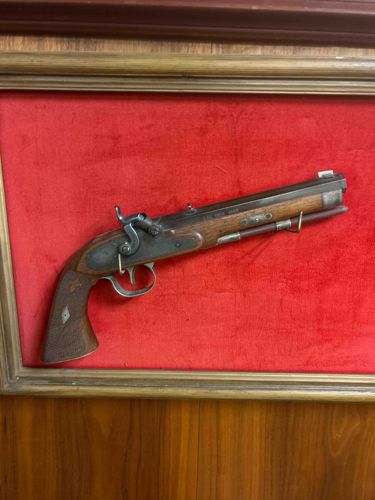
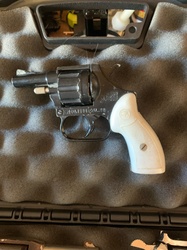
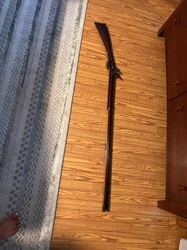
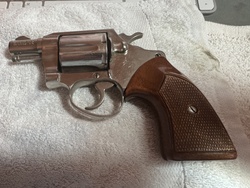
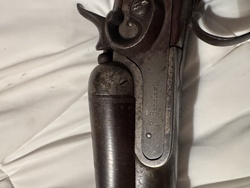
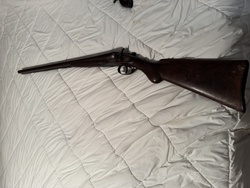
This item is an antique percussion cap pistol, likely from the mid-19th century. The pistol features a dark wooden stock, possibly walnut, with a textured or checkered grip that includes a decorative diamond-shaped inlay, likely of a contrasting wood or mother-of-pearl, on the left side of the handle. The metal components, including the barrel, lock plate, hammer, and trigger guard, appear to be made of blued or case-hardened steel, showing some patination consistent with age and use. The barrel is relatively long and sports a front sight near the muzzle. A ramrod, held in place by two metal thimbles, runs underneath the barrel, which is typical for muzzle-loading firearms of this era. The percussion lock mechanism is visible, with the hammer in a 'rest' or 'half-cocked' position. Markings on the lock plate or barrel are faintly visible but not clearly discernible from the image; however, there appears to be some engraved text or numbering, possibly indicating a manufacturer or serial number. The general condition suggests a well-preserved antique, with a visible patina on the metalwork and a rich, aged finish on the wood. There are no overt signs of significant damage such as large cracks, rust, or major repairs, although minor surface wear and handling marks are present. The craftsmanship appears to be of good quality, indicative of a functional and well-made firearm from its period.
AI Appraisal Report
Upon examining the provided image of the antique percussion cap pistol, I assess its condition as well-preserved for its age, likely mid-19th century. The dark wooden stock, possibly walnut, shows a rich, aged finish with a textured grip and a decorative diamond-shaped inlay, suggesting quality craftsmanship. The metal components, including the blued or case-hardened steel barrel, lock plate, hammer, and trigger guard, exhibit a consistent patination, indicative of authentic age and use. There are no overt signs of significant damage like large cracks, deep rust, or major repairs, though minor surface wear and handling marks are visible. The presence of a ramrod and an intact percussion lock mechanism further supports its completeness.
From a market perspective, antique percussion pistols with good preservation and clear lineage are in steady demand among collectors. The visible but indistinct markings hint at a potential manufacturer, which if identifiable, could significantly impact its value. Comparables of well-preserved, functional percussion pistols from the mid-19th century typically fall within the $1,500 to $3,000 range, depending heavily on provenance, manufacturer, and specific model rarity. This piece appears to be a good quality, functional firearm from its period, making it desirable.
However, it is crucial to note the limitations of assessing authenticity and full value from images alone. While the visual indicators are positive, a definitive appraisal would require an in-person examination to verify the integrity of the firing mechanism, confirm the material composition, and accurately identify any faint markings or engravings. Scientific testing, such as metallurgy analysis, could further confirm authenticity. Documentation of provenance, if available, would significantly enhance its value by providing historical context and verifying originality. Without physical inspection, I cannot fully ascertain if the piece has undergone restorations or if any internal components are non-original, matching, or if the gun is in functional, safe order.