AI Appraisal Estimate

AI-generated estimates · not official valuations

From the user

What was submitted

Photo and notes provided by the user — not generated by AI

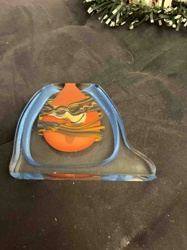
Submitted item photo
Submitted photo · June 3, 2026

User's notes

Bohemian

AI analysis below

AI appraisal

AI analysis & estimate

AI-Generated · Verify before acting

Everything below is generated by AI for informational purposes only. AI can make mistakes — the AI may misidentify items or misattribute them (artist, maker, brand, designer, origin, era). This is not an official valuation and should not be used for insurance, sale, tax, estate, legal, or lending purposes — or any decision requiring a certified appraisal. It is not an authoritative claim about any person, brand, or rights holder — do not share or rely on it as a factual statement about a third party. Always consult qualified professionals before making financial decisions.

Note

This analysis also relies on unverified notes provided by the user, which may be incomplete or inaccurate and could affect the result.

Read the full disclaimer

AI Identification

·Not independently authenticated·Verify before acting

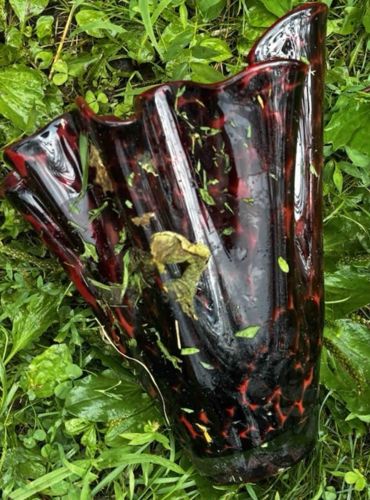
Vintage Bohemian Tortoise Shell Art Glass Fan Vase

Art Glass / Collectible Glassware

AI Estimated Value

·Not an official valuation·Verify before acting

$45.00 - $75.00

As of June 3, 2026

AI Item Analysis

·AI can make mistakes·Verify before acting
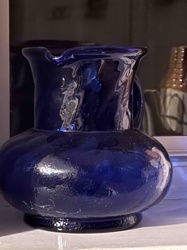
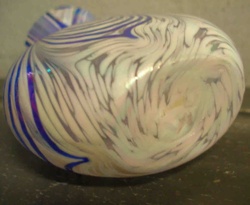
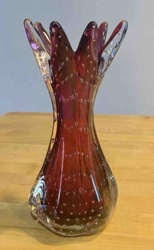
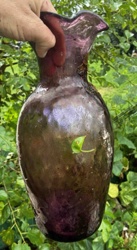
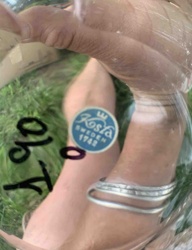
This is a hand-blown Bohemian art glass vase, likely originating from Czechoslovakia mid-20th century. The piece features a distinct 'tortoise shell' pattern, achieved by layering dark amber or black glass splatters over a translucent ruby red or deep amber body, creating a high-contrast, dappled effect. The vase is shaped in a classic 'fan' or 'swung' style with deep, vertical ribs that lead To a heavily ruffled and undulating rim. Its thick, weighted base provides structural stability, tapering upward to a wide opening. The craftsmanship exhibits typical mid-century European glass-blowing techniques, characterized by smooth, fire-polished edges and rich, saturated coloration. The surface shows a high-gloss finish typical of lead glass or high-quality potash glass. In terms of condition, the item appears to be resting in grass and is covered in plant debris; however, the glass itself shows no immediate cracks or large chips in the visible portion. There is light surface grime and potentially minor shelf wear on the bottom of the base. No visible maker's marks are present in the photo, which is common for these pieces that often bore paper labels rather than acid stamps. It represents a fine example of Bohemian decorative glass from the 1950s-1970s era.
AI Appraisal Report

·AI can make mistakes·Verify before acting
I have examined the provided images of this Bohemian tortoise shell art glass fan vase. The piece exhibits the characteristic 'tortoise shell' spatter technique popularized by Czech glassworks such as Chřibská or Sklo Union during the mid-20th century. The deep ruby-to-amber transition combined with the ruffled fan morphology is consistent with high-quality Czechoslovakian production from the 1950s–1970s. The vertical ribbing and fire-polished rim suggest skilled hand-blown craftsmanship. Currently, the item is obscured by organic debris; while no major structural fractures are visible, the presence of surface grime may hide minor flea bites or 'sulfur bumps' common in vintage potash glass. The lack of a maker's mark is standard for this era, as most authentication relied on paper labels. The market for mid-century Bohemian glass remains steady but saturated. Comparables for unsigned spatter glass fan vases frequently realize between $40 and $80 in online auctions and vintage boutiques. Rarity is considered low to moderate, as these were produced for export in significant quantities. The most significant factor impacting value is the condition of the base and the clarity of the glass once cleaned. Limitations of this appraisal include the inability to verify the presence of internal heat cracks or base wear hidden by debris. For definitive authentication, an in-person inspection of the pontil mark and UV light testing to determine glass composition would be required. Provenance documentation, such as an original export label or sales receipt, would further solidify its origin.

Get your items appraised

Instant estimates of your treasures with AI-powered appraisals

Browse More Appraisals