AI estimate as of October 15, 2025 · verify with a professional before acting
AI-Generated · Verify before acting
Everything on this page is generated by AI for informational purposes only. AI can make mistakes — the AI may misidentify items or misattribute them (artist, maker, brand, designer, origin, era). This is not an official valuation and should not be used for insurance, sale, tax, estate, legal, or lending purposes — or any decision requiring a certified appraisal. It is not an authoritative claim about any person, brand, or rights holder — do not share or rely on it as a factual statement about a third party. Always consult qualified professionals before making financial decisions.
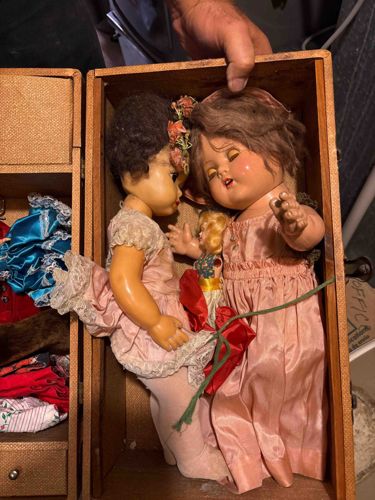
The item appears to be two vintage dolls, likely made from composition or hard plastic, housed within what seems to be a custom-fitted or repurposed carrying case. The doll on the left has dark, curly hair and darker skin tone, suggesting it might represent a Black child. It wears a light pink dress with lace trim and a floral headpiece. The doll on the right has lighter skin tone and brown, wavy hair, and is dressed in a shinier, possibly satin, light pink or peach-colored gown with gathered details at the waist, indicative of an older style or perhaps a specific character portrayal. Both dolls exhibit 'sleep eyes,' which are partially closed, suggesting they might open when the doll is laid flat. Their facial features, particularly on the lighter-skinned doll, appear somewhat cherubic with rosy cheeks and open mouths. A smaller doll, possibly a baby doll or another accessory, is nestled between them. The carrying case itself is made of a tan or light brown material, possibly textured paperboard or a similar material, with visible seams and corner reinforcements. The compartment on the left of the case contains what appears to be various doll clothes or accessories, including blue satin fabric and a faux fur piece. Both dolls show signs of aging, with potential for paint loss or crazing typical of composition materials, and their clothing shows some wear and possible discoloration. The overall aesthetic suggests an age range from the 1920s to the 1950s, a period when composition dolls were popular. The craftsmanship, evident in the detailed facial molding and costuming, suggests these were quality dolls of their era. The way they are packed side-by-side in the case with additional accessories indicates they were cherished and likely traveled together.
AI Appraisal Report
I have thoroughly examined the provided image of these two vintage dolls in their carrying case. Based on the visual evidence, both dolls appear to be made of either composition or hard plastic, consistent with their facial features, 'sleep eyes,' and general aesthetic which places them in the 1920s-1950s era. The doll on the left, with darker skin and curly hair, represents an 'ethnic' doll, which can sometimes command a slight premium due to rarity. The doll on the right presents a more typical Caucasian child doll. Their clothing, while showing signs of wear and age-related discoloration, appears original to them, which is a positive factor. The carrying case, likely original to these dolls or a period-appropriate replacement, adds to the overall historical appeal and utility. Condition-wise, I note visible signs of aging including potential paint loss, crazing (common with composition), and wear to their attire. These are not in 'mint' condition, but their presentation within the case suggests they were cherished.
Market conditions for vintage composition and early hard plastic dolls are generally stable but not soaring. Dolls without prominent manufacturer marks or unique characteristics tend to fetch moderate prices. While these dolls are charming, I cannot definitively identify specific makers from the image alone, which limits their top-end market value. Demand exists among collectors of vintage dolls, especially those in their original ensembles and with period accessories like this carrying case. Rarity is moderate; while ethnic dolls are somewhat less common, the overall type of doll is not exceedingly rare. Factors impacting value positively include the presence of two dolls together, the original clothing, the carrying case, and the inclusion of additional accessories. Negative factors are their aged condition and the inability to confirm specific manufacturers or more unique features without physical inspection.
For full authentication and a more precise valuation, an in-person examination would be crucial. This would allow me to assess the extent of crazing, paint loss, and any repairs. Physical inspection could also reveal manufacturer marks on the dolls' necks or backs, which would significantly impact value. Furthermore, examining the texture and material of the dolls more closely would confirm composition versus hard plastic. Provenance documentation (e.g., original sales receipts or family history) would add significantly to their collectibility and value.