AI Appraisal Estimate

AI-generated estimates · not official valuations

From the user

What was submitted

Photo and notes provided by the user — not generated by AI

Submitted item photo
Submitted photo · June 28, 2026

User's notes

No additional notes provided.

AI analysis below

AI appraisal

AI analysis & estimate

AI-Generated · Verify before acting

Everything below is generated by AI for informational purposes only. AI can make mistakes — the AI may misidentify items or misattribute them (artist, maker, brand, designer, origin, era). This is not an official valuation and should not be used for insurance, sale, tax, estate, legal, or lending purposes — or any decision requiring a certified appraisal. It is not an authoritative claim about any person, brand, or rights holder — do not share or rely on it as a factual statement about a third party. Always consult qualified professionals before making financial decisions.

Read the full disclaimer

AI Identification

·Not independently authenticated·Verify before acting

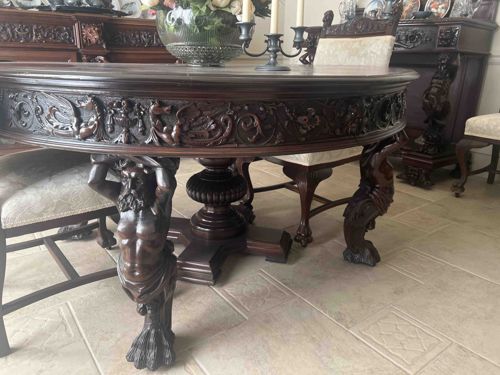
Italian Renaissance Revival Heavily Carved Walnut Center Table

Antique Furniture

AI Estimated Value

·Not an official valuation·Verify before acting

$4,500 - $6,500

As of June 28, 2026

AI Item Analysis

·AI can make mistakes·Verify before acting
This is an exceptional example of an Italian Renaissance Revival (Neo-Renaissance) center table, likely dating from the late 19th to early 20th century. The table is expertly crafted from solid walnut, finished in a deep, rich chocolate brown stain that emphasizes the intricate grain and three-dimensional carvings. The circular tabletop features a stepped molded edge above a wide, highly ornate frieze or apron. The apron is decorated in high-relief with a continuous rinceau pattern consisting of scrolls, acanthus leaves, and mythical motifs. Supporting the table are three monumental figural legs in the form of Atlantes or bearded Titans, shown in a classical athletic pose supporting the weight of the table on their shoulders, terminating in stylized paw feet. A central gadrooned pedestal column provides additional structural support, resting on a heavy tripartite (three-point) platform base. The craftsmanship is of high quality, exhibiting deep undercut carving techniques typical of high-end European cabinetmaking of the period. The condition appears very good, showing a well-maintained lustrous patina with minor surface abrasions and light age-related wear consistent with its vintage; no major structural failures, splits, or repairs are immediately visible in the image. This piece is characteristic of the grandiose, historical styles favored in formal 19th-century interiors and remains a statement piece of furniture.
AI Appraisal Report

·AI can make mistakes·Verify before acting
Based on my visual examination of this late 19th-century Italian Renaissance Revival walnut center table, I find it to be an exceptional example of high-style European cabinetmaking. The deep, three-dimensional carvings of the Atlantes figures and the rinceau-decorated apron demonstrate superior craftsmanship and an adherence to the grandiose 'Neo-Renaissance' aesthetic popular during the Belle Époque. The walnut displays a desirable deep patina, and the structural integrity appears sound from the photographic evidence, with only minor surface abrasions consistent with age. Market demand for such monumental revival furniture currently favors pieces with high decorative impact and superior carving quality. While the 'brown furniture' market has seen fluctuations, unique figural pieces of this caliber maintain a steady niche among collectors of historical revivalism and interior designers seeking focal points. Comparable auction results for similar tripartite figural center tables range from $4,000 to over $7,000 depending on the specificity of the provenance. Several limitations exist in this remote assessment. Authenticity as a period 19th-century piece versus a mid-20th-century reproduction cannot be definitively confirmed without an in-person inspection of the joinery (checking for hand-cut vs. machine-cut dovetails) and the oxidation of the secondary woods underneath the tripartite base. Verification would require examining the underside for historical maker's marks or stamps. Furthermore, I cannot rule out professional restorations or hidden stabilizing pins without a physical stress test. A full valuation would also benefit from provenance documentation, such as original gallery receipts or estate records.

Get your items appraised

Instant estimates of your treasures with AI-powered appraisals

Browse More Appraisals