AI Appraisal Estimate

AI-generated estimates · not official valuations

From the user

What was submitted

Photo and notes provided by the user — not generated by AI

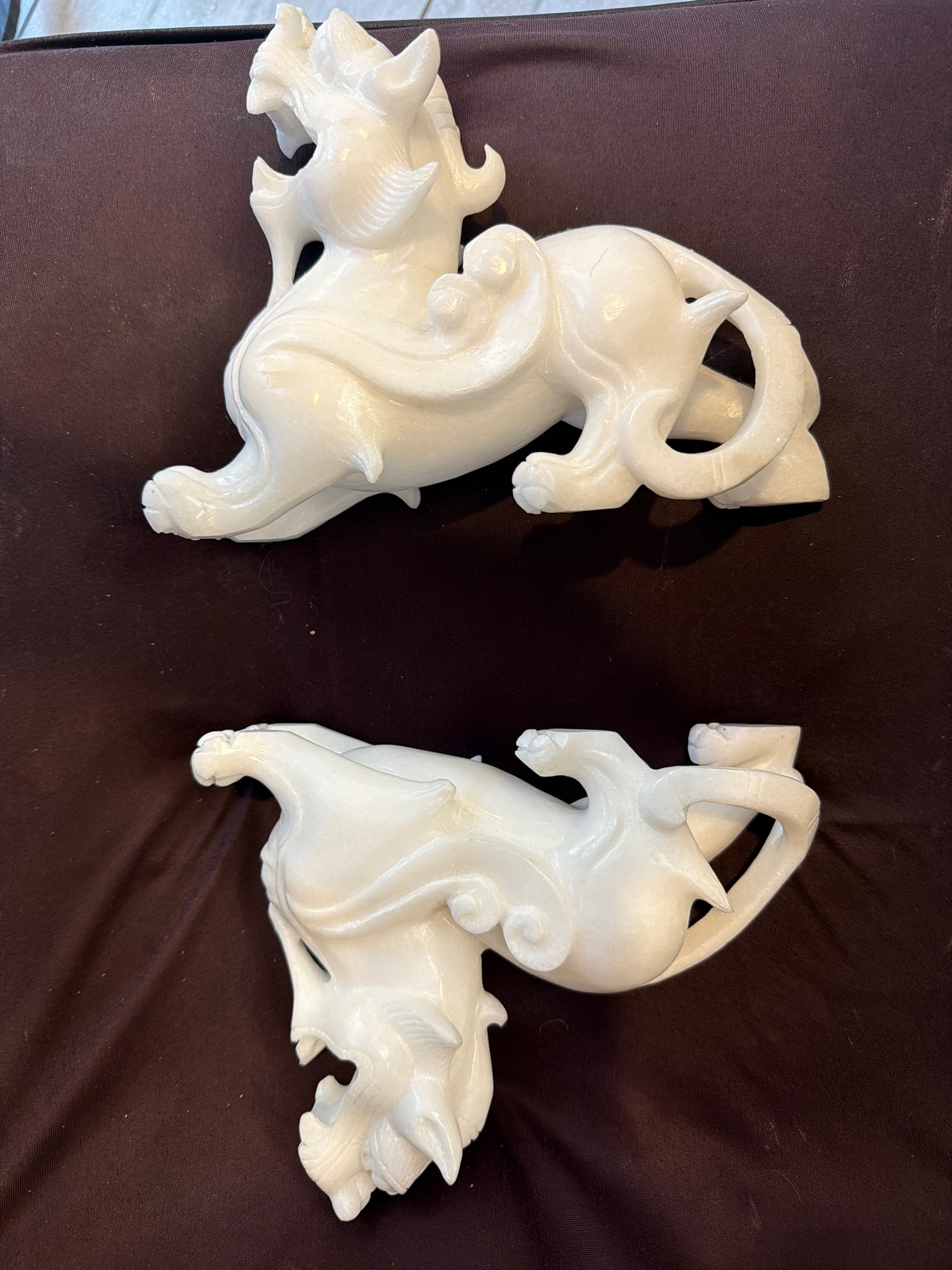
Submitted item photo
Submitted photo · June 15, 2026

User's notes

No additional notes provided.

AI analysis below

AI appraisal

AI analysis & estimate

AI-Generated · Verify before acting

Everything below is generated by AI for informational purposes only. AI can make mistakes — the AI may misidentify items or misattribute them (artist, maker, brand, designer, origin, era). This is not an official valuation and should not be used for insurance, sale, tax, estate, legal, or lending purposes — or any decision requiring a certified appraisal. It is not an authoritative claim about any person, brand, or rights holder — do not share or rely on it as a factual statement about a third party. Always consult qualified professionals before making financial decisions.

Read the full disclaimer

AI Identification

·Not independently authenticated·Verify before acting

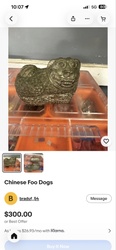
Pair of White Marble Carved Pixiu Guardians

Asian Art and Antiques - Lapidary Sculptures

AI Estimated Value

·Not an official valuation·Verify before acting

$1,200 - $1,800 USD

As of June 15, 2026

AI Item Analysis

·AI can make mistakes·Verify before acting
This is a pair of hand-carved guardian figures, likely representing the mythical Chinese creature known as a Pixiu or Pi Yao. The figures are sculpted from a dense, bright white mineral material, most likely white marble or a high-quality white jadeite / bowenite. Each figure is rendered in a dynamic, crouching posture with fluid, curvilinear lines. The craftsmanship features deep undercuts and open-work elements, particularly around the tails and arched backs, demonstrating a high level of sculptural skill. The physical characteristics show a semi-translucent quality to the stone with a soft, polished luster. The anatomy includes characteristic chimerical features: a dragon-like head with a single horn (Bixie style), flame-like tufts at the joints, and a broad chest. In terms of condition, the pieces appear remarkably well-preserved with no major fractures visible, though there are minor surface abrasions and fine hairline 'veins' natural to the stone. The style is reminiscent of Qing dynasty archaistic revivals, likely dating to the late 20th century. There are no visible maker's marks or signatures, which is typical for such lapidary work. The smooth finish and rounded edges suggest modern pneumatic tools were likely used for the initial roughing, followed by hand-polishing to achieve the final satin sheen. The pair is symmetrical, designed to be displayed facing one another to serve as spiritual protectors according to Feng Shui tradition.
AI Appraisal Report

·AI can make mistakes·Verify before acting
I have examined the images of this pair of carved Pixiu guardians. These figures, likely sculpted from high-grade white marble or a fine-grained bowenite, exhibit the fluid curvilinear forms and deep open-work characteristic of high-quality lapidary craftsmanship. Based on the uniform surface luster and the precision of the undercuts, I estimate these pieces date to the late 20th century, created in the archaistic style of the Qing dynasty. The condition is excellent, showing only minor natural inclusions and negligible surface wear consistent with display in a protected environment. The market for decorative Asian stone carvings remains stable, particularly for pairs that serve a dual purpose as both fine art and Feng Shui protectors. Comparable sales for hand-polished white stone guardians of this scale and detail typically fall within the $1,200 to $1,800 range. However, value is significantly impacted by material purity; if these were confirmed to be nephrite jade rather than marble or bowenite, the valuation would increase substantially. As this examination was conducted via high-resolution imagery, I cannot definitively confirm the mineral hardness or detect professional restorations that may be invisible to the naked eye. A physical inspection using a Mohs hardness test, UV light analysis, and a review of provenance documentation would be required for a definitive authentication of the stone type and age. For insurance purposes, I recommend documenting the specific weight and dimensions of each piece.

Get your items appraised

Instant estimates of your treasures with AI-powered appraisals

Browse More Appraisals