AI Appraisal Estimate

AI-generated estimates · not official valuations

From the user

What was submitted

Photo and notes provided by the user — not generated by AI

Submitted item photo
Submitted photo · June 30, 2026

User's notes

No additional notes provided.

AI analysis below

AI appraisal

AI analysis & estimate

AI-Generated · Verify before acting

Everything below is generated by AI for informational purposes only. AI can make mistakes — the AI may misidentify items or misattribute them (artist, maker, brand, designer, origin, era). This is not an official valuation and should not be used for insurance, sale, tax, estate, legal, or lending purposes — or any decision requiring a certified appraisal. It is not an authoritative claim about any person, brand, or rights holder — do not share or rely on it as a factual statement about a third party. Always consult qualified professionals before making financial decisions.

Read the full disclaimer

AI Identification

·Not independently authenticated·Verify before acting

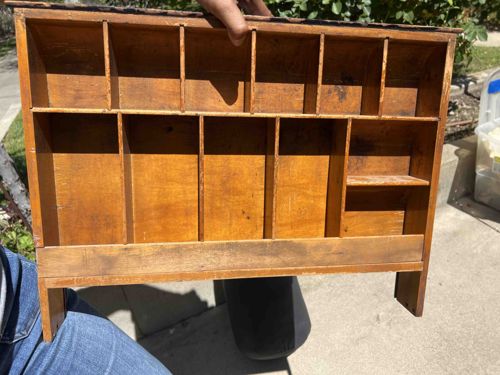
Vintage Wooden Desktop Mail Sorter or Office Cubby

Antique Office Furniture & Organizers

AI Estimated Value

·Not an official valuation·Verify before acting

$125 - $175

As of June 30, 2026

AI Item Analysis

·AI can make mistakes·Verify before acting
This is a rectangular wooden desktop organizer or mail sorter, likely dating from the early to mid-20th century. Constructed from solid wood with a warm, amber-toned shellac or varnish finish, the item features a series of asymmetrical compartments. The upper tier consists of six small vertical cubbies, while the lower tier contains four tall vertical slots and a specialized section on the far right divided by a horizontal shelf. The construction utilizes thin wooden slats or dividers joined by simple dado or groove joints. The piece stands on two integral side legs, elevate the main body, suggesting it was designed to sit atop a desk or be mounted within a larger secretary cabinet. Physically, the item shows significant signs of age and functional wear. There is prominent finish loss and scuffing along the edges and divider fronts. Dark stains, possibly from ink or long-term dust accumulation, are visible in the corners of several compartments. The top surface appears weathered with some peeling and surface grime. No manufacturer marks or stamps are visible in the provided image. The craftsmanship is utilitarian, aimed at office or home-organization efficiency rather than high-end ornamentation, fitting an Industrial or Americana style.

AI Appraisal Report

·AI can make mistakes·Verify before acting
I have conducted a visual inspection of this vintage wooden desktop mail sorter. The piece appears to be an authentic example of early-to-mid 20th-century office utility furniture, likely Americana in origin. The construction utilizes period-appropriate dado joinery and thin-slat dividers typical of mass-produced yet sturdy organizational tools from the 1920s through the 1940s. Its asymmetrical configuration—specifically the vertical slots paired with a singular horizontal shelf—suggests it was likely a custom insert for a roll-top desk or a clerk’s workstation rather than a standalone retail piece. The condition is 'fair' to 'good' for its age. I observe significant finish degradation, including 'alligatoring' of the shellac and localized ink staining. While these signs of wear confirm a long history of functional use, they do detract from the value for collectors seeking pristine 'mint' condition items. However, in the current 'Industrial Chic' and 'Farmhouse' markets, this authentic patina is often viewed as a desirable attribute. Comparables for unbranded oak or pine sorters in similar condition generally sell within the $100 to $200 range at regional auctions. Value is bolstered by the solid wood construction but limited by the lack of a prominent maker's mark (such as Globe Wernicke). Limitations: This appraisal is based solely on visual analysis. A physical inspection is required to confirm the wood species (likely oak or stained pine) and to check for structural stability or repair evidence. Definitive authentication would require checking the undersides for faint pencil marks or stencils and verifying the hardware/fasteners used in the joinery. No scientific testing was performed.

Get your items appraised

Instant estimates of your treasures with AI-powered appraisals

Browse More Appraisals