AI Appraisal Estimate

AI-generated estimates · not official valuations

From the user

What was submitted

Photo and notes provided by the user — not generated by AI

Submitted item photo
Submitted photo · July 21, 2026

User's notes

Possible sterling silver. Green stone

AI analysis below

AI appraisal

AI analysis & estimate

AI-Generated · Verify before acting

Everything below is generated by AI for informational purposes only. AI can make mistakes — the AI may misidentify items or misattribute them (artist, maker, brand, designer, origin, era). This is not an official valuation and should not be used for insurance, sale, tax, estate, legal, or lending purposes — or any decision requiring a certified appraisal. It is not an authoritative claim about any person, brand, or rights holder — do not share or rely on it as a factual statement about a third party. Always consult qualified professionals before making financial decisions.

Note

This analysis also relies on unverified notes provided by the user, which may be incomplete or inaccurate and could affect the result.

Read the full disclaimer

AI Identification

·Not independently authenticated·Verify before acting

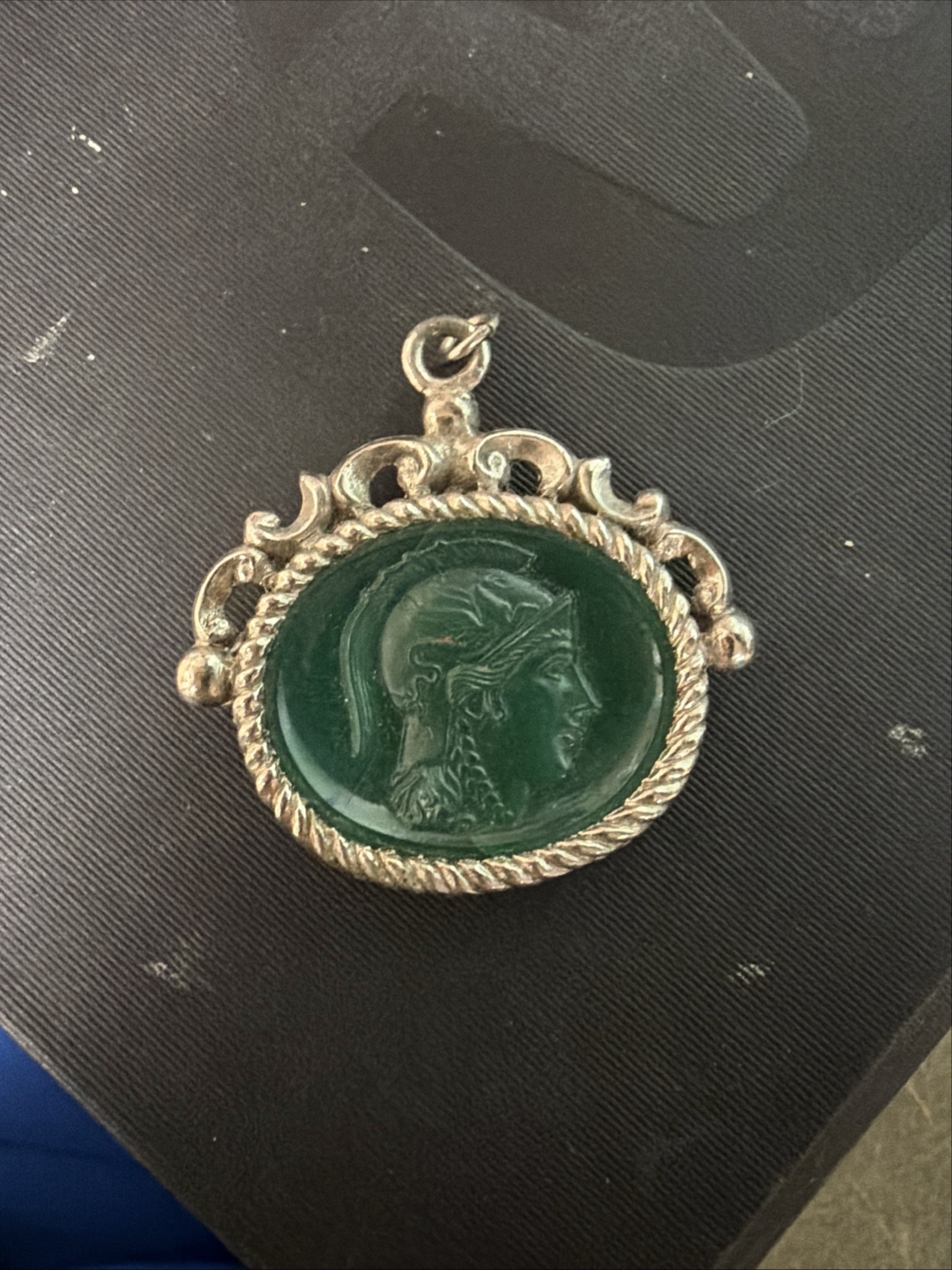
Intaglio-style pendant featuring a classical bust

Jewelry

AI Estimated Value

·Not an official valuation·Verify before acting

$45–$85

As of July 21, 2026

AI Item Analysis

·AI can make mistakes·Verify before acting
This item is an oval pendant, featuring a translucent green stone or glass insert with a carved or molded intaglio of a figure in profile wearing a classical Greek or Roman-style helmet. The user notes this is a "possible sterling silver" setting with a "green stone," though these materials remain unverified without physical testing or laboratory analysis. The metal setting consists of a rope-twist border surrounding the central oval, topped with a decorative scrollwork and ball-finial gallery that incorporates a small suspension loop. The metal displays a bright silver color with dark tarnish or oxidation visible in the recessed areas of the rope border and scrollwork, which is a feature consistent with aged silver-colored alloys or sterling silver. The translucent green insert is consistent in appearance with materials such as green chalcedony, chrysoprase, or molded glass. No maker's marks, hallmarks, or metal purity stamps are visible in the provided image. The design is stylistically consistent with late 19th-century or 20th-century Neo-Classical revival jewelry. The condition appears fair, with visible surface grime and oxidation on the metalwork and minor surface wear consistent with age and use.
AI Appraisal Report

·AI can make mistakes·Verify before acting
Based on my visual evaluation of the image provided, I have examined this intaglio-style pendant featuring a classical bust. I cannot verify the metal purity or the nature of the green insert from a photograph alone; however, the design is stylistically consistent with Neo-Classical revival jewelry from the late 19th or 20th century. While the owner identifies this as potentially sterling silver with a green stone, the absence of visible hallmarks means the metal could also be a silver-toned base alloy. Physical testing for silver content and gemological analysis of the green material—which may be chrysoprase, chalcedony, or molded glass—would be necessary to confirm the materials. The value is based on the assumption that the item is a vintage decorative piece of modest craftsmanship. If the metal is confirmed as sterling silver and the insert as a natural gemstone, the value would sit at the higher end of the $45–$85 range. However, if the piece is found to be a contemporary reproduction or made of non-precious materials like pot metal and glass, the value would likely drop to $10–$20. Current market demand for Neo-Classical style revival jewelry is stable, though items lacking recognized maker's marks or high-quality lapidary work are typically valued as decorative costume or 'bridge' jewelry. To provide a more robust valuation, I would require an in-person acid test of the metal and a refractive index test on the stone. The presence of surface oxidation and grime suggests age, but without provenance or verified marks, the piece must be treated as an unattributed decorative object.

Get your items appraised

Instant estimates of your treasures with AI-powered appraisals

Browse More Appraisals