AI estimate as of August 24, 2026 · verify with a professional before acting
AI-Generated · Verify before acting
Everything on this page is generated by AI for informational purposes only. AI can make mistakes — the AI may misidentify items or misattribute them (artist, maker, brand, designer, origin, era). This is not an official valuation and should not be used for insurance, sale, tax, estate, legal, or lending purposes — or any decision requiring a certified appraisal. It is not an authoritative claim about any person, brand, or rights holder — do not share or rely on it as a factual statement about a third party. Always consult qualified professionals before making financial decisions.
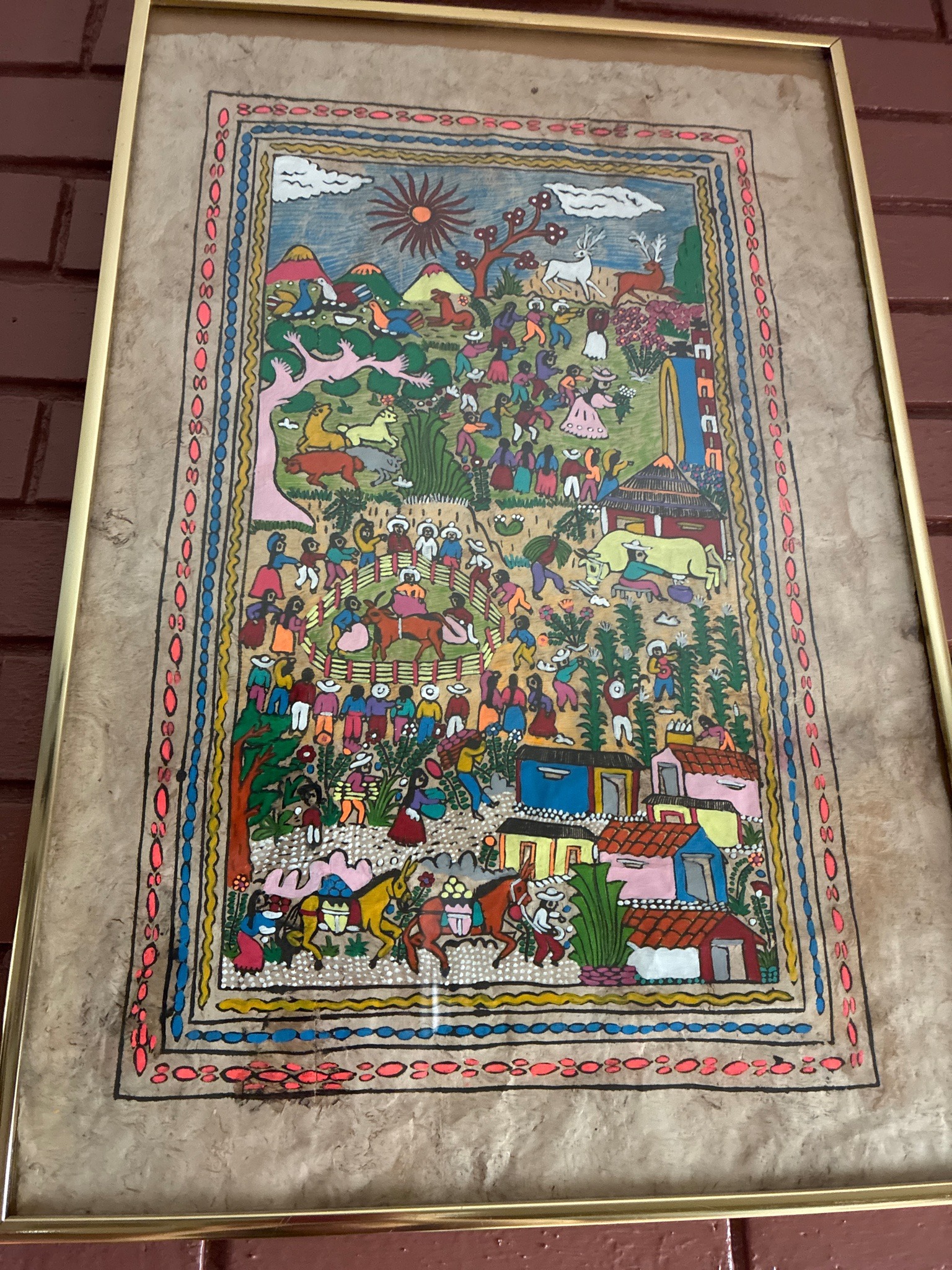
This is a brightly colored, vertical folk art painting rendered on a textured, fibrous sheet of handmade amate bark paper, framed in a simple metallic gold-tone frame behind glass. The artwork features a complex, narrative pastoral scene densely populated with numerous human figures, animals, and rural dwellings. The color palette is vibrant and varied, utilizing rich blues, pinks, reds, greens, and yellows against the earthy brown and tan background of the natural bark paper. The composition is divided into multiple registers or tiers showing daily life, agricultural activities, festive gatherings with people dancing in a circle, and wildlife such as deer and birds roaming through a mountainous landscape with a stylized sun and clouds at the top. The entire central scene is enclosed within a decorative multi-layered border consisting of repeating geometric patterns, dots, and wave motifs. There is no visible artist signature or maker's mark within the composition shown. The style is visually consistent with traditional Mexican Otomi amate bark painting from the Guerrero or Puebla regions, characterized by flat perspectives, bold outlines, and exuberant polychrome detailing depicting communal village life. The overall condition appears well-preserved under glass, though the underlying bark paper naturally displays inherent fibrous irregularities, uneven edges, and mottled color variations typical of this medium. The identification is based purely on visual characteristics of medium, style, and subject matter without any verified provenance or accompanying documentation.
AI Appraisal Report
Based on the provided description and visual analysis, I observe a vibrant folk art painting rendered on what appears to be traditional Mexican amate bark paper. The artwork features a highly detailed, densely populated pastoral scene characteristic of Otomi indigenous artisan communities, likely from the Guerrero or Puebla regions. The piece is unsigned, which is common for such communal or export-oriented folk art. Based on what I can see, the complex composition and vivid polychrome palette add to its decorative appeal. However, I cannot verify the exact age, the specific physical texture of the paper, or the paint application from a photograph alone. The market for amate bark paintings is primarily decorative, with abundant supply generally keeping prices accessible. Framed examples of good quality and intricate detail typically sell in the secondary market within this estimated range. The basis for this estimate assumes the piece is a hand-painted original work on natural amate paper. To properly assess the piece, an in-person physical inspection would be required to examine the fibrous qualities of the bark and confirm it is hand-painted. If physical examination revealed the piece to be a modern printed reproduction rather than a hand-crafted painting, the value would be strictly nominal. The frame also contributes a small amount to the overall decorative value, assuming it remains in good display condition.