AI Appraisal Estimate

AI-generated estimates · not official valuations

From the user

What was submitted

Photo and notes provided by the user — not generated by AI

Submitted item photo
Submitted photo · May 27, 2026

User's notes

No additional notes provided.

AI analysis below

AI appraisal

AI analysis & estimate

AI-Generated · Verify before acting

Everything below is generated by AI for informational purposes only. AI can make mistakes — the AI may misidentify items or misattribute them (artist, maker, brand, designer, origin, era). This is not an official valuation and should not be used for insurance, sale, tax, estate, legal, or lending purposes — or any decision requiring a certified appraisal. It is not an authoritative claim about any person, brand, or rights holder — do not share or rely on it as a factual statement about a third party. Always consult qualified professionals before making financial decisions.

Read the full disclaimer

AI Identification

·Not independently authenticated·Verify before acting

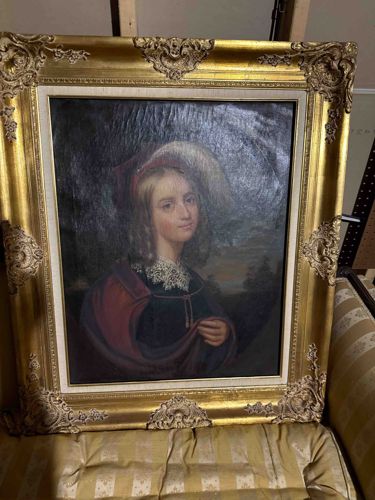
Oil Portrait of a Young Nobleman in Late 17th-Century Style

Fine Art - Paintings

AI Estimated Value

·Not an official valuation·Verify before acting

$400 - $800

As of May 27, 2026

AI Item Analysis

·AI can make mistakes·Verify before acting
This item is a large oil on canvas portrait depicting a youthful figure, likely a young nobleman, executed in the Grand Manner style. The figure is shown from the chest up, positioned slightly angled with a direct gaze toward the viewer. He wears a dark doublet with an intricate white lace falling band collar and a crimson mantel draped over his shoulder. His head is adorned with a soft hat featuring a prominent, wispy white ostrich plume. The style of dress and composition suggest an inspiration from 17th-century European portraiture, specifically following the tradition of Anthony van Dyck or Sir Peter Lely. The canvas is housed in a substantial, ornate gilded wood and gesso frame. The frame features decorative corner and center cartouches with floral and acanthus leaf scrollwork, finished with a linen-covered inner liner. Regarding condition, the painting exhibits significant age-related wear including noticeable craquelure across the entire surface and some visible surface dirt or yellowing of the varnish. The canvas appears somewhat slack within the frame, showing faint stretcher bar marks. The frame itself shows minor losses to the gilded finish and small chips in the plaster moldings, typical of a mid-to-late 19th-century or early 20th-century revival piece. No artist signature is clearly visible in the provided image.

AI Appraisal Report

·AI can make mistakes·Verify before acting
Upon examining this oil portrait, it presents as a decorative revival piece rather than a period 17th-century work. While the composition mimics the Grand Manner style of Van Dyck or Lely—specifically in the draping of the crimson mantle and the lace falling band—the execution lacks the delicate subtleties of the Old Masters. The brushwork appears somewhat flatter, and the psychological depth typical of the period is missing, suggesting this is a mid-19th to early 20th-century copy or pastiche, likely created during the Victorian fascination with Cavalier imagery. The condition significantly impacts the value. The heavy craquelure is consistent with age, but the visible stretcher bar marks indicate the canvas has lost tension and requires re-stretching. The yellowing varnish obscures the original palette, necessitating professional cleaning. The frame is a substantial asset; likely mid-19th century, constructed of gilded wood and gesso. Despite minor losses to the scrollwork, the frame alone carries intrinsic value, perhaps $150–$300 of the total estimate. The market for unsigned decorative portraits of this nature has softened, with buyers prioritizing decorative impact over historical attribution unless a specific hand can be identified. Without a signature or provenance linking this to a known studio, it is appraised primarily as a decorative antique. While I cannot definitively rule out an earlier origin without UV testing for overpainting or pigment analysis, the visual evidence strongly points to a later homage. A higher valuation would require a confirmed attribution or discovery of a significant signature beneath the accumulated grime.

Get your items appraised

Instant estimates of your treasures with AI-powered appraisals

Browse More Appraisals