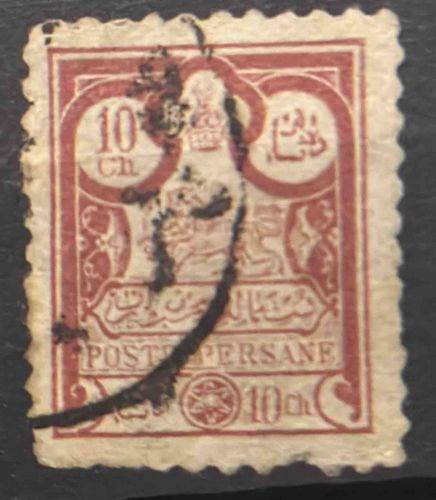
1909 Iran (Persia) 10 Chahi Postes Persane Stamp
This is a used postage stamp from Iran, dating back to the Qajar Dynasty era around 1909. The stamp features the denomination of '10 Ch' (10 Chahi) printed in a deep rose or carmine-red ink on cream-colored paper. The central motif depicts the Lion and Sun (Shir-o-Khorshid), the historical national emblem of Persia, surrounded by ornate Islamic geometric patterns and Arabic calligraphy. The bottom of the stamp features the French inscription 'POSTE PERSANE', reflecting the international postal standards of the time. The stamp identifies itself through both Western numerals and Perso-Arabic script. The physical condition shows signs of postal use, most notably a heavy, black circular date stamp (CDS) cancel that obscures a significant portion of the central design. The perforation edges are somewhat uneven, with some blunted teeth, particularly on the left side. The paper displays age-appropriate toning (patina) and minor surface wear. The printing quality is characteristic of the early 20th-century lithographic or typo-printing methods used by the Enschede or similar European firms for Persian contracts, showcasing intricate line work despite the heavy cancelation.
AI-Generated Appraisal Disclaimer
Estimated Value
$5.00 - $12.00
Basic Information
Category
Philately / Postage Stamps
Appraised On
February 1, 2026
Estimated Value
$5.00 - $12.00
Item Description
This is a used postage stamp from Iran, dating back to the Qajar Dynasty era around 1909. The stamp features the denomination of '10 Ch' (10 Chahi) printed in a deep rose or carmine-red ink on cream-colored paper. The central motif depicts the Lion and Sun (Shir-o-Khorshid), the historical national emblem of Persia, surrounded by ornate Islamic geometric patterns and Arabic calligraphy. The bottom of the stamp features the French inscription 'POSTE PERSANE', reflecting the international postal standards of the time. The stamp identifies itself through both Western numerals and Perso-Arabic script. The physical condition shows signs of postal use, most notably a heavy, black circular date stamp (CDS) cancel that obscures a significant portion of the central design. The perforation edges are somewhat uneven, with some blunted teeth, particularly on the left side. The paper displays age-appropriate toning (patina) and minor surface wear. The printing quality is characteristic of the early 20th-century lithographic or typo-printing methods used by the Enschede or similar European firms for Persian contracts, showcasing intricate line work despite the heavy cancelation.
Related Tags
Get Your Items Appraised
Instant estimates of your treasures with AI-powered instant appraisals