AI estimate as of October 25, 2025 · verify with a professional before acting
AI-Generated · Verify before acting
Everything on this page is generated by AI for informational purposes only. AI can make mistakes — the AI may misidentify items or misattribute them (artist, maker, brand, designer, origin, era). This is not an official valuation and should not be used for insurance, sale, tax, estate, legal, or lending purposes — or any decision requiring a certified appraisal. It is not an authoritative claim about any person, brand, or rights holder — do not share or rely on it as a factual statement about a third party. Always consult qualified professionals before making financial decisions.
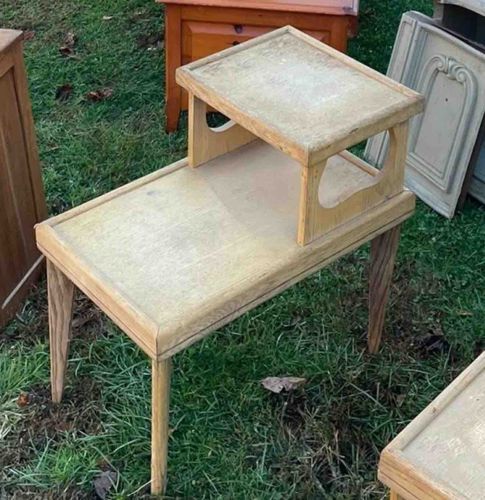
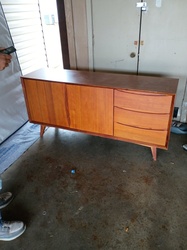
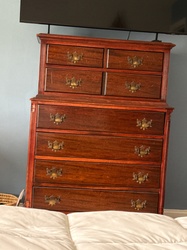
This is a Mid-Century Modern style step table, characterized by its two-tiered design and light wood finish. The table features two rectangular surface areas: a larger, lower surface and a smaller, elevated upper surface. The surfaces appear to be constructed from a light-colored wood, possibly oak or a similar hardwood, with a visible wood grain, though the finish is faded and suggests a natural or lightly stained treatment. The edges of both table surfaces are slightly beveled or rounded, contributing to a softer aesthetic. The elevated top is supported by two curved, cutout side panels, which are integrated into the lower surface, creating an open storage or display space underneath the top tier. The table stands on four splayed, tapered legs, a quintessential design element of Mid-Century Modern furniture, indicating an estimated age between the 1950s and 1970s.
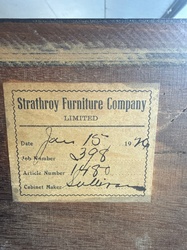
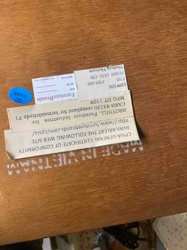
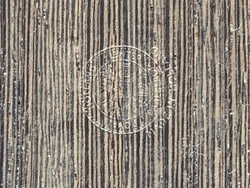
Physically, the table exhibits significant wear and tear. The light finish on both top surfaces is severely discolored and appears to have water rings, stains, and general grime accumulated over time, indicating a lack of maintenance and exposure to elements. The wood itself shows signs of age, including potential surface scratches, fading, and a dull patina. The construction appears to be solid, with the legs securely attached, though without closer inspection, it's difficult to determine the specific joinery. There are no visible maker's marks or signatures in the provided images. The overall condition suggests that the piece has been stored outdoors or in a non-climate-controlled environment for an extended period, requiring substantial restoration to revive its original appearance and structural integrity. The craftsmanship appears utilitarian but sturdy for its original function as a side or end table.
AI Appraisal Report
Based on my visual examination of the provided image, this Mid-Century Modern step table, with its two-tiered design and splayed, tapered legs, is consistent with furniture produced between the 1950s and 1970s. The light wood finish and overall form are characteristic of the era. The construction appears utilitarian but sturdy, lacking any distinguishing decorative elements or highly refined craftsmanship that might indicate a high-end designer piece. Authenticity as a period Mid-Century Modern item seems plausible based on style alone; however, without maker's marks or provenance, definitive authentication beyond stylistic attributes is not possible from images. An in-person inspection would be needed to check joinery, wood species, and any hidden markings.
Condition is the primary factor significantly impacting its current value. The table exhibits severe signs of neglect: extensive discoloration, water rings, and grime on both top surfaces. This indicates a history of poor maintenance or unsuitable storage, likely outdoors or in a non-climate-controlled environment. While the structure seems intact, the finish is compromised to the point where significant restoration, including sanding and refinishing, would be required to make it presentable.
In the current market, there is demand for Mid-Century Modern pieces, but condition heavily dictates value. Similar tables in excellent original condition or professionally restored can fetch $200-$500, especially from a known designer. However, given its heavily distressed state, this piece would be considered a restoration project. As such, its value is significantly depressed. Comparables for items in this condition typically fall into a very low range, reflecting the cost and effort of restoration. Without any identifying markings for a desirable manufacturer or designer, its value is solely based on its project potential. I would appraise this Mid-Century Modern step table in its current condition at an estimated value of $50-$100.