These notes were written by the person who submitted this item. Appraiser.AI has not verified them, and the AI's identification and estimate may rely on them.
AI Estimated Value
Not an official valuation
$35-65
AI estimate as of September 18, 2025 · verify with a professional before acting
AI-Generated · Verify before acting
Everything on this page is generated by AI for informational purposes only. AI can make mistakes — the AI may misidentify items or misattribute them (artist, maker, brand, designer, origin, era). This is not an official valuation and should not be used for insurance, sale, tax, estate, legal, or lending purposes — or any decision requiring a certified appraisal. It is not an authoritative claim about any person, brand, or rights holder — do not share or rely on it as a factual statement about a third party. Always consult qualified professionals before making financial decisions.
This analysis also relies on unverified notes provided by the user, which may be incomplete or inaccurate and could affect the result.
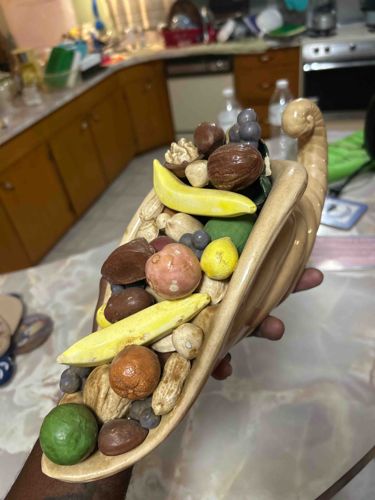
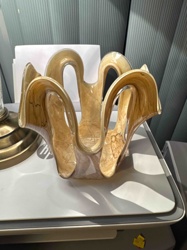
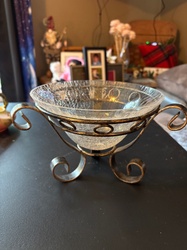
This item is a vintage ceramic cornucopia, or horn of plenty, overflowing with an assortment of realistically rendered faux fruit and nuts. The cornucopia itself is a light beige or cream-colored ceramic, featuring a smooth, glazed finish. Its shape is true to a cornucopia, wide at the mouth and tapering to a curled, scrolled tip at the narrower end. The ceramic appears to be in good condition with no immediately visible chips, cracks, or significant wear, suggesting careful handling or display over time. Inside, the vessel is filled with a variety of sculpted and painted fruit and nut pieces, likely made from plaster, resin, or another dense material. The individual pieces include what appear to be bananas, grapes (both dark purple and lighter green/blue), various types of nuts in their shells (such as walnuts, pecans, and what look like peanuts), and other small fruits like an apple or citrus fruit, and possibly even a potato or guava. The colors of the faux produce are vivid and varied, ranging from bright yellow bananas and green apples to deep browns of walnuts and reddish-browns of other nuts. Some pieces, like the bananas, show a subtle sheen, while others, like the nuts, have a more matte or textured finish, aiming for realism. The craftsmanship of the individual faux food items varies; some depict fine details like the texture of nut shells or grape skins, while others are more generalized. The overall effect is decorative and abundant, characteristic of mid-20th-century home decor. This piece likely dates from the mid-century to late 20th century, given its style and the prevalent use of such decorative items during that period. No specific manufacturer's marks or signatures are visible in the provided image.
AI Appraisal Report
Upon visual examination of the provided images, this decorative ceramic cornucopia filled with faux fruit and nuts appears to be a well-preserved example of mid-to-late 20th-century home decor. The ceramic horn of plenty, finished in a cream-colored glaze, shows no visible chips, cracks, or crazing, which is a positive indicator of its condition. The faux fruit and nuts are vibrant and largely intact, consistent with pieces from this era, which were often made from plaster or resin. Based on the style, it is likely a mass-produced decorative item from the 1960s to 1980s. The market for such items is generally stable but modest. Similar unmarked ceramic cornucopia arrangements are common and readily available on secondary markets like Etsy and eBay. Comparable pieces in good condition typically sell in the $35 to $65 range. The value is primarily driven by its decorative appeal and nostalgic charm, rather than rarity or manufacturer prestige, as no maker's mark is visible. The primary factor limiting its value is its status as a common, mass-market decor piece. A higher value would require evidence of a desirable manufacturer, such as Haeger or McCoy, or an exceptional level of artistic quality. This appraisal is based solely on visual inspection of images. A full authentication would require in-person examination to locate any faint or hidden maker's marks and to confirm the materials used. Without physical inspection, I cannot rule out the possibility of it being a reproduction or having repairs that are not visible in the photos.