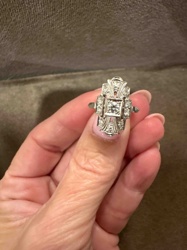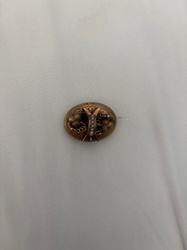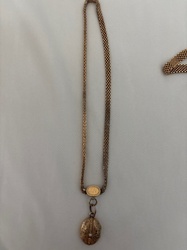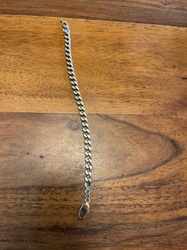
Artisanal Wire-Wrapped Brass Tussie-Mussie Pin
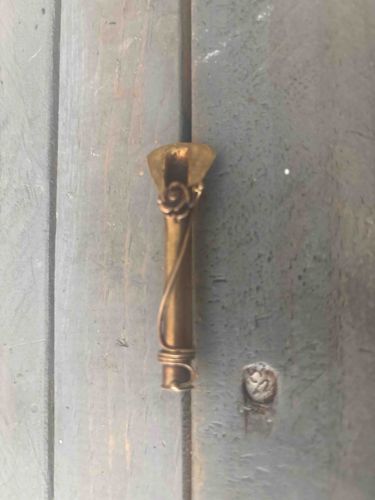
This item is a decorative lapel pin or small posy holder, commonly known as a tussie-mussie, designed to hold small floral sprigs. It features a conical brass base with a slight flare at the top, measuring approximately two to three inches in length. The construction is characterized by a distinct wire-wrapping technique using a lighter-colored metal wire, possibly sterling silver or silver-plated copper, which spirals around the main body. A notable artistic feature is the wire-formed floral rosette or scrollwork near the upper rim, which serves as both decoration and potentially as a structural element to hold stems in place. The metal exhibits a significant aged patina with dark oxidation in recessed areas, suggesting a mid-to-late 20th-century artisanal origin rather than a modern mass-produced piece. The craftsmanship is folk-art in style, displaying manual twisting and winding of wires. There are no visible maker's marks or stamps in the current view. The condition appears fair, showing consistent surface wear, minor tarnishing, and some slight distortion in the wire wrapping consistent with age and use.
AI-Generated Appraisal Disclaimer
Estimated Value
$45.00-$75.00
Basic Information
Category
Antique and Vintage Jewelry
Appraised On
February 20, 2026
Estimated Value
$45.00-$75.00
Item Description
This item is a decorative lapel pin or small posy holder, commonly known as a tussie-mussie, designed to hold small floral sprigs. It features a conical brass base with a slight flare at the top, measuring approximately two to three inches in length. The construction is characterized by a distinct wire-wrapping technique using a lighter-colored metal wire, possibly sterling silver or silver-plated copper, which spirals around the main body. A notable artistic feature is the wire-formed floral rosette or scrollwork near the upper rim, which serves as both decoration and potentially as a structural element to hold stems in place. The metal exhibits a significant aged patina with dark oxidation in recessed areas, suggesting a mid-to-late 20th-century artisanal origin rather than a modern mass-produced piece. The craftsmanship is folk-art in style, displaying manual twisting and winding of wires. There are no visible maker's marks or stamps in the current view. The condition appears fair, showing consistent surface wear, minor tarnishing, and some slight distortion in the wire wrapping consistent with age and use.
Related Tags
Get Your Items Appraised
Instant estimates of your treasures with AI-powered instant appraisals