AI estimate as of October 8, 2025 · verify with a professional before acting
AI-Generated · Verify before acting
Everything on this page is generated by AI for informational purposes only. AI can make mistakes — the AI may misidentify items or misattribute them (artist, maker, brand, designer, origin, era). This is not an official valuation and should not be used for insurance, sale, tax, estate, legal, or lending purposes — or any decision requiring a certified appraisal. It is not an authoritative claim about any person, brand, or rights holder — do not share or rely on it as a factual statement about a third party. Always consult qualified professionals before making financial decisions.
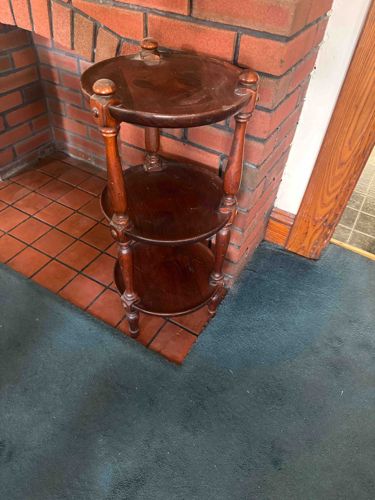
This item is a three-tiered wooden stand, likely functioning as a dumbwaiter or cake stand. It features three circular shelves, each progressively smaller from bottom to top, suggesting a traditional design of such furniture. The wood appears to be a dark-stained hardwood, possibly mahogany or a similar rich-toned wood, exhibiting a warm auburn to dark brown color with a visible grain beneath a glossy finish. The construction is characterized by turned wooden spindles supporting each tier, with four spindles per tier, culminating in decorative finials at the top. The spindles themselves exhibit classic Victorian or Edwardian turning patterns, featuring bulbous and tapered sections, indicating a period craftsmanship. The edges of the circular shelves are subtly raised or molded, adding a finished detail. Visible condition issues include areas of wear on the top surface, suggesting frequent use, and some surface scratches or abrasions consistent with its age. There might be some dust accumulation and minor discoloration in crevices, typical of an aged piece of furniture. No obvious cracks, repairs, or significant damage are discernible from the image. The overall style points to a late 19th to early 20th-century aesthetic, common for functional yet decorative pieces designed for serving or display in parlors and dining rooms. The quality of craftsmanship appears to be good, with smoothly turned components and a generally sturdy construction, though without closer inspection, details on joinery are speculative. The item's design is elegant and functional, indicative of a time when furniture was both utilitarian and aesthetically pleasing.
AI Appraisal Report
Upon examining the provided image of this three-tiered wooden stand, I assess it to be a Victorian/Edwardian period dumbwaiter or cake stand. The dark-stained hardwood, likely mahogany, exhibits a warm hue consistent with furniture of that era. The turned spindles, with their characteristic bulbous and tapered sections, are indicative of late 19th to early 20th-century craftsmanship. The graduated circular shelves and decorative finials further support this dating.
From a condition standpoint, I observe typical wear commensurate with age and use. There are visible surface scratches and abrasions on the top tiers, and some dust/discoloration in crevices, all expected for a piece over a century old. Importantly, I detect no obvious cracks, repairs, or significant structural damage from the image. The overall impression is one of good, sturdy construction.
The market for such functional yet decorative antique pieces remains steady, though not exceptionally high. While these stands are charming, they are not exceedingly rare, and numerous similar examples exist. Comparables in good, unrestored condition typically fetch values in the mid-hundreds at auction or through antique dealers. Factors impacting value include the wood species (mahogany or rosewood would command more than oak), the intricacy of the turning, and the overall state of preservation.
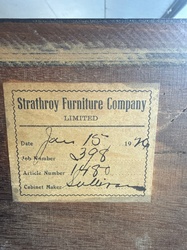
It is crucial to note that this authenticity verification is based solely on visual examination of the image. A definitive assessment of the wood type, precise age, and absence of repairs would require a physical inspection. In-person examination would allow for tactile assessment of joinery, scrutiny under varying light conditions for repairs, and potentially wood grain analysis. Provenance documentation, though rarely available for such utilitarian items, would further solidify authenticity. Scientific testing, such as dendrochronology for age, is generally not warranted for items in this value range. The current appraisal reflects its visual attributes and market expectations for similar pieces.