AI Appraisal Estimate

AI-generated estimates · not official valuations

From the user

What was submitted

Photo and notes provided by the user — not generated by AI

Submitted item photo
Submitted photo · June 4, 2026

User's notes

No additional notes provided.

AI analysis below

AI appraisal

AI analysis & estimate

AI-Generated · Verify before acting

Everything below is generated by AI for informational purposes only. AI can make mistakes — the AI may misidentify items or misattribute them (artist, maker, brand, designer, origin, era). This is not an official valuation and should not be used for insurance, sale, tax, estate, legal, or lending purposes — or any decision requiring a certified appraisal. It is not an authoritative claim about any person, brand, or rights holder — do not share or rely on it as a factual statement about a third party. Always consult qualified professionals before making financial decisions.

Read the full disclaimer

AI Identification

·Not independently authenticated·Verify before acting

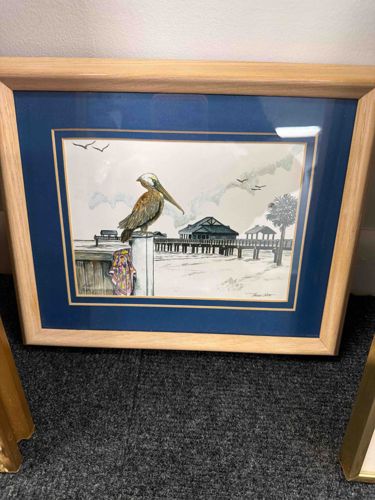
Coastal Pelican and Pier Framed Watercolor Print

Wall Art & Prints

AI Estimated Value

·Not an official valuation·Verify before acting

$45 - $75

As of June 4, 2026

AI Item Analysis

·AI can make mistakes·Verify before acting
This rectangular landscape-oriented artwork features a coastal scene centered around a brown pelican perched atop a weathered wooden pylon. In the background, a long wooden fishing pier extends into the sea, leads to a gabled pavilion structure, and is flanked by a single palm tree on the right shore. Tiny silhouettes of gulls populate the sky, which contains soft, cloud-like wash details. The piece is likely a watercolor or a high-quality lithographic print of a watercolor original, evidenced by the translucent layering of colors and fine pen-and-ink linework for detail. The palette is dominated by muted earth tones, browns, and grays, set against a pale off-white background. A signature, which appears to be 'Terrie See', is visible in the bottom right corner of the artwork. The custom framing includes a double mat: a thick outer navy blue mat with a thin gold-toned inner reveal, providing depth and contrast. The frame itself is a light, natural-finish oak or pine wood with a rounded profile. The condition appears fair to good; while the artwork seems protected behind glass, there is slight visible waviness to the paper (cockling), and the wooden frame shows minor scuff marks consistent with age and previous handling. This style is typical of late 20th-century coastal decor, approximately circa 1980s-1990s.
AI Appraisal Report

·AI can make mistakes·Verify before acting
Based on my visual inspection of this coastal-themed landscape, the piece is a decorative lithographic print of an original watercolor by Terrie See, likely dating from the 1980s to early 1990s. The artwork exhibits characteristic mass-market appeal of late 20th-century beach house decor. The aesthetic is defined by muted earth tones and a double-matting technique common for the era. The condition is rated as fair; while the pigments appear stable, I note significant 'cockling' or waviness in the paper substrate, suggesting historical exposure to humidity or improper mounting. The wooden frame shows minor abrasions commensurate with its age. The market for this specific artist and style is currently saturated. Comparable works frequently appear in estate sales and secondary retail markets with high frequency and low scarcity. The primary value resides in the frame and decorative utility rather than investment-grade fine art collectability. Demand for 'Coastal Grandmother' or vintage maritime decor provides some value stability, but the production method (print vs. original) significantly caps the price ceiling. Limitations: My assessment is based solely on digital imagery. A physical examination is required to definitively distinguish between a high-quality lithograph and an original watercolor. I would need to observe the paper under 10x magnification to check for a mechanical dot matrix versus a continuous wash of pigment. Furthermore, inspecting the backing would reveal acidic migration or potential foxing not visible through the glass. Provenance or a gallery receipt would be necessary to increase professional confidence in the item's origin.

Get your items appraised

Instant estimates of your treasures with AI-powered appraisals

Browse More Appraisals