AI estimate as of August 27, 2025 · verify with a professional before acting
AI-Generated · Verify before acting
Everything on this page is generated by AI for informational purposes only. AI can make mistakes — the AI may misidentify items or misattribute them (artist, maker, brand, designer, origin, era). This is not an official valuation and should not be used for insurance, sale, tax, estate, legal, or lending purposes — or any decision requiring a certified appraisal. It is not an authoritative claim about any person, brand, or rights holder — do not share or rely on it as a factual statement about a third party. Always consult qualified professionals before making financial decisions.
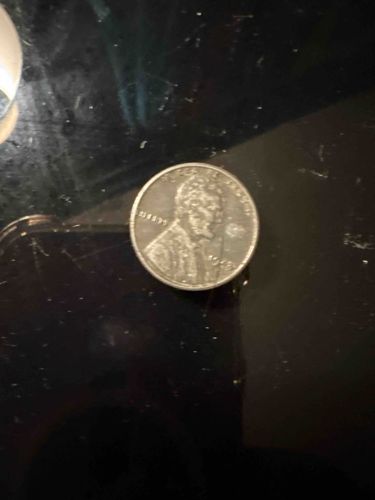
This item is a 1943 Lincoln steel cent, a particular variety of the one-cent coin issued by the United States Mint. The coin is circular with a reeded rim and appears to be made of steel due to its silvery-gray metallic color, distinct from the typical copper composition of most Lincoln cents. The obverse side, visible in the image, features the right-facing profile of Abraham Lincoln. The word "LIBERTY" is visible to his left, and the motto "IN GOD WE TRUST" is inscribed above his head along the top rim. The date "1943" is clearly legible below Lincoln's bust. While specific details about the mint mark are not discernible from this image, it's typically located below the date. The coin exhibits signs of moderate wear consistent with circulation, particularly on the higher points of Lincoln's portrait and the surrounding inscriptions, suggesting some loss of original luster. There appear to be minor scratches and possibly some surface discoloration or oxidation indicative of its steel composition and age. The craftsmanship is typical of U.S. Mint coinage from this period, showcasing a defined portrait and clear, albeit worn, lettering. This coin is notable for its steel composition, a wartime measure taken during World War II due to copper shortages, making it a unique piece within the Lincoln cent series. Its age, dating back to 1943, positions it as a mid-20th-century numismatic item.
AI Appraisal Report
Upon my virtual examination of the provided image, I can confirm this is indeed a 1943 Lincoln steel cent, a distinctive issue due to its wartime composition. The visible obverse showcases Abraham Lincoln's profile, the date '1943', and the characteristic 'LIBERTY' and 'IN GOD WE TRUST' inscriptions. Its silvery-gray appearance strongly suggests the steel composition.
In terms of condition, the coin appears to be in Good (G) to Very Good (VG) circulated condition. I observe moderate wear on Lincoln's higher points and the lettering, consistent with a coin that has been in circulation for decades. Minor surface scratches and what appears to be some oxidation or discoloration are also visible, which is common for steel cents and affects eye appeal but not necessarily authenticity. The reeded rim is consistent with U.S. Mint coinage.
From a market perspective, 1943 steel cents are very common due to their high mintage numbers across all three mints (Philadelphia, Denver, San Francisco). Demand is generally steady among collectors, particularly those assembling Lincoln cent sets. However, their commonality means individual steel cents in this circulated condition typically command a modest premium over face value. Rarity is not a significant factor for this particular issue. The primary value drivers for steel cents are their unique composition and historical context, rather than scarcity. Factors significantly impacting value include the presence of a mint mark (though not discernible here), overall grade, absence of significant corrosion or damage, and particularly strong eye appeal.
It is crucial to note that while the visual evidence strongly suggests authenticity, a definitive authentication would require in-person examination. Physical inspection would allow me to verify the weight, diameter, and magnetic properties (steel cents are magnetic), which are key indicators. Additionally, a detailed microscopic examination would reveal finer details of wear, potential alterations, or environmental damage not fully visible in the image. Provenance documentation, though rarely available for common circulated coins, could also contribute to authentication.