AI Appraisal Estimate

AI-generated estimates · not official valuations

From the user

What was submitted

Photo and notes provided by the user — not generated by AI

Submitted item photo
Submitted photo · June 30, 2026

User's notes

Category: Art

AI analysis below

AI appraisal

AI analysis & estimate

AI-Generated · Verify before acting

Everything below is generated by AI for informational purposes only. AI can make mistakes — the AI may misidentify items or misattribute them (artist, maker, brand, designer, origin, era). This is not an official valuation and should not be used for insurance, sale, tax, estate, legal, or lending purposes — or any decision requiring a certified appraisal. It is not an authoritative claim about any person, brand, or rights holder — do not share or rely on it as a factual statement about a third party. Always consult qualified professionals before making financial decisions.

Note

This analysis also relies on unverified notes provided by the user, which may be incomplete or inaccurate and could affect the result.

Read the full disclaimer

AI Identification

·Not independently authenticated·Verify before acting

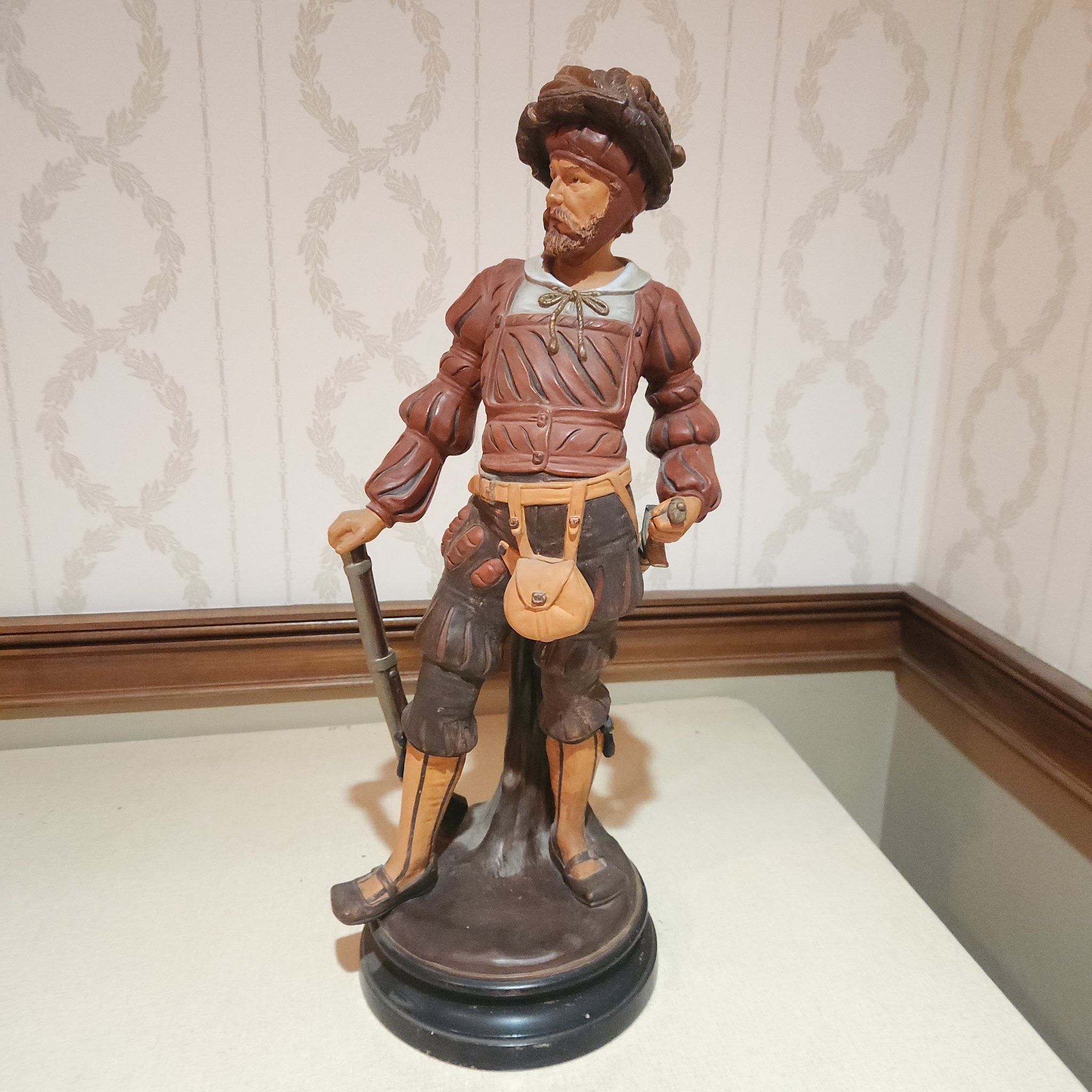
Polychrome Resin Figurine of a Renaissance Landsknecht or Hunter

Art

AI Estimated Value

·Not an official valuation·Verify before acting

$45.00 - $75.00

As of June 30, 2026

AI Item Analysis

·AI can make mistakes·Verify before acting
This is a detailed polychrome figurine depicting a male figure dressed in stylized Renaissance-era attire, reminiscent of a German Landsknecht or a high-ranking hunter. The figure is constructed from a cast resin or cold-cast material, finished with a matte, hand-painted surface. He wears a dark brown Renaissance-style wide-brimmed hat, a rust-colored quilted doublet with slashed sleeves, and dark brown trunk hose over tan-colored stockings or gaiters. A notable feature is the small tan pouch suspended from a belt at the waist. He holds a slender staff or rifle-like object in his right hand and rests his left hand near his hip. The figure stands atop a textured base molded to look like a tree stump, which is mounted on a circular black tiered wooden or composite plinth. The craftsmanship shows high attention to detail in the textures of the fabric, the facial hair, and the accessories. The color palette is earthy, dominated by browns, rust, and tans with a white collar accent. The condition appears fair to good, with some visible dust accumulation in the crevices and possible minor paint loss along the edges of the hat and base, consistent with a decorative piece from the late 20th century. No visible maker marks are present from this angle, but the style suggests a mass-produced collectible art piece.

AI Appraisal Report

·AI can make mistakes·Verify before acting
I have examined the polychrome resin figurine depicting a Renaissance Landsknecht. Based on the cast resin construction and hand-painted matte finish, this piece is a decorative collectible, likely produced in the late 20th century. My visual assessment confirms the detail in the slashed sleeves and trunk hose is consistent with mass-produced historical revival figurines often sold in specialty gift shops or historical sites. The condition is fair to good, though visible dust and minor paint abrasions on the hat and base slightly detract from its secondary market value. The market for non-articulated resin historical figures is currently stable but saturated with similar decorative imports. Comparable sales for unsigned resin figurines of this scale typically range between $40 and $80. The lack of a maker's mark or artist signature confirms its status as a commercial decor item rather than a unique work of fine art or a significant limited edition. Rarity is low, as these molds were produced in volume. The most significant factor impacting value is the material; being cast resin rather than hand-carved wood or bronze limits its investment potential. Limitations: This appraisal is based solely on digital images. Without a physical inspection, I cannot verify the structural integrity of the resin or detect internal repairs. A full authentication would require examining the underside of the plinth for manufacturer stamps and checking the weight to confirm the material is not a heavier composite or cold-cast bronze. Provenance documentation or a purchase receipt would clarify the specific manufacturer, which could marginally influence the price if linked to a known studio.

Get your items appraised

Instant estimates of your treasures with AI-powered appraisals

Browse More Appraisals