AI Appraisal Estimate

AI-generated estimates · not official valuations

From the user

What was submitted

Photo and notes provided by the user — not generated by AI

Submitted item photo
Submitted photo · May 18, 2026

User's notes

No additional notes provided.

AI analysis below

AI appraisal

AI analysis & estimate

AI-Generated · Verify before acting

Everything below is generated by AI for informational purposes only. AI can make mistakes — the AI may misidentify items or misattribute them (artist, maker, brand, designer, origin, era). This is not an official valuation and should not be used for insurance, sale, tax, estate, legal, or lending purposes — or any decision requiring a certified appraisal. It is not an authoritative claim about any person, brand, or rights holder — do not share or rely on it as a factual statement about a third party. Always consult qualified professionals before making financial decisions.

Read the full disclaimer

AI Identification

·Not independently authenticated·Verify before acting

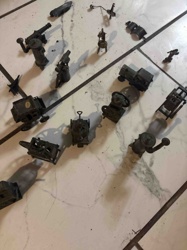
Lot of Vintage Cast Metal Roman Gladiator and Soldier Miniatures

Antique and Vintage Toys / Collectible Miniatures

AI Estimated Value

·Not an official valuation·Verify before acting

$45.00 - $75.00

As of May 18, 2026

AI Item Analysis

·AI can make mistakes·Verify before acting
This is a collection of approximately 25 to 30 cast metal miniature figurines depicting ancient Roman soldiers and gladiators. The figures appear to be approximately 25mm to 28mm in scale, a standard size for tabletop gaming and historical dioramas. Each piece is constructed from a cast pewter or lead alloy, finished with a monochromatic metallic bronze or copper-tone patina that suggests a vintage production era, likely mid-to-late 20th century. The figures are captured in various dynamic combat poses, including some with raised gladius swords, round parma shields, and crested galeo helmets characteristic of the Roman period. They are mounted on flat, integral rectangular or oval metal bases, some of which show a greyish oxidation consistent with aged lead or white metal. The craftsmanship reveals moderate detail in the musculature and armor, though the molding is somewhat soft, typical of mass-produced gaming or souvenir sets. There is visible wear across the lot, including minor bending of thinner limbs or weapons and some surface rubbing that exposes the lighter base metal beneath the bronze finish. No specific maker's marks are visible from this distance, but they are stylistically reminiscent of manufacturers like Britains or similar hobby brands.
AI Appraisal Report

·AI can make mistakes·Verify before acting
I have conducted a visual examination of this lot of approximately 25 to 30 Roman-themed miniatures. These figures represent mid-to-late 20th-century casting, likely intended for the souvenir market or entry-level historical hobbyists. The monochromatic bronze-tone finish over a lead-based alloy is consistent with sets produced by various European and American novelty manufacturers during the 1960s through 1980s. The condition is graded as 'Fair to Good.' I observed significant oxidation on the integral bases and 'zinc rot' or surface rubbing where the metallic patina has worn away, revealing the grey substrate. The 'soft' molding suggests these were cast from secondary or late-run molds, rather than high-fidelity master toolings. While dynamic, the minor bending in the weapons and limbs reduces the value for serious military miniature collectors who prioritize structural integrity. Market demand for unmarked cast metal figures of this type remains stable but low, primarily driven by dcor enthusiasts or diorama builders rather than high-end philatelists or toy collectors. Comparables for unboxed, unattributed lots of this size typically hammer at the $1.50 to $2.50 per figure range. The lack of a manufacturer’s mark (such as Britains or Stadden) prevents a higher-tier valuation. Final authentication is limited by digital inspection. To confirm the metal composition and safety (specifically lead content), a physical density test or XRF analysis is required. In-person inspection would also be necessary to check for 'lead plague' – a crystalline crumbling that can destroy such figures over time. Provenance regarding the specific foundry would be needed to elevate these from 'novelty' to 'collectible' status.

Get your items appraised

Instant estimates of your treasures with AI-powered appraisals

Browse More Appraisals