AI Appraisal Estimate

AI-generated estimates · not official valuations

From the user

What was submitted

Photo and notes provided by the user — not generated by AI

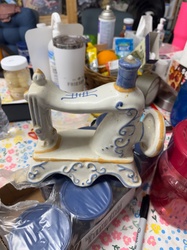
Submitted item photo
Submitted photo · June 6, 2026

User's notes

Germany

AI analysis below

AI appraisal

AI analysis & estimate

AI-Generated · Verify before acting

Everything below is generated by AI for informational purposes only. AI can make mistakes — the AI may misidentify items or misattribute them (artist, maker, brand, designer, origin, era). This is not an official valuation and should not be used for insurance, sale, tax, estate, legal, or lending purposes — or any decision requiring a certified appraisal. It is not an authoritative claim about any person, brand, or rights holder — do not share or rely on it as a factual statement about a third party. Always consult qualified professionals before making financial decisions.

Note

This analysis also relies on unverified notes provided by the user, which may be incomplete or inaccurate and could affect the result.

Read the full disclaimer

AI Identification

·Not independently authenticated·Verify before acting

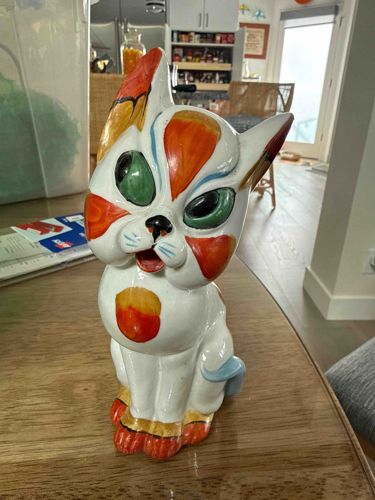
Mid-Century Modern Goebel-Style Ceramic Cat Figurine

Collectible Ceramics / Vintage Decor

AI Estimated Value

·Not an official valuation·Verify before acting

$45 - $75

As of June 6, 2026

AI Item Analysis

·AI can make mistakes·Verify before acting
This is a stylized ceramic figurine of a cat, characterized by its playful Mid-Century Modern aesthetic and vibrant hand-applied glazes. Standing approximately 8-10 inches tall, the piece is constructed from a white earthenware or porcelain body. The feline is depicted in an upright sitting posture with an oversized, expressive head featuring large, almond-shaped green eyes and an open 'meowing' mouth. The color palette is bold, incorporating shades of burnt orange, mustard yellow, and sky blue accents against a glossy white ground. The application of the color follows a 'calico' or abstract patchwork pattern typical of West German pottery from the 1950s and 1960s. One ear is notably larger and more curved than the other, adding to its whimsical character. While no explicit maker's mark is visible from this angle, the style is highly reminiscent of German manufacturers like Goebel or Cortendorf. The condition appears fair to good with some visible chipping or paint loss on the tips of the ears and localized crazing in the glaze, which is common for ceramics of this age. The craftsmanship displays high-quality mold work and free-hand painted details, particularly in the whiskers and eyes, making it a desirable piece for collectors of retro kitsch or vintage European ceramics.
AI Appraisal Report

·AI can make mistakes·Verify before acting
Based on my examination of this mid-century cat figurine, I have identified it as a classic example of West German studio pottery, likely produced by Goebel or a contemporary like Cortendorf during the 1950s-1960s. The stylized features, particularly the large almond eyes and the 'Patch' or 'Calico' decor—specifically the 'S' or 'A' series glaze patterns popular at the time—confirm its origin and era. The bold application of orange and yellow glazes remains vibrant, though the visible chipping on the ears and the localized crazing significantly impact the valuation, as collectors of these whimsical pieces prioritize the integrity of the glaze. The market for mid-century German kitsch remains steady, fueled by collectors of 'Retro' and 'Eames Era' decor. While non-marked pieces are common, they generally fetch lower prices than those with the 'V' or bumblebee Goebel marks. Comparables for unbranded, damaged figurines in this size range frequently sell between $40 and $60, whereas pristine, marked examples can reach $120. The current valuation reflects the 'Fair to Good' condition and the lack of a visible maker's mark. Note: This appraisal is based on digital images alone, which limits my ability to detect professional repairs, subtle hairlines, or small structural cracks common in earthenware. A physical inspection would be required to verify the presence of an impressed model number (often three digits) on the base, which would confirm the specific manufacturer. For definitive authentication, I would recommend checking for incised 'W. Germany' marks or archival catalog matches from Goebel’s feline series of the late 1950s.

Get your items appraised

Instant estimates of your treasures with AI-powered appraisals

Browse More Appraisals