AI estimate as of July 8, 2025 · verify with a professional before acting
AI-Generated · Verify before acting
Everything on this page is generated by AI for informational purposes only. AI can make mistakes — the AI may misidentify items or misattribute them (artist, maker, brand, designer, origin, era). This is not an official valuation and should not be used for insurance, sale, tax, estate, legal, or lending purposes — or any decision requiring a certified appraisal. It is not an authoritative claim about any person, brand, or rights holder — do not share or rely on it as a factual statement about a third party. Always consult qualified professionals before making financial decisions.
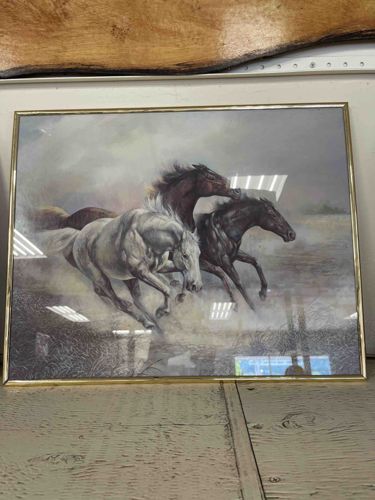
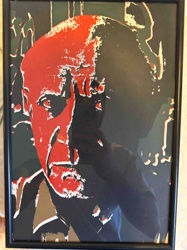
This item is a framed art print depicting three galloping horses in a dynamic, motion-blurred style. The print is housed within a simple, narrow gold-toned metal frame, likely aluminum or brass, which appears to be in good condition with no visible significant scratches or dents. The artwork itself features a central white horse, a dark brown/black horse, and another dark brown horse, all in mid-stride, kicking up dust or mist. The background is muted and gray, emphasizing the movement of the horses. The style suggests a realistic but dramatic portrayal of equine power and freedom. While difficult to ascertain the exact printing method without closer inspection, it appears to be a mass-produced print, possibly an offset lithograph. There are reflections on the glass or acrylic cover of the print, indicating its presence and protection for the artwork. The overall condition of the print appears good, with no overt signs of fading, creases, or damage visible through the glare. The craftsmanship of the framing seems standard for a commercial piece. Based on the style and framing, this print likely dates from the late 20th century, possibly the 1980s or 1990s, when such equine art was popular for decorative purposes. No discernible artist's signature or maker's mark is visible in the provided images.
AI Appraisal Report
Upon examining the provided image of this framed print, I assess it to be in good overall condition. The narrow gold-toned metal frame appears well-maintained, free from significant damage. The print itself, depicting three galloping horses with a motion-blurred effect, shows no visible signs of fading, creasing, or damage. The reflections on the protective cover confirm its presence, safeguarding the artwork. Authenticity, based solely on this visual, points to a mass-produced decorative print, likely an offset lithograph. The lack of a visible artist's signature or specific printmaker's marks supports this.
In terms of market conditions, decorative prints of this nature, especially equine themes popular in the late 20th century (1980s-1990s), generally have a modest market value. They are not rare and significant demand typically exists only for vintage decorative pieces in excellent condition from specific, known producers. Comparables in the secondary market (online marketplaces, antique malls) for similar commercially produced framed art range from $20 to $80. Factors impacting value here are mainly its good condition and aesthetic appeal as a decorative item.
Limitations in authenticity verification are significant. Without physical examination, I cannot confirm the exact printing method, paper quality, or true age, nor can I check for hidden markings or damages. In-person inspection would allow for careful examination of the print medium, frame construction, and any potential hidden artist's proofs or signatures. Provenance documentation (purchase receipts, artist's certificates) would be essential for confirming origin and potential higher value if it were an artist-signed or limited-edition piece. Scientific testing, such as print analysis, would only be merited if there were a strong suspicion of it being a valuable original artwork, which is not suggested by its current presentation.