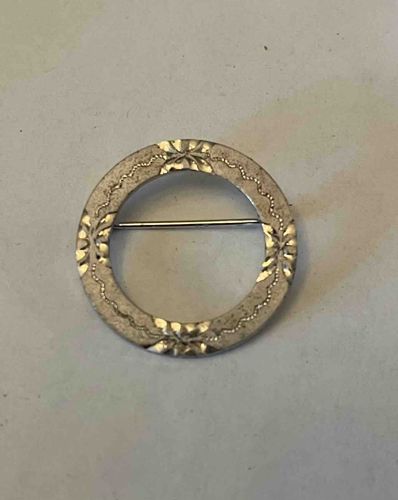
Sterling silver brooch, approximately 2.75 cm in diameter
These notes were written by the person who submitted this item. Appraiser.AI has not verified them, and the AI's identification and estimate may rely on them.
AI Estimated Value
Not an official valuation
$50 - $100
AI estimate as of July 21, 2025 · verify with a professional before acting
AI-Generated · Verify before acting
Everything on this page is generated by AI for informational purposes only. AI can make mistakes — the AI may misidentify items or misattribute them (artist, maker, brand, designer, origin, era). This is not an official valuation and should not be used for insurance, sale, tax, estate, legal, or lending purposes — or any decision requiring a certified appraisal. It is not an authoritative claim about any person, brand, or rights holder — do not share or rely on it as a factual statement about a third party. Always consult qualified professionals before making financial decisions.
This analysis also relies on unverified notes provided by the user, which may be incomplete or inaccurate and could affect the result.
This is a circular sterling silver brooch with an approximate diameter of 2.75 cm. The brooch features an elegant, continuous engraved pattern encircling its outer edge, consisting of stylized foliage or floral motifs interspersed with delicate dotted lines. The design appears to be engraved rather than cast, suggesting a level of craftsmanship. The silver exhibits a visible patina, consistent with age, indicating it has not been recently polished. Several darker areas of tarnish are noticeable, particularly within the engraved recesses, which enhances the contrast of the design. The surface is evenly textured, suggesting a matte or satin finish rather than a highly polished one. There are no overt signs of significant damage such as bends, breaks, or deep scratches that might compromise its structural integrity, although minor surface wear is present, typical of a piece of this age. The pin mechanism on the reverse is a simple straight bar with a catch, securely attached and appearing to be fully functional. No distinct maker's marks or hallmarks are immediately discernible from the provided image, which might be located on the reverse side. The overall aesthetic suggests a mid-20th century or earlier style, possibly Art Nouveau or Art Deco influence given the organic floral patterns, but without clearer context or hallmarks, a precise age is difficult to pinpoint. The quality of engraving indicates careful workmanship.
AI Appraisal Report
Upon examining the provided image and information regarding this engraved sterling silver circular brooch, I can offer the following appraisal. The visual evidence suggests a genuine sterling silver piece, indicated by the typical patina and tarnish patterns. The continuous engraved pattern, likely stylized foliage or floral motifs, points to a period piece, possibly late 19th to mid-20th century, with influences of Art Nouveau or Art Deco craftsmanship due to the organic design and fine detailing. The engraved nature, rather than casting, underscores a higher level of artisan skill. Its condition appears good for its age, displaying typical minor surface wear and an unpolished patina which, in my view, enhances its antique appeal. No significant structural damage, bends, or breaks are apparent, and the pin mechanism seems functional.
Market conditions for antique sterling silver jewelry, particularly smaller, unadorned brooches without significant gemstones or provenance, are generally stable but not experiencing rapid appreciation. The value is primarily driven by material weight, craftsmanship, and aesthetic appeal. Comparables for similar sterling brooches of this era and quality typically range from modest to moderate. Demand exists among collectors of antique jewelry and those seeking unique, wearable historical pieces, but it's not considered a rare item.
Factors impacting value include the quality of engraving, the overall aesthetic appeal, and the material. The absence of discernible maker's marks or hallmarks, which is not uncommon for older pieces, limits definitive authentication of origin and period without closer inspection. Without physical examination, I cannot definitively confirm the silver purity (though 'sterling' is stated), nor can I rule out minute damages not visible in the image. Full authentication would benefit from in-person examination to verify hallmarks, assess the exact silver content via non-destructive testing if marks are absent, and confirm the specific engraving technique. Provenance documentation, if available, would also significantly enhance its value as it would add to its history and originality.