AI estimate as of August 18, 2025 · verify with a professional before acting
AI-Generated · Verify before acting
Everything on this page is generated by AI for informational purposes only. AI can make mistakes — the AI may misidentify items or misattribute them (artist, maker, brand, designer, origin, era). This is not an official valuation and should not be used for insurance, sale, tax, estate, legal, or lending purposes — or any decision requiring a certified appraisal. It is not an authoritative claim about any person, brand, or rights holder — do not share or rely on it as a factual statement about a third party. Always consult qualified professionals before making financial decisions.
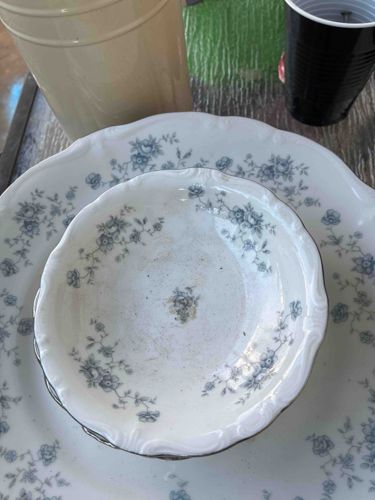
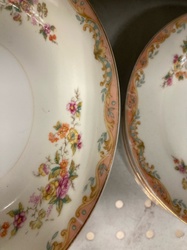
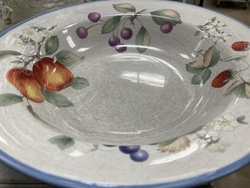
The image displays a set of two porcelain or ceramic dishes, likely part of a larger dinnerware set, featuring a consistent floral pattern. The dominant color of the dishes is off-white or cream, acting as a canvas for the delicate blue floral motif. The pattern consists of stylized roses or similar blossoms with accompanying foliage, distributed somewhat sparsely across the surface, giving it a light and airy feel. Both pieces exhibit a scalloped or gently fluted rim, adding an elegant detail to their edges. The smaller, shallower bowl is nested within a larger, flatter plate or platter, fitting snugly due to their complementary sizes and shapes. The craftsmanship suggests a manufactured item, possibly machine-decorated with applied decals or transferware, rather than hand-painted, which is common for mass-produced dinnerware sets. The overall aesthetic points to an older style, possibly mid-20th century or earlier, hinting at a vintage or antique origin. There are visible signs of age and wear; the surface of the smaller bowl shows some discoloration and what appears to be dirt or debris, suggesting it has been used or stored in less than pristine conditions. The larger plate also shows some surface inconsistencies, though less pronounced than the bowl. There are no obvious chips, cracks, or repairs discernible from this angle, but close inspection would be required to verify. The quality appears to be utilitarian for everyday use, with aesthetic appeal derived from the classic floral design and scalloping.
AI Appraisal Report
Based on my visual examination of the provided image of this Vintage Blue Floral Scalloped Dinnerware Set (Bowl and Plate), I can offer an appraisal. The set appears to be porcelain or ceramic, featuring a classic blue floral motif on an off-white or cream background with scalloped rims. The design, particularly the stylized roses and foliage, strongly suggests a mid-20th century origin, aligning with vintage dinnerware styles. The manufacturing method likely involves transferware or decals, typical for mass-produced sets of that era, rather than intricate hand-painting, which affects inherent value.
From a condition standpoint, I observe clear signs of age and use. The smaller bowl exhibits noticeable discoloration and surface debris, indicating use or less-than-ideal storage. The larger plate also shows some surface inconsistencies, though less severe. Crucially, I do not observe any immediate chips, cracks, or repairs from this vantage point. However, a physical inspection would be essential to confirm this and assess the extent of wear, crazing, or staining not visible in the image. The functionality seems intact, and the aesthetic appeal is derived from its classic, utilitarian design.
Regarding market conditions, vintage dinnerware sets, especially those not from renowned manufacturers or with unique artistic merit, generally command modest prices. While there's a steady demand from collectors and individuals seeking retro decor or usable vintage items, this specific pattern doesn't appear to be exceptionally rare or highly sought after. Comparable vintage dinnerware pieces or sets with similar conditions and utility-grade quality often sell in the low to mid-range. Factors significantly impacting value include the overall completeness of a set (this is only two pieces), the manufacturing quality (e.g., specific pottery maker marks), and importantly, the physical condition.
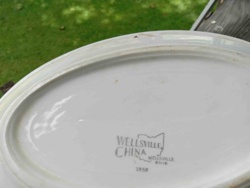
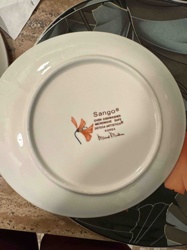
My primary limitation in this appraisal is the reliance solely on images. I cannot definitively verify authenticity, the presence of maker's marks, or the true extent of wear and damage (like hairline cracks or crazing) without a direct, in-person examination. Physical handling would also allow assessment of the material's quality and weight. Provenance documentation (e.g., original purchase receipts, family history) could further corroborate its age or origin, and in some cases, scientific testing (e.g., material analysis) might be used for definitive identification, though this is rarely necessary for common dinnerware of this type. My valuation reflects these limitations and the item's apparent characteristics.