These notes were written by the person who submitted this item. Appraiser.AI has not verified them, and the AI's identification and estimate may rely on them.
AI Estimated Value
Not an official valuation
$120-200
AI estimate as of August 11, 2025 · verify with a professional before acting
AI-Generated · Verify before acting
Everything on this page is generated by AI for informational purposes only. AI can make mistakes — the AI may misidentify items or misattribute them (artist, maker, brand, designer, origin, era). This is not an official valuation and should not be used for insurance, sale, tax, estate, legal, or lending purposes — or any decision requiring a certified appraisal. It is not an authoritative claim about any person, brand, or rights holder — do not share or rely on it as a factual statement about a third party. Always consult qualified professionals before making financial decisions.
This analysis also relies on unverified notes provided by the user, which may be incomplete or inaccurate and could affect the result.
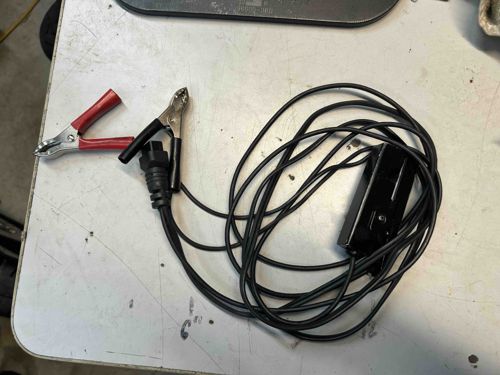
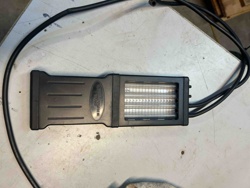
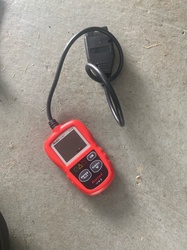
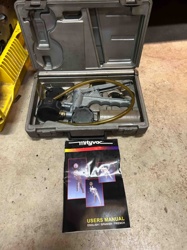
This item appears to be a specialized diagnostic cable or extension lead, likely for automotive or powersports applications, given the provided context of 'big twins' and 'bearing race tool'. It consists of a black electrical cable, coiled and approximately 6 to 8 feet in length (estimated from the image). One end terminates in a pair of alligator clips; one with a red insulating handle, the other with a black insulating handle, indicating positive and negative terminals respectively. These clips are made of a metallic alloy, possibly chrome-plated steel. The red clip shows some slight wear and scuffing on its handle. The other end of the cable leads into a black, rectangular plastic housing, measuring roughly 4-6 inches in length. This housing appears to contain internal circuitry, typical for interfaces or diagnostic devices. Exiting this housing, or perhaps integrated into the cable before it, is a black, multi-pin electrical connector, likely a proprietary diagnostic plug. The connector has a ribbed, cylindrical base for grip and possibly strain relief. The overall construction suggests a robust design suitable for a workshop environment. The cable itself shows no obvious kinks or severe damage, but some dust and minor surface grime are visible, consistent with use in a garage or similar setting. There are no discernible manufacturer markings or specific model numbers visible in the image. Its design suggests a purpose of either supplying power to a diagnostic device or acting as an interface between a vehicle's electrical system and a diagnostic scanner.
AI Appraisal Report
Upon my virtual examination of this Diagnostic Cable with Alligator Clips and Interface Box, I assess its condition as good, consistent with use in a workshop environment. The cable itself appears intact without severe damage, though minor surface grime and dust are visible, which is typical for such an item. The alligator clips show minor wear, particularly the red one, but remain functional. The black interface box and multi-pin connector also appear to be in good physical shape. Authenticity, based solely on the image, points to a purpose-built automotive diagnostic or power interface cable. The description's mention of 'big twins' and 'bearing race tool' strongly suggests its application within the motorcycle, specifically Harley-Davidson, diagnostic or maintenance ecosystem, likely related to specialized tools for engine or transmission work (e.g., 620060 main shaft). The proprietary connector further supports this.
Market conditions for specialized diagnostic tools can fluctuate. While generic diagnostic cables are inexpensive, application-specific tools, especially those for niche markets like Harley-Davidson 'big twins,' command higher values due to their limited availability and necessity for specific tasks. Comparables would include specialized diagnostic interfaces like those from TwinScan or similar aftermarket tools. This item's rarity isn't extremely high, but its specific function limits its general market, creating a consistent demand from mechanics and enthusiasts working on relevant models. Factors significantly impacting value include its specific compatibility and the functionality of the internal circuitry within the interface box, which cannot be determined visually. Its value is enhanced if it's a known, reliable tool for a difficult diagnostic procedure.
Limitations in authenticity verification are significant. Without manufacturer markings, I cannot definitively confirm its origin or precise function. A physical examination is crucial to test continuity, verify internal components, and confirm the exact pinout and protocol of the connector. Provenance documentation, such as original purchase receipts or manuals, would be invaluable for full authentication and to confirm its compatibility and intended use.