AI Appraisal Estimate

AI-generated estimates · not official valuations

From the user

What was submitted

Photo and notes provided by the user — not generated by AI

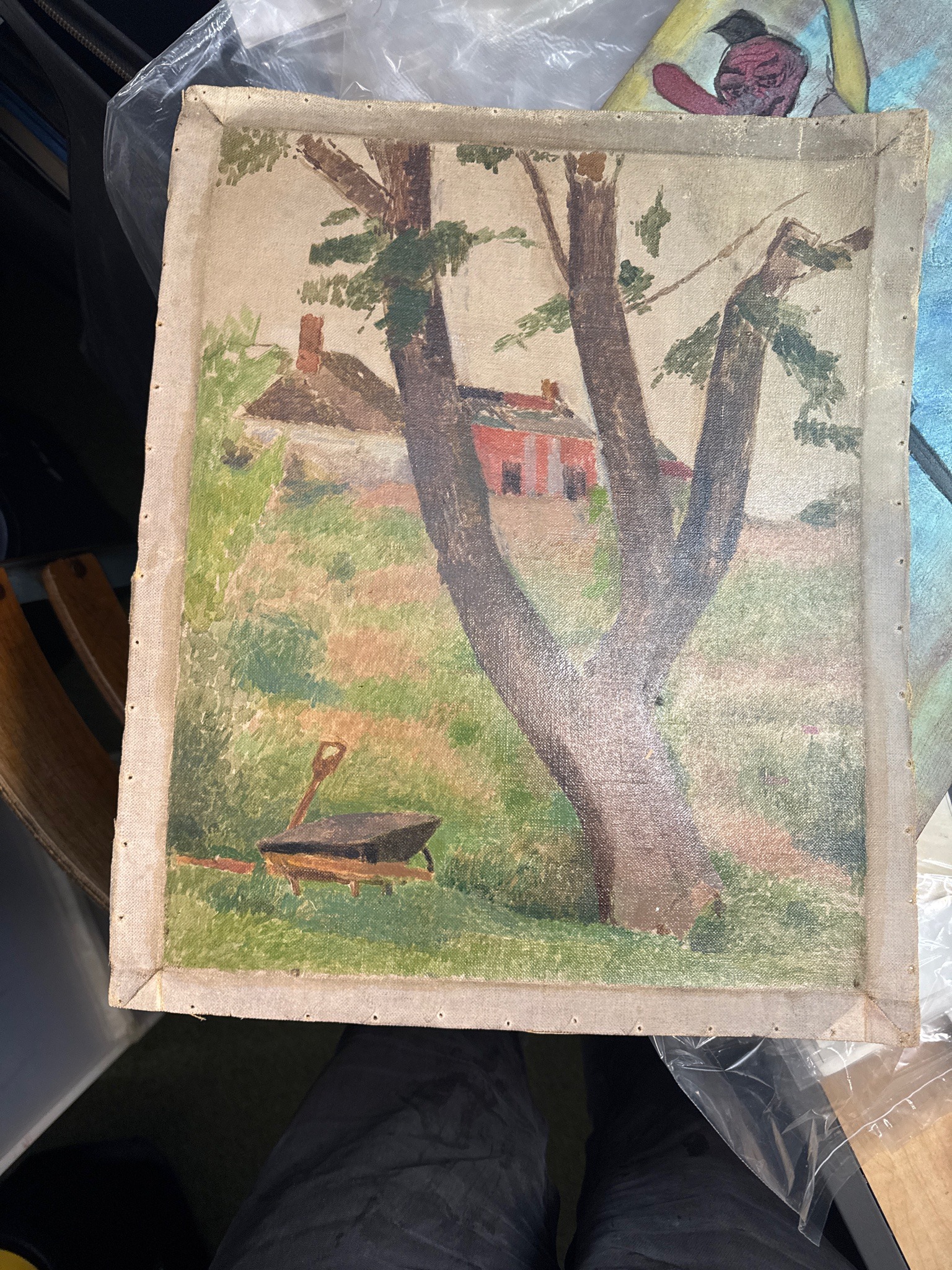
Submitted item photo
Submitted photo · June 6, 2026

User's notes

No additional notes provided.

AI analysis below

AI appraisal

AI analysis & estimate

AI-Generated · Verify before acting

Everything below is generated by AI for informational purposes only. AI can make mistakes — the AI may misidentify items or misattribute them (artist, maker, brand, designer, origin, era). This is not an official valuation and should not be used for insurance, sale, tax, estate, legal, or lending purposes — or any decision requiring a certified appraisal. It is not an authoritative claim about any person, brand, or rights holder — do not share or rely on it as a factual statement about a third party. Always consult qualified professionals before making financial decisions.

Read the full disclaimer

AI Identification

·Not independently authenticated·Verify before acting

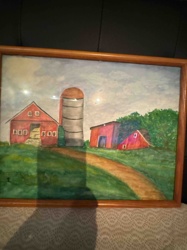
Rural Landscape with Wheelbarrow Oil Painting on Canvas

Fine Art - Paintings

AI Estimated Value

·Not an official valuation·Verify before acting

$150 - $250

As of June 6, 2026

AI Item Analysis

·AI can make mistakes·Verify before acting
This is an original oil painting on canvas, likely dating from the early to mid-20th century, executed in a post-impressionist or folk art style. The composition features a prominent, bifurcated tree in the foreground that serves as a framing device for a rural scene. Behind the tree, a traditional wooden wheelbarrow sits on a grassy slope. In the background, two structures are visible: a white building with a dark roof and chimney, and a red building, possibly a barn or secondary outbuilding. The color palette is composed of earthy tones including greens, browns, ochre, and a muted red. The painting is executed on a coarse-weave canvas that has been removed from its original stretcher bars, showing visible tack holes and frayed edges along the perimeter where it was previously mounted. The paint application is somewhat thin, with the texture of the canvas showing through in several areas. There is no visible signature on the front of the piece. Notable condition issues include significant paint loss and abrasions, particularly along the top edge and right side where the canvas was folded. The surface shows a general layer of grime consistent with age and unprotected storage. The canvas appears brittle with some minor creasing and staining throughout the composition.


AI Appraisal Report

·AI can make mistakes·Verify before acting
After a thorough visual examination of the digital images provided, I have evaluated this rural landscape oil on canvas. The work reflects an early-to-mid 20th-century folk-art aesthetic, characterized by a flattened perspective and a naive, bifurcated tree framing. The canvas weave and tack holes suggest it was historically mounted on a wooden stretcher, though its current state is loose. The condition is poor to fair; there is significant mechanical damage, including paint loss and abrasions along the margins consistent with long-term storage in a folded or rolled state. Surface grime and brittleness further diminish its structural integrity. From a market perspective, anonymous folk art of this quality occupies a niche decorative category. Values for such works are currently depressed due to the lack of an attributable artist and the substantial restoration costs required to stabilize the canvas and fill losses. Comparables for unsigned, mid-century rural landscapes in similar distressed conditions typically hammer at local auctions for under $300. The item's value is primarily decorative rather than investment-grade. While the composition has charm, the condition issues are a major detractor. Authenticity as a period piece seems likely based on the material aging, but I cannot definitively rule out a later student study without physical analysis of the pigment binders and canvas fibers. A full authentication would require in-person inspection of the verso (back) for hidden markings, provenance documentation such as gallery labels or receipts, and UV light examination to detect previous repairs or overpainting. Without these, this remains an unattributed 'In the Manner of' or period folk work.

Get your items appraised

Instant estimates of your treasures with AI-powered appraisals

Browse More Appraisals