These notes were written by the person who submitted this item. Appraiser.AI has not verified them, and the AI's identification and estimate may rely on them.
AI Estimated Value
Not an official valuation
$800 - $1,500
AI estimate as of September 11, 2025 · verify with a professional before acting
AI-Generated · Verify before acting
Everything on this page is generated by AI for informational purposes only. AI can make mistakes — the AI may misidentify items or misattribute them (artist, maker, brand, designer, origin, era). This is not an official valuation and should not be used for insurance, sale, tax, estate, legal, or lending purposes — or any decision requiring a certified appraisal. It is not an authoritative claim about any person, brand, or rights holder — do not share or rely on it as a factual statement about a third party. Always consult qualified professionals before making financial decisions.
This analysis also relies on unverified notes provided by the user, which may be incomplete or inaccurate and could affect the result.
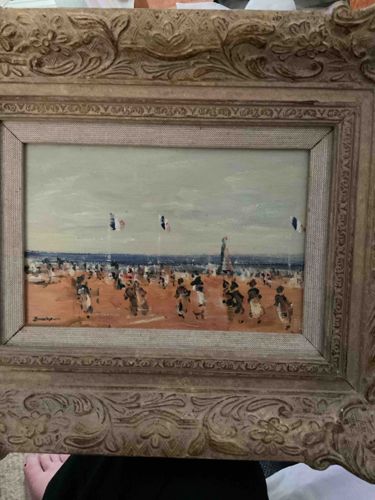
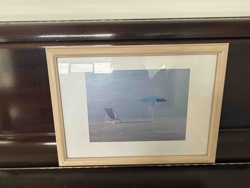
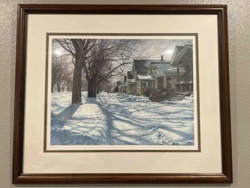
This item is an oil painting depicting a lively beach scene, housed within an ornate, possibly gilded, wooden frame. The painting itself evidences an impressionistic style, characterized by visible brushstrokes and a focus on capturing light and atmosphere rather than fine detail. The scene features numerous figures, rendered as small, indistinct shapes, enjoying a sandy beach, with a body of water and a light, partly cloudy sky in the background. Several vertical elements, possibly flags or poles, pierce the sky. The color palette of the painting is relatively muted, dominated by sandy browns, blues, and grays for the sky and water, with small dabs of color suggesting clothing on the figures. The overall impression of the painting is one of a bright, outdoor setting. The frame is a prominent feature, constructed of wood with highly detailed carving work. The pattern includes scrolling acanthus leaves and floral motifs along both the inner and outer borders, with a simpler, possibly beaded, detail separating these main elements from the painting itself by means of a fabric fillet or linen liner. The color of the frame appears to be a distressed or antiqued gold, contributing to a sense of age and classic elegance. The condition is noted as excellent, which is consistent with the visual evidence as there are no visible chips, cracks, or significant wear on either the frame or the painted surface. The craftsmanship of the frame is high, suggesting it was either custom-made for the painting or selected as a complementary, quality piece. Based on the style of both the painting and the frame, the item likely dates from the late 19th to mid-20th century.
AI Appraisal Report
Based on my visual examination of the Impressionistic Beach Scene Oil Painting in Ornate Frame, I find the condition to be excellent. The paint surface appears stable with no visible craquelure, flaking, or damage, and the colors retain their vibrancy. The ornate, possibly gilded, frame is also in splendid condition, showing no chips, cracks, or significant wear, which is consistent with the owner's description. The craftsmanship of the frame is notable, suggesting a high-quality, possibly custom-made piece that enhances the painting’s presentation.
While the impressionistic style is appealing, the indistinct figural rendition and lack of a definitive artistic signature visible in the image prevent a specific attribution without further examination. This significantly impacts value, as works by known, listed artists command substantially higher prices. The general period, late 19th to mid-20th century, is a desirable one for decorative art and aligns with the style presented.
In terms of market conditions, impressionistic landscapes and genre scenes, especially those in excellent condition and housed in attractive frames, maintain consistent demand. Comparables for unsigned, decorative oil paintings of this size and quality typically range from $800 to $1,500. Rarity is difficult to assess without artist attribution; however, general decorative impressionistic works are not inherently rare.
Limitations in authenticity verification are significant when relying solely on images. To confirm authenticity and potentially attribute the work to a specific artist, an in-person examination would be crucial for closer inspection of brushwork, paint application, and potential hidden signatures. Furthermore, provenance documentation (history of ownership) and scientific testing (e.g., pigment analysis, forensic examination) would be necessary for full authentication and to ascertain if it is indeed an original work from the suggested period or a later decorative piece. Without such verification, the valuation remains primarily decorative.