AI estimate as of August 11, 2025 · verify with a professional before acting
AI-Generated · Verify before acting
Everything on this page is generated by AI for informational purposes only. AI can make mistakes — the AI may misidentify items or misattribute them (artist, maker, brand, designer, origin, era). This is not an official valuation and should not be used for insurance, sale, tax, estate, legal, or lending purposes — or any decision requiring a certified appraisal. It is not an authoritative claim about any person, brand, or rights holder — do not share or rely on it as a factual statement about a third party. Always consult qualified professionals before making financial decisions.
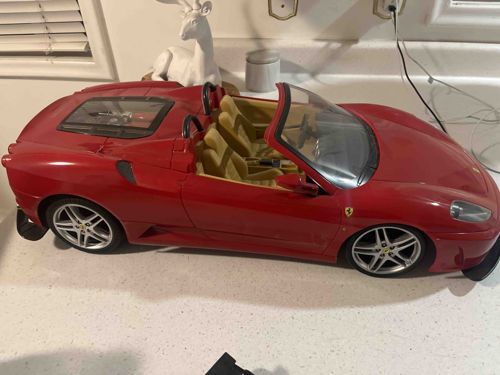
The item is a large-scale toy model of a red Ferrari 360 Spider, likely a ride-on toy or a very large radio-controlled car, given its apparent size relative to the surrounding kitchen counter and wall outlets. It features a bright, glossy red exterior, typical of Ferrari vehicles. The interior is visible and appears to have tan or light brown seating. Notable features include realistic five-spoke silver wheels, clear plastic headlights and taillights, and details such as side mirrors and roll hoops behind the seats. The vehicle is a convertible, with the top down, and the engine bay is visible through a clear plastic cover at the rear, showcasing some molded engine details. There is a small, yellow Ferrari emblem visible on the side panel near the front wheel. The overall condition appears good, with some minor surface dust and possibly light scuffs indicative of play or handling. There are no major visible cracks, breaks, or missing parts. The construction seems to be primarily plastic, possibly with some metal components for axles or other structural elements, typical for durable toy vehicles. The level of detail suggests a mid-to-high quality toy, aiming for a realistic representation of the actual car.
AI Appraisal Report
Based on my visual examination of the large-scale Ferrari 360 Spider toy model, I assess its condition as good, showing typical signs of light play or handling, such as minor surface dust and potential light scuffs, but no significant damage or missing parts. The detail level, including clear headlights/taillights, visible engine bay, and Ferrari badging, suggests a mid-to-high quality toy.
Authenticity, in terms of it being a licensed Ferrari product, appears highly probable given the visible Ferrari emblem and accurate replication of the 360 Spider's design elements. However, definitive authentication would require an in-person examination to check for official licensing marks, manufacturer stamps, or serial numbers, which are not visible in the provided image. Provenance documentation, such as original packaging or purchase receipts, would also significantly aid in confirming authenticity and origin.
Market conditions for large-scale licensed toy vehicles, particularly desirable sports cars like Ferraris, are generally stable. These items appeal to collectors of automotive memorabilia, toy enthusiasts, and parents seeking high-quality ride-on or display models. Comparables would include other large-scale Ferrari models from reputable toy manufacturers (e.g., Peg Perego, Rastar, or even high-end RC brands).
Demand for accurate, well-maintained Ferrari models remains consistent. While not inherently rare, the specific 360 Spider model in good condition may have moderate scarcity depending on its production run. Its play-used but intact condition suggests it has been enjoyed but also cared for. The primary factor impacting value beyond condition and authenticity is the original manufacturer and scale; higher-end, larger, or more detailed models command premium prices. Without knowing the manufacturer or precise scale, and without physical inspection, these are my best estimates.
Full authentication and a more precise valuation would necessitate a physical inspection to: verify manufacturing marks, assess material quality, determine exact scale and functionality (e.g., if it's a ride-on, does it work?), and confirm the absence of hidden damage.