AI estimate as of November 18, 2025 · verify with a professional before acting
AI-Generated · Verify before acting
Everything on this page is generated by AI for informational purposes only. AI can make mistakes — the AI may misidentify items or misattribute them (artist, maker, brand, designer, origin, era). This is not an official valuation and should not be used for insurance, sale, tax, estate, legal, or lending purposes — or any decision requiring a certified appraisal. It is not an authoritative claim about any person, brand, or rights holder — do not share or rely on it as a factual statement about a third party. Always consult qualified professionals before making financial decisions.
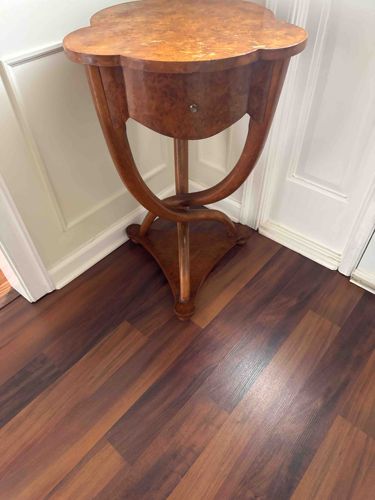
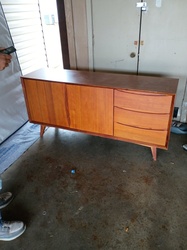
This is an elegant Art Deco style sewing table, characterized by its distinctive form and materials. The table features a curvilinear, clover-shaped top crafted from burled wood, exhibiting a rich, warm brown tone with highly figured grain patterns that catch the light. The apron below the tabletop also utilizes burled wood, forming a semi-circular body that cleverly houses a single, centrally located drawer. The drawer face matches the burled wood aesthetic of the rest of the body and is fitted with a small, circular metal pull or keyhole escutcheon, indicative of an internal locking mechanism or simply a decorative handle. The table's most striking feature is its base, which consists of two broad, curved supports that appear to crisscross or interlock near the bottom, rising from a tripartite or trefoil-shaped base. These supports and the central column are made of solid wood, likely a contrasting or complementary wood to the burl, possibly walnut or mahogany, given the darker, more uniform grain visible. The construction suggests quality craftsmanship, with smooth, flowing lines and well-integrated components. Visible condition issues include some surface wear and minor discoloration on the tabletop, particularly along the edges and in a few central spots, suggesting age and regular use. There might be some subtle scratches or loss of finish, though the overall appearance remains good. The piece exhibits a warm, aged patina consistent with an item from its estimated period. The style points strongly to the Art Deco era, likely dating from the 1920s to 1940s, given the curvilinear geometry and emphasis on luxurious wood veneers. This table could also be described as a small occasional table or side table, but the presence of the drawer, and specific design often associated with such pieces, lends itself to the 'sewing table' or 'work table' classification.
AI Appraisal Report
Upon examining the provided images, I find this Art Deco style sewing or occasional table to be a fine example of the period's aesthetic, likely dating from the 1920s to 1940s. The piece's value is primarily derived from its striking design, featuring a clover-shaped top and intricate burlwood veneers, which are highly desirable. The curvilinear base and integrated drawer showcase quality craftsmanship characteristic of the era.
The condition appears to be good for its age, displaying an honest, mellowed patina. I note some surface wear, minor scratches, and light discoloration on the tabletop, which is consistent with regular use and does not significantly detract from the overall appeal. The key factor driving its value is the strong, well-executed Art Deco design. The market for stylish, functional pieces from this period remains robust, with strong demand from designers and collectors. Comparable burlwood Art Deco tables of similar size and quality typically sell in the $600 to $900 range at auction and in retail settings. While not exceptionally rare, the elegant form makes it a sought-after piece.
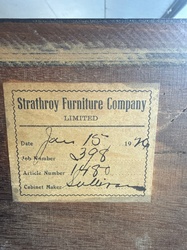
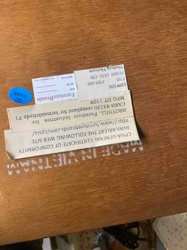
However, this appraisal is based solely on visual examination of images. A definitive assessment of authenticity and condition requires in-person inspection. This would allow me to check for maker's marks, examine the joinery and drawer construction for period-correct techniques, and feel for any repairs or restorations not visible in photos. Confirming the specific types of wood (e.g., walnut burl, mahogany) would also be possible. Full authentication would benefit from provenance documentation tracing its ownership history.