AI Appraisal Estimate

AI-generated estimates · not official valuations

From the user

What was submitted

Photo and notes provided by the user — not generated by AI

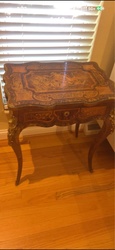
Submitted item photo
Submitted photo · June 12, 2026

User's notes

Judith Dalozzo

AI analysis below

AI appraisal

AI analysis & estimate

AI-Generated · Verify before acting

Everything below is generated by AI for informational purposes only. AI can make mistakes — the AI may misidentify items or misattribute them (artist, maker, brand, designer, origin, era). This is not an official valuation and should not be used for insurance, sale, tax, estate, legal, or lending purposes — or any decision requiring a certified appraisal. It is not an authoritative claim about any person, brand, or rights holder — do not share or rely on it as a factual statement about a third party. Always consult qualified professionals before making financial decisions.

Note

This analysis also relies on unverified notes provided by the user, which may be incomplete or inaccurate and could affect the result.

Read the full disclaimer

AI Identification

·Not independently authenticated·Verify before acting

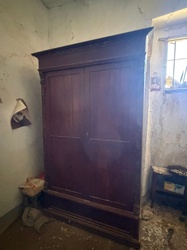
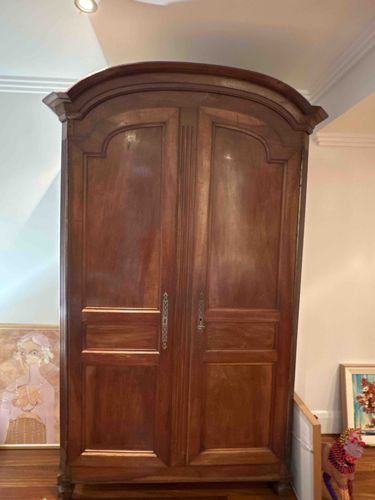
French Louis XV Style Double-Door Armoire

Antique Furniture

AI Estimated Value

·Not an official valuation·Verify before acting

$1,200 - $1,800 USD

As of June 12, 2026

AI Item Analysis

·AI can make mistakes·Verify before acting
This is a substantial antique or vintage double-door armoire crafted in the French Louis XV Provincial style. The piece features a distinctive arched and molded bonnet top crown, which is characteristic of regional French cabinetmaking. The two large doors are constructed with sunken panels, featuring elegant serpentine-curved tops that mirror the crown's silhouette. The wood appears to be a solid fruitwood or walnut with a rich, medium-brown warm patina. Centrally, the doors are separated by a fluted vertical pilaster. Notable hardware includes elongated, decorative brass or bronze-toned escutcheons and simple keyholes. The piece rests on short, sturdy legs, likely including a bracket or bun foot. In terms of condition, there is visible surface wear consistent with age, including minor scuffing and small chips along the lower base molding and side panels. The wood Displays a natural grain with some variation in color, indicating authentic period construction or high-quality traditional reproduction. The craftsmanship is evident in the precision of the paneling and the depth of the moldings. Estimating based on the style and construction, this piece likely dates from the late 19th to early 20th century. While no visible makers' marks are present in the photo, the scale and formality of the piece suggest it was a significant household investment. The overall presentation is stately, suited for both storage and as a focal decorative element.
AI Appraisal Report

·AI can make mistakes·Verify before acting
Based on my examination of the visual evidence provided by Judith Dalozzo, this appears to be a handsome French Louis XV Provincial style armoire, likely dating to the late 19th or very early 20th century. My assessment identifies it as constructed from solid hardwood, likely walnut or a stained fruitwood, displaying a warm, authentic patina characteristic of its age. The distinct arched bonnet and serpentine paneling on the doors are well-executed, pointing to competent regional French cabinetmaking rather than mass-produced factory work. The fluted central pilaster adds a touch of sophistication typical of the Normandy or Brittany regions. Condition-wise, the piece shows honest wear. The scuffing and small chips along the lower molding are consistent with usage and do not significantly detract from its structural integrity or aesthetic appeal; they rather confirm its age. However, the market for large brown furniture' has softened in recent years. While still desirable for their storage capacity and classic lines, these pieces no longer command the premium prices seen two decades ago. The lack of visible maker's marks is common for provincial pieces but limits attribution to a specific workshop. Crucially, this appraisal is limited by the inability to inspect the joinery (dovetails, mortise and tenon) or the interior shelving configuration in person. To fully authenticate the age and rule out a later mid-20th-century reproduction, I would need to examine the back panel construction, the oxidation of the hardware on the reverse side, and the secondary woods used for the drawers or shelves. Assuming the piece is structurally sound with original hardware, it remains a solid investment piece.

Get your items appraised

Instant estimates of your treasures with AI-powered appraisals

Browse More Appraisals