AI Appraisal Estimate

AI-generated estimates · not official valuations

From the user

What was submitted

Photo and notes provided by the user — not generated by AI

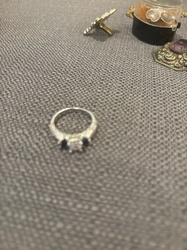
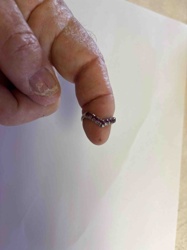
Submitted item photo
Submitted photo · May 27, 2026

User's notes

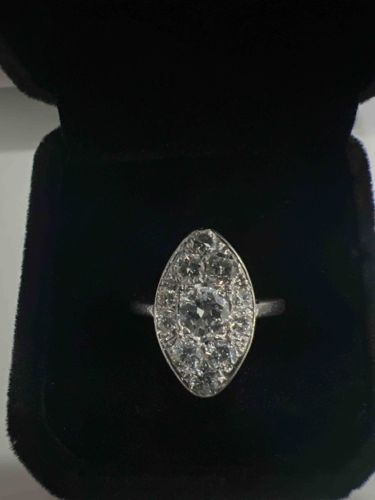
3/4 c center diamond with 10 surrounding diamonds

AI analysis below

AI appraisal

AI analysis & estimate

AI-Generated · Verify before acting

Everything below is generated by AI for informational purposes only. AI can make mistakes — the AI may misidentify items or misattribute them (artist, maker, brand, designer, origin, era). This is not an official valuation and should not be used for insurance, sale, tax, estate, legal, or lending purposes — or any decision requiring a certified appraisal. It is not an authoritative claim about any person, brand, or rights holder — do not share or rely on it as a factual statement about a third party. Always consult qualified professionals before making financial decisions.

Note

This analysis also relies on unverified notes provided by the user, which may be incomplete or inaccurate and could affect the result.

Read the full disclaimer

AI Identification

·Not independently authenticated·Verify before acting

Edwardian Style Diamond Marquise-Shaped Cluster Ring

Fine Jewelry

AI Estimated Value

·Not an official valuation·Verify before acting

$2,800 - $3,500

As of May 27, 2026

AI Item Analysis

·AI can make mistakes·Verify before acting
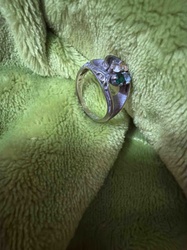
This is a vintage or antique-style cluster ring featuring a prominent marquise-shaped head set with multiple diamonds. The central focal point is a round brilliant-cut diamond, stated to be approximately 0.75 carats, which is surrounded by a halo of ten smaller bezel or pavé-set diamonds that follow the elongated navette or marquise silhouette. The mounting appears to be crafted from a white metal, likely platinum or 14k/18k white gold, consistent with late Edwardian or Art Deco design aesthetics. The head of the ring shows intricate workmanship with milgrain bordering or fine metalwork around the stones, enhancing the brilliance of the diamonds. The band is a slender, polished shank that tapers slightly as it meets the decorative head. Regarding condition, the metal surfaces show a soft patina indicative of age and light wear. No visible cracks or significant chips are noted in the stones from this angle, though microscopic facet wear is common in such pieces. The overall craftsmanship suggests a high-quality period piece or a very fine mid-century reproduction, emphasizing elongated geometric symmetry that was popular in the early 20th century.
AI Appraisal Report

·AI can make mistakes·Verify before acting
Based on my examination of the digital images provided, this ring presents as a classic Edwardian or early Art Deco-style marquise cluster ring. The design is characterized by an elegant navette silhouette, featuring a central round brilliant-cut diamond estimated at approximately 0.75 carats, surrounded by a halo of ten smaller accent diamonds. The metalwork exhibits fine milgrain detailing typical of the 1910-1930 era, suggesting fabrication in either platinum or 18k white gold. The overall condition appears good, with the metal showing a soft patina consistent with age and no obvious structural damage to the shank or setting visible in the photos. In the current market, authentic period engagement rings are highly desirable, particularly those featuring the elongated geometry seen here, which offers excellent finger coverage. Values for similar pieces rely heavily on the precise grading of the central stone. Assuming the 0.75ct center stone is of H-I color and VS-SI clarity—average standards for fine jewelry of this type—the ring holds significant intrinsic value. If this is a genuine period piece (circa 1920s) rather than a later reproduction, the value leans toward the higher end of my estimate. It is crucial to note the limitations of an appraisal based solely on photographs. I cannot definitively confirm the metal purity without acid testing or hallmarks, nor can I accurately grade the diamonds for color, clarity, or carat weight without laboratory equipment. Furthermore, identifying whether the center stone is a mined diamond, lab-grown, or a simulant like moissanite requires thermal conductivity testing and magnification. An in-person inspection is required to verify the stone's integrity, confirm the metal content, and check for signs of repair that might affect antique value.

Get your items appraised

Instant estimates of your treasures with AI-powered appraisals

Browse More Appraisals