Victorian Renaissance Revival Center Table
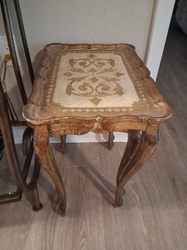
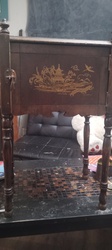
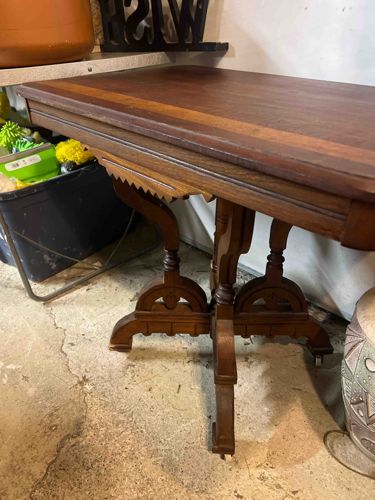
This is a late 19th-century Victorian center table designed in the Renaissance Revival style. The piece is constructed from solid wood with a medium-to-dark walnut or mahogany finish. The rectangular tabletop features a subtle perimeter inlay or banding, adding a layer of sophisticated ornamentation. One of the most striking features is the highly decorative trestle-style base, which includes four splayed, hand-carved legs emerging from a central pedestal. The base is adorned with intricate architectural motifs, including semi-circular cutouts, turned finials, and a prominent sawtooth or crenelated apron detail beneath the tabletop. The legs terminate in small metal casters, a common feature of high-quality furniture from this period to facilitate movement. The craftsmanship is indicative of high-tier production, showing complex joinery and decorative elements that were popular in formal home parlors during the late 1800s. In terms of condition, there is visible surface wear, particularly around the edges of the base and feet, where the wood shows scuffing and finish loss. The tabletop surface appears to have some uneven patina and minor scratches consistent with its age. No major cracks or structural failures are immediately apparent, though the casters may need lubrication or replacement if they have seized over time.
AI-Generated Appraisal Disclaimer
Estimated Value
$800 - $1,200
Basic Information
Category
Antique Furniture
Appraised On
January 10, 2026
Estimated Value
$800 - $1,200
Item Description
This is a late 19th-century Victorian center table designed in the Renaissance Revival style. The piece is constructed from solid wood with a medium-to-dark walnut or mahogany finish. The rectangular tabletop features a subtle perimeter inlay or banding, adding a layer of sophisticated ornamentation. One of the most striking features is the highly decorative trestle-style base, which includes four splayed, hand-carved legs emerging from a central pedestal. The base is adorned with intricate architectural motifs, including semi-circular cutouts, turned finials, and a prominent sawtooth or crenelated apron detail beneath the tabletop. The legs terminate in small metal casters, a common feature of high-quality furniture from this period to facilitate movement. The craftsmanship is indicative of high-tier production, showing complex joinery and decorative elements that were popular in formal home parlors during the late 1800s. In terms of condition, there is visible surface wear, particularly around the edges of the base and feet, where the wood shows scuffing and finish loss. The tabletop surface appears to have some uneven patina and minor scratches consistent with its age. No major cracks or structural failures are immediately apparent, though the casters may need lubrication or replacement if they have seized over time.
Related Tags
Explore similar items and categories:
Get Your Items Appraised
Instant estimates of your treasures with AI-powered instant appraisals