AI estimate as of November 29, 2025 · verify with a professional before acting
AI-Generated · Verify before acting
Everything on this page is generated by AI for informational purposes only. AI can make mistakes — the AI may misidentify items or misattribute them (artist, maker, brand, designer, origin, era). This is not an official valuation and should not be used for insurance, sale, tax, estate, legal, or lending purposes — or any decision requiring a certified appraisal. It is not an authoritative claim about any person, brand, or rights holder — do not share or rely on it as a factual statement about a third party. Always consult qualified professionals before making financial decisions.
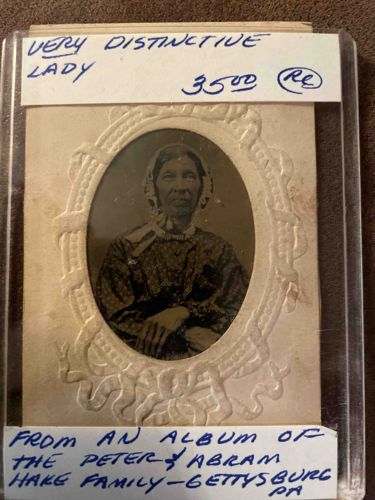
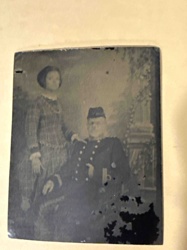
This item is a tintype photograph, also known as a ferrotype, featuring a portrait of an elderly woman. The photograph itself is oval-shaped and set within an ornate, embossed paper mat. The mat is a light, possibly off-white or cream color, with an intricate floral or scrollwork design surrounding the central oval opening. The overall aesthetic suggests a mid-to-late 19th-century photographic style. The woman in the portrait is depicted from the waist up, wearing a dark, patterned dress with a high collar and a traditional bonnet or cap that covers her head and frames her face. Her hands are clasped in front of her. The expression on her face is somber and direct.
The condition of the tintype appears to be fair, with some visible dust or minor abrasions on the surface, typical for an item of this age. The paper mat shows some signs of handling and slight discoloration consistent with age. The entire piece is currently housed within a clear plastic protective sleeve, which has handwritten labels indicating significant provenance. The top label reads "VERY DISTINCTIVE LADY 3500 (Re)," and the bottom label identifies it as "FROM AN ALBUM OF THE PETER & ABRAM HAKE FAMILY - GETTYSBURG PA." This provenance linking it to a Gettysburg family is a crucial piece of information, potentially indicating connections to historical events or figures. The tintype is a unique primary source historical document and a testament to photographic practices of its era. The craftsmanship of the tintype process and the embossed mat indicates a commercially produced item, possibly a souvenir or family heirloom.
AI Appraisal Report
Upon examining the provided image of this tintype, I assess its condition as fair. There are visible signs of dust or minor abrasions on the tintype surface, and the ornate paper mat shows slight discoloration and handling wear, all consistent with its age. Authenticity as a period tintype appears strong based on the photographic medium, attire, and mat style, which all align with mid-to-late 19th-century aesthetics. The protective sleeve and handwritten labels, while helpful for provenance, are external additions.
Market conditions for antique tintypes are generally stable, with demand driven by visual quality, photographic subject matter, and provenance. This piece features a "Very Distinctive Lady" with compelling facial features, which is a positive. The most significant value driver here is the provenance linking it to "AN ALBUM OF THE PETER & ABRAM HAKE FAMILY - GETTYSBURG PA." Gettysburg association, even without direct military ties, adds a layer of historical interest and rarity. Comparables for average studio tintypes without strong provenance typically range from $50-150. However, the Gettysburg connection elevates its appeal. If the Hake family had notable historical roles or direct connections to the Battle of Gettysburg, the rarity and demand would increase significantly.
Limitations in authenticity verification from an image alone are considerable. While the visual indicators suggest a genuine tintype of the period, a physical examination would be crucial to confirm the photographic process, assess the extent of surface damage (scratches vs. dust), and verify the integrity of the mat. Full authentication of the provenance (Hake family and Gettysburg connection) would require documentation such as family records, historical society archives, or verified ownership history to confirm the claims on the protective sleeve. Without such verification, the Gettysburg connection, while suggestive, is not definitively confirmed through the photograph itself.