AI estimate as of November 28, 2025 · verify with a professional before acting
AI-Generated · Verify before acting
Everything on this page is generated by AI for informational purposes only. AI can make mistakes — the AI may misidentify items or misattribute them (artist, maker, brand, designer, origin, era). This is not an official valuation and should not be used for insurance, sale, tax, estate, legal, or lending purposes — or any decision requiring a certified appraisal. It is not an authoritative claim about any person, brand, or rights holder — do not share or rely on it as a factual statement about a third party. Always consult qualified professionals before making financial decisions.
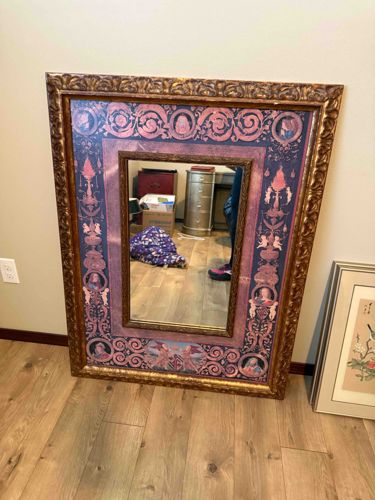
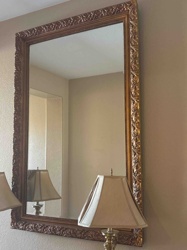
This grand mirror features a heavily ornate, gilded frame finished in a warm gold tone with antique patina accents that highlight its intricate carving. The outermost frame boasts deeply carved acanthus leaves and scrolling motifs that provide a sense of classical elegance and luxury. The mirror's most distinctive feature is the wide, decorative inner border that surrounds the central reflective glass. This border is adorned with a detailed, possibly printed or painted, Neoclassical design. The predominant colors in this border are deep indigo or navy blue and a muted rose or dusty pink, with accents of lighter peach or cream. The design includes scrolled patterns, stylized floral or botanical elements, and what appear to be classical busts or figures within medallions, often framed by a patterned background. There are also torch-like or candelabra-like symmetrical motifs running vertically along the sides of this decorative panel. The central mirror itself is set within a simpler, possibly beveled, golden frame that matches the primary outer frame in color. The overall condition appears good, with some visible wear consistent with age and handling, particularly on the raised gilded elements where the finish might be slightly rubbed. No significant damage such as cracks in the glass or large chips in the frame are immediately apparent from the image. The construction suggests a substantial piece, likely of wood with applied ornate resin or gesso carvings, finished with gilding. The aesthetic leans towards a revivalist style, drawing inspiration from Italian Renaissance or Baroque periods, possibly dating to the late 19th or 20th century.
AI Appraisal Report
Based on my visual examination of the Ornate Neoclassical Style Grand Mirror, I assess its condition as good, consistent with its likely age. There is visible wear on the raised gilded elements, suggesting some rubbing of the finish, which is typical for such pieces. No significant damage like glass cracks or large chips in the frame are apparent from the provided image. The construction appears substantial, likely wood with applied gesso or resin carvings, finished with gilding.
The mirror's aesthetic, with its deeply carved acanthus leaves, scrolling motifs, and the prominent decorative inner border featuring classical busts, stylized floral elements, and torch-like motifs in indigo, rose, and peach tones, speaks to a Neoclassical Revivalist style. This design draws heavily from Italian Renaissance and Baroque influences, suggesting a late 19th to early 20th-century origin. The detailed, possibly printed or painted, nature of the inner border design is a key feature.
In terms of market conditions, large, decorative mirrors in good condition with a distinct revivalist style tend to hold steady demand, particularly for those furnishing elegant or eclectic interiors. Comparables in this size and style often fetch between $800 and $1,500, depending on the provenance and true craftsmanship. The ornate frame and unique inner decorative panel add to its appeal. Rarity is moderate; while many revival-style mirrors exist, this specific combination of color and detailed inner border design is less common than purely gilded frames.
Factors impacting value positively include its overall scale, the intricate carving, and the distinctive decorative inner border. Negative factors are the minor wear on the gilding. It's crucial to note that this authenticity verification is limited to visual inspection of images. A full in-person examination would allow me to thoroughly assess the quality of the gesso or resin application, confirm the construction materials, and accurately determine if the inner border is hand-painted or a printed decorative element, which could significantly impact value. Provenance documentation or scientific testing for materials would further aid in full authentication and precise dating.