AI Appraisal Estimate

AI-generated estimates · not official valuations

From the user

What was submitted

Photo and notes provided by the user — not generated by AI

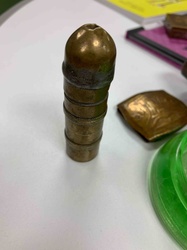
Submitted item photo
Submitted photo · June 8, 2026

User's notes

No additional notes provided.

AI analysis below

AI appraisal

AI analysis & estimate

AI-Generated · Verify before acting

Everything below is generated by AI for informational purposes only. AI can make mistakes — the AI may misidentify items or misattribute them (artist, maker, brand, designer, origin, era). This is not an official valuation and should not be used for insurance, sale, tax, estate, legal, or lending purposes — or any decision requiring a certified appraisal. It is not an authoritative claim about any person, brand, or rights holder — do not share or rely on it as a factual statement about a third party. Always consult qualified professionals before making financial decisions.

Read the full disclaimer

AI Identification

·Not independently authenticated·Verify before acting

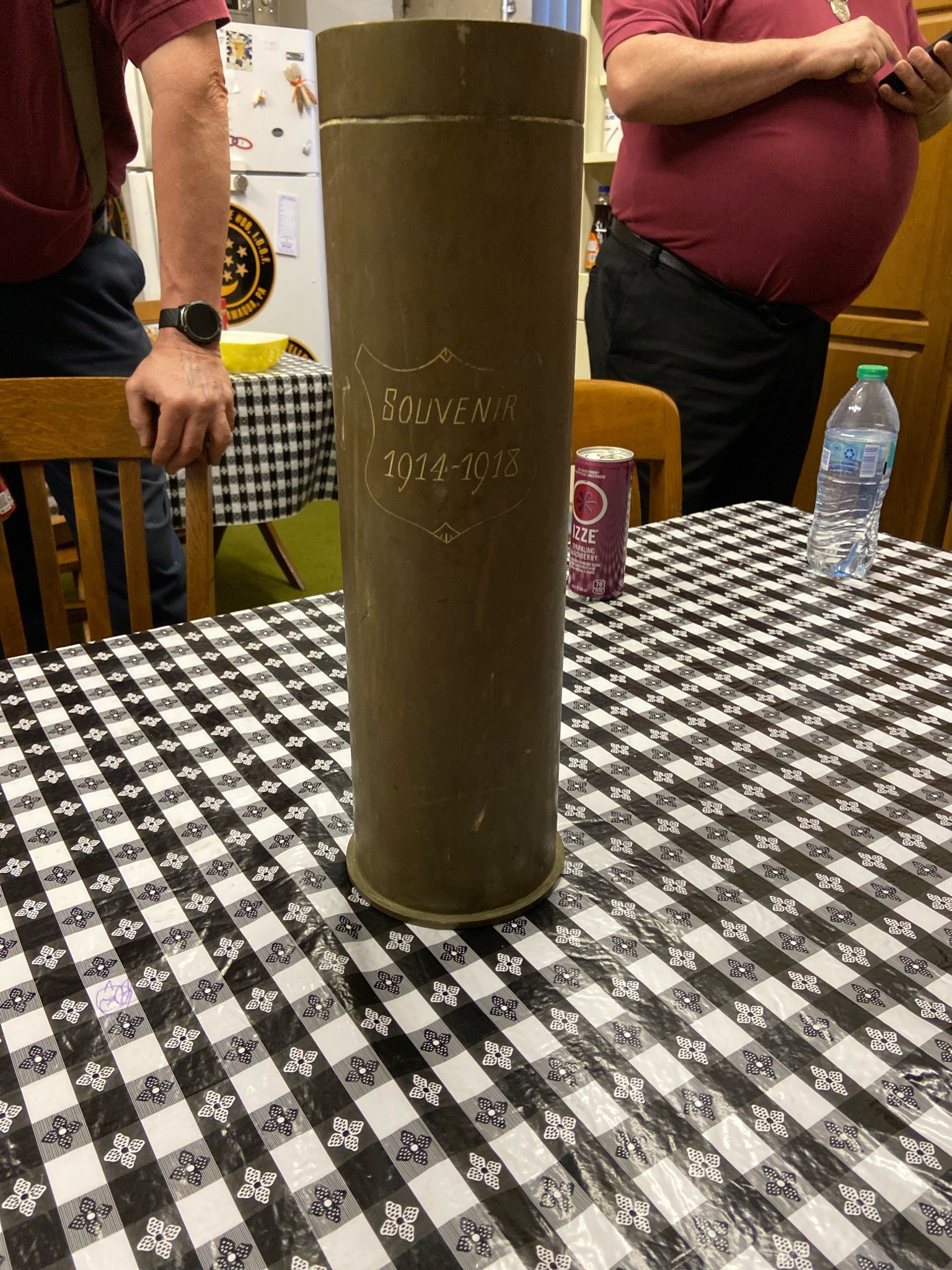
World War I Trench Art Artillery Shell Casing Souvenir

Militaria / Trench Art

AI Estimated Value

·Not an official valuation·Verify before acting

$150 - $250

As of June 8, 2026

AI Item Analysis

·AI can make mistakes·Verify before acting
This item is a large-caliber artillery shell casing, likely brass, that has been repurposed as a commemorative 'trench art' souvenir. It stands upright on its base, exhibiting a significant height and diameter consistent with heavy field artillery. The material displays a dark, aged olive-drab or brass patina with visible surface oxidation, scuffs, and minor abrasions throughout its cylindrical form. A central decorative element has been engraved into the metal, featuring a shield-shaped border containing the hand-stippled or engraved inscription 'SOUVENIR 1914-1918'. This inscription directly references the duration of World War I. The construction is heavy and industrial, showing the characteristic flanged rim at the base used for ejection from a cannon breech. The condition appears structurally sound but shows authentic signs of age, including a matte finish that has lost its original metallic luster. Trench art pieces like this were often crafted by soldiers or locals near the front lines using discarded military hardware. The craftsmanship is utilitarian yet deliberate, with the engraving serving as a personal or unit-level memento of the Great War. While no specific maker's marks are visible on the side, the base primer (not shown) would typically contain manufacturing stamps. The style is late-Art Nouveau to functional military commemorative, specifically dating from the immediate post-war period circa 1918-1920.

AI Appraisal Report

·AI can make mistakes·Verify before acting
I have conducted a visual examination of the World War I artillery shell trench art souvenir. Based on the provided imagery, the specimen appears to be a genuine artifact from the post-war commemorative period (circa 1918–1920). The patina is consistent with centered brass oxidation over a century, and the stippled 'SOUVENIR 1914-1918' inscription reflects the utilitarian hand-tooling characteristic of field-made or local artisan souvenir production. The structural integrity is excellent, though the lack of intricate repoussé floral work—standard in high-end 'Arras' or 'Somme' shells—places this in the mid-range of market collectability. Current market conditions for Militaria show a steady demand for Great War artifacts, though common shell casings are plentiful. Comparables for simple stippled designs typically sell in the $100–$300 range depending on the caliber and clarity of the markings. Larger casings from heavy field guns command higher prices than standard 75mm French or 18-pounder British shells. Since no specific unit markings or location names (e.g., 'Verdun') are present, the value relies on the general historical aesthetic. Final valuation is limited by the inability to inspect the headstamp on the base primer, which would confirm the shell's country of manufacture (e.g., Krupp, Spandau, or American munitions) and date. A physical inspection is required to ensure the engraving is contemporary to the 1920s and not a modern 'aged' reproduction. Full authentication would also require checking for live primers (a safety necessity) and verifying provenance to see if the piece was linked to a specific veteran's estate, which would significantly increase its historical and monetary value.

Get your items appraised

Instant estimates of your treasures with AI-powered appraisals

Browse More Appraisals