AI identification & appraisal estimate

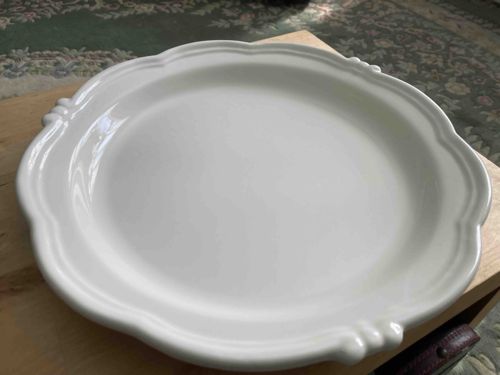
Williams Sonoma Manosque White Ceramic Dinner Plate

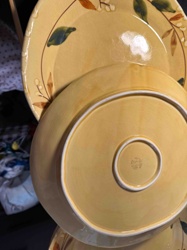
Submitted photo of Williams Sonoma Manosque White Ceramic Dinner Plate
Photo submitted by the user — not generated by AI

User's notes

Manosque, Williams Sonoma, Made in Portugal

These notes were written by the person who submitted this item. Appraiser.AI has not verified them, and the AI's identification and estimate may rely on them.

AI Estimated Value

Not an official valuation

$25 - $35

AI estimate as of March 26, 2026 · verify with a professional before acting

AI-Generated · Verify before acting

Everything on this page is generated by AI for informational purposes only. AI can make mistakes — the AI may misidentify items or misattribute them (artist, maker, brand, designer, origin, era). This is not an official valuation and should not be used for insurance, sale, tax, estate, legal, or lending purposes — or any decision requiring a certified appraisal. It is not an authoritative claim about any person, brand, or rights holder — do not share or rely on it as a factual statement about a third party. Always consult qualified professionals before making financial decisions.

This analysis also relies on unverified notes provided by the user, which may be incomplete or inaccurate and could affect the result.

Read the full disclaimer

AI Item Analysis

This is a fine ceramic dinner plate from the 'Manosque' collection, produced for Williams Sonoma and manufactured in Portugal. The piece is constructed from high-fired stoneware or earthenware, featuring a lustrous, creamy white glaze that covers the entire surface. Its most distinguishing physical characteristic is the elegant scalloped or lobed rim, which incorporates subtle architectural ribbing or 'ear' details at opposing sides, reminiscent of traditional French country or Provincial styling. The plate exhibits a clean, smooth well with a gentle transition to the decorative border. Measuring approximately 10 to 11 inches in diameter, the craftsmanship indicates a high-quality commercial production consistent with Portuguese ceramic traditions known for durability and classic aesthetics. Under close inspection, the glaze appears uniform with no immediate evidence of crazing, chips, or significant utensil marks, suggesting it has been well-maintained. The style is contemporary yet inspired by 18th-century European silhouettes, making it a versatile piece for formal or casual dining. Although the maker’s mark is not visible in the top-down view, it would typically feature the 'Williams Sonoma', 'Manosque', and 'Made in Portugal' stamps on the reverse. The condition is excellent, showing a vibrant reflective sheen and no visible structural repairs.

AI Appraisal Report

Based on my visual examination of the Williams Sonoma 'Manosque' dinner plate, I find it to be a faithful representative of high-quality Portuguese stoneware. The creamy white glaze exhibits a consistent vitreous luster, and the scalloped rim with its characteristic 'point' details remains crisp, suggesting the mold-cast quality is intact. The condition appears to be 'Excellent' with no visible crazing, chips, or surface dulling typically associated with heavy dishwasher use or metal utensil abrasion. Market analysis indicates that the Manosque pattern is a popular, albeit discontinued, line for Williams Sonoma. The secondary market remains stable because collectors frequently seek replacements for broken pieces in their larger sets. Current comparable sales on platforms like eBay and Replacements, Ltd. show individual dinner plates consistently fetching between $25 and $40 depending on the exact diameter and state of wear. While not considered 'rare,' there is a persistent demand for authentic Portuguese-made dinnerware due to its durability compared to cheaper alternatives. Key value factors include the 'Made in Portugal' origin and the lack of surface staining. However, physical limitations of this digital appraisal exist: I cannot verify the underside maker's mark to confirm absolute authenticity or identify minor tactile imperfections (pinholes or 'flea bites') that might downgrade the grade from 'Excellent' to 'Good.' A full authentication would require an in-person inspection of the backstamp, a weight/density check to differentiate stoneware from lighter earthenware, and a tactile 'ring test' to check for internal structural cracks not visible to the naked eye.

Keep exploring

More kitchen & dining - dinnerware appraisals

Get your items appraised

Instant AI-powered appraisal estimates from a photo

Browse More Appraisals