AI estimate as of October 7, 2025 · verify with a professional before acting
AI-Generated · Verify before acting
Everything on this page is generated by AI for informational purposes only. AI can make mistakes — the AI may misidentify items or misattribute them (artist, maker, brand, designer, origin, era). This is not an official valuation and should not be used for insurance, sale, tax, estate, legal, or lending purposes — or any decision requiring a certified appraisal. It is not an authoritative claim about any person, brand, or rights holder — do not share or rely on it as a factual statement about a third party. Always consult qualified professionals before making financial decisions.
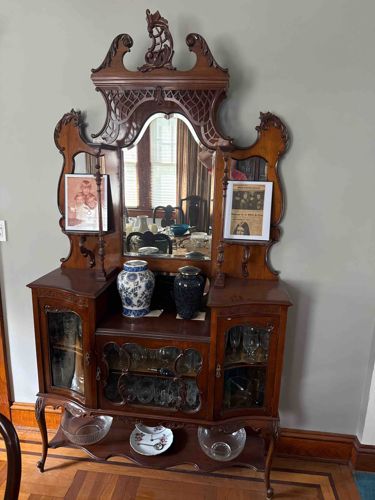
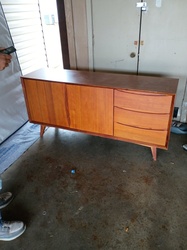
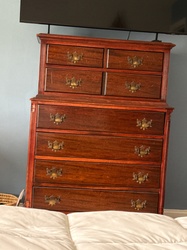
This is a meticulously crafted Victorian-era sideboard, likely constructed from walnut, exhibiting a rich, dark brown hue with a noticeable warm patina consistent with its age. The overall design is ornate and characteristic of the late 19th or early 20th century, probably between 1880 and 1910, reflecting the Aesthetic Movement or similar revival styles of the period. Its physical characteristics include a tall, elegant mirror central to the upper section, flanked by intricately carved supports and topped with a substantial, highly decorative pediment featuring carved scrolls, foliage, and a prominent rococo-inspired cartouche or crest at its apex. Below the mirror, the sideboard features a central open shelf area, currently displaying two decorative vases, and two side cabinets with curved glass doors, likely designed for displaying fine china or glassware. The lower section includes an additional open shelf with a scalloped edge, providing further display or storage space. The construction highlights include curved glass panels on the cabinet doors, turned legs terminating in what appear to be caster wheels (though not clearly visible), and extensive carved detailing throughout the piece, including lattice-work patterns on the mirror's arch. The wood appears to be in good condition, showing expected signs of wear and tear, such as minor scratches or abrasions, but no major visible damage or repairs. The mirror itself seems clear, reflecting a room interior with a window. The quality of craftsmanship is high, indicative of a piece that would have been a significant furnishing in its time, showcasing skilled woodworking and attention to decorative detail. There are no visible maker's marks or signatures in the provided image. The photographs and newspaper clipping placed on either side of the mirror are personal additions and not part of the original piece.
AI Appraisal Report
Based on my visual examination of the provided image, this Victorian Era Carved Walnut Sideboard with Mirror appears to be a genuine article from the late 19th or early 20th century, likely dating between 1880 and 1910. The elaborate carving, particularly the rococo-inspired crest, scrolled pediment, and curved glass doors, is consistent with the Aesthetic Movement and late Victorian styles. The rich, dark brown hue and visible patina further support its age and walnut construction.
The condition appears remarkably good for its age, with only minor wear such as scratches or abrasions mentioned – typical signs of a well-cared-for antique. I see no evidence of major repairs or significant damage from the image. The high quality of craftsmanship is evident in the intricate detailing and substantial form, indicating it was a prominent piece in its original setting.
Market conditions for substantial Victorian-era furniture can be variable; while some traditional pieces have seen softening demand, highly decorative and well-preserved examples like this, particularly those with original mirrors and curved glass, continue to attract interest from collectors and homeowners appreciative of historical aesthetics. Comparables for pieces of this quality and period, especially those in walnut with similar levels of carving and in good condition, typically range in the low to mid-thousands. The rarity lies in finding a piece with such comprehensive original detailing and in such good visual condition.
The main factors impacting its value positively are its excellent preservation, high-quality original craftsmanship, and the elaborate, popular Victorian design elements. The lack of visible maker's marks is common for the period and does not negatively impact value unless a prominent maker was expected.
Limitations to this appraisal: Authenticity and condition verification from images alone are inherently limited. A physical inspection would be crucial to confirm wood species, structural integrity, originality of all components (especially the mirror and glass), and the exact nature and extent of any wear or repairs. In-person examination could also reveal any hidden damage or restorations not visible in the photograph. Provenance documentation, if available, linking the piece to a specific owner or region, would also enhance its historical value.