AI estimate as of September 26, 2025 · verify with a professional before acting
AI-Generated · Verify before acting
Everything on this page is generated by AI for informational purposes only. AI can make mistakes — the AI may misidentify items or misattribute them (artist, maker, brand, designer, origin, era). This is not an official valuation and should not be used for insurance, sale, tax, estate, legal, or lending purposes — or any decision requiring a certified appraisal. It is not an authoritative claim about any person, brand, or rights holder — do not share or rely on it as a factual statement about a third party. Always consult qualified professionals before making financial decisions.
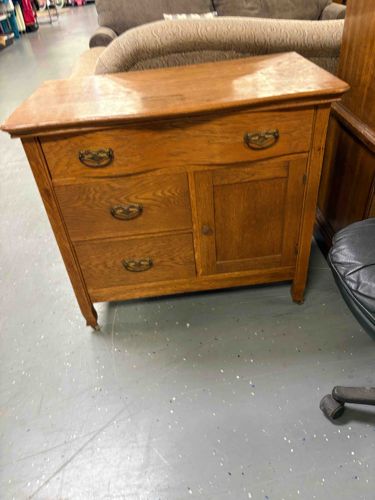
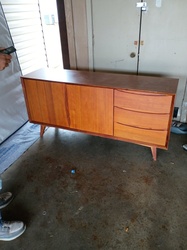
This is an antique piece of furniture, likely a chest of drawers or a small sideboard, crafted from quarter-sawn oak, which is evident in the prominent ray fleck patterns visible in the wood grain. The finish appears to be an original or early stain, giving the oak a medium to dark brown hue with some variations in tone, suggesting a natural patina developed over time. The item features a distinctive serpentine or bowed front on the upper drawer, adding a touch of elegance and visual interest. Below this, there are two additional drawers on the left side, stacked vertically, and a single cabinet door on the right. All visible drawers and the cabinet door are equipped with matching ornate brass or bronze bail pull handles, characteristic of late 19th or early 20th-century furniture. The construction appears sturdy, with visible joinery providing a sense of craftsmanship. The top surface shows some wear, including what appears to be water rings or finish discoloration, consistent with its age and prolonged use. One leg on the bottom left corner is visible, ending in a small caster wheel, indicating movability. The overall style suggests an Arts and Crafts or Mission influence, though the serpentine front adds a more refined touch than typical for those styles. There are no clear manufacturer's marks or signatures visible in the provided image. The piece exhibits signs of age appropriate wear, including minor scratches, dings, and finish loss, but no major structural damage or repairs are immediately apparent.
AI Appraisal Report
Based on my visual examination of the provided image, I assess this Antique Quarter-Sawn Oak Serpentine Front Chest/Sideboard to be an authentic period piece, likely dating from the late 19th to early 20th century. The quarter-sawn oak, prominent ray fleck, and original-style bail pull hardware are consistent with furniture from that era, particularly with Arts and Crafts or a transitional Victorian style, enhanced by the serpentine front. The finish appears original or an early refinish, showing a desirable aged patina, though scuffs, water rings, and some finish loss are evident across the top, which are appropriate for its age and reflect its history of use. I see no immediate signs of major structural damage or significant repairs, which is positive for its value.
Market conditions for quarter-sawn oak pieces remain stable, with good demand for functional and aesthetically pleasing items. Comparables often include smaller sideboards or chests from the Arts and Crafts period. The serpentine front adds a touch of uniqueness and elegance, potentially enhancing its desirability compared to plainer examples. While not exceedingly rare, the combination of quarter-sawn oak, serpentine styling, and apparent original hardware makes it a more sought-after piece.
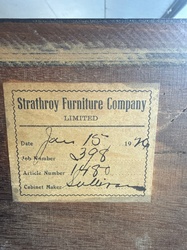
Factors significantly impacting its value include its solid construction, the distinctive serpentine front, and the desirable quarter-sawn oak. The wear on the top surface, while authentic, slightly reduces its top-end value. Without physical inspection, I cannot definitively confirm the originality of all components, assess the internal joinery quality beyond visible elements, or confirm the absence of hidden repairs. An in-person examination would allow me to thoroughly assess the structural integrity, verify wood species and construction methods definitively, and check for any manufacturing marks or stamps which could further authenticate its origin and potentially increase its value. Provenance documentation, if available, would also be invaluable for full authentication and historical context.