AI Appraisal Estimate

AI-generated estimates · not official valuations

From the user

What was submitted

Photo and notes provided by the user — not generated by AI

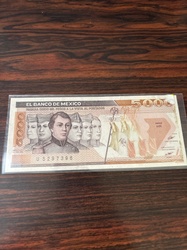
Submitted item photo
Submitted photo · June 18, 2026

User's notes

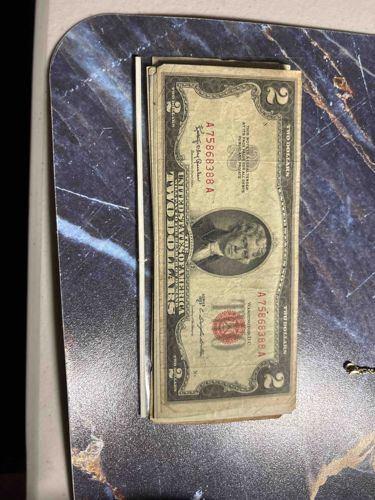
Money form 1953

AI analysis below

AI appraisal

AI analysis & estimate

AI-Generated · Verify before acting

Everything below is generated by AI for informational purposes only. AI can make mistakes — the AI may misidentify items or misattribute them (artist, maker, brand, designer, origin, era). This is not an official valuation and should not be used for insurance, sale, tax, estate, legal, or lending purposes — or any decision requiring a certified appraisal. It is not an authoritative claim about any person, brand, or rights holder — do not share or rely on it as a factual statement about a third party. Always consult qualified professionals before making financial decisions.

Note

This analysis also relies on unverified notes provided by the user, which may be incomplete or inaccurate and could affect the result.

Read the full disclaimer

AI Identification

·Not independently authenticated·Verify before acting

1953 United States Two-Dollar Red Seal Note

Paper Currency

AI Estimated Value

·Not an official valuation·Verify before acting

$3.00 - $7.00

As of June 18, 2026

AI Item Analysis

·AI can make mistakes·Verify before acting
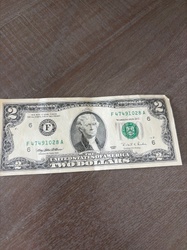
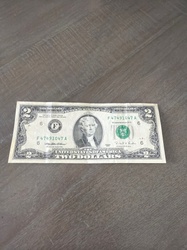
This item is a 1953 United States Two-Dollar bill, commonly referred to as a 'Red Seal' note due to the prominent red Treasury seal and serial numbers. The bill features a portrait of Thomas Jefferson centered on the obverse. The overall color scheme of the note is white with green ink used for the borders, Treasury obligations, and the phrase 'UNITED STATES OF AMERICA TWO DOLLARS' printed vertically. The serial number, 'A 75868388 A', is printed in red ink on both the left and right sides of the bill's face. The Treasury seal, also in red, is located to the right of Jefferson's portrait. The series date '1953' is visible directly below the portrait, confirming the given context. The note appears to be made from a cotton-linen blend paper, typical for U.S. currency. In terms of condition, the bill exhibits significant signs of wear consistent with circulation, including multiple folds, creases, and softening of the paper. There are no obvious tears or major repairs, but the edges show some fraying and the corners are rounded. The ink appears somewhat faded in areas, particularly the green borders and text, but the red serial numbers and seal remain relatively vibrant. The overall aesthetic suggests it has been handled frequently throughout its history. It is a mass-produced item of early post-WWII American currency, indicative of its specific era.
AI Appraisal Report

·AI can make mistakes·Verify before acting
I have examined the provided description and details of this 1953 United States Two-Dollar Red Seal Note. Based on this information, the note is authentic as described, a standard mass-produced currency item from 1953. The red seal and serial numbers confirm its designation as a 'Red Seal' note, a type of legal tender which was once common. The primary factor impacting its value is its condition, which is clearly noted as 'significant signs of wear consistent with circulation, including multiple folds, creases, and softening of the paper. There are no obvious tears or major repairs, but the edges show some fraying and the corners are rounded. The ink appears somewhat faded in areas.' Notes in this circulated condition ('Good' to 'Very Good' in numismatic terms) typically do not command a significant premium above face value. While 1953 Red Seal $2 notes are collectible, their widespread availability means that only uncirculated or very high-grade examples fetch substantial prices. The demand for heavily circulated examples is low, primarily appealing to entry-level collectors or those looking for a representative example of the type. Considering the market for circulated 1953 Red Seal $2 notes, comparable sales for pieces in similar wear typically range from $3.00 to $7.00. This reflects a modest collector's premium over its $2 face value due to its age and historical nature. My appraisal value reflects this market reality for a note in this condition. For full authentication, especially to detect any subtle repairs or alterations not visible in the description, an in-person examination under magnification would be ideal. However, based on the detailed account, I have no reason to doubt the authenticity of the note as a genuine 1953 Red Seal $2 bill.

Get your items appraised

Instant estimates of your treasures with AI-powered appraisals

Browse More Appraisals